Heinz Mack (1931) - Vibration


08
days
14
hours
26
minutes
34
seconds

5 other people are watching this object
 Bidder 5172 Bidder 5172 | €1 |
|---|
Catawiki Buyer Protection
Your payment’s safe with us until you receive your object.View details
Trustpilot 4.4 | 121899 reviews
Rated Excellent on Trustpilot.
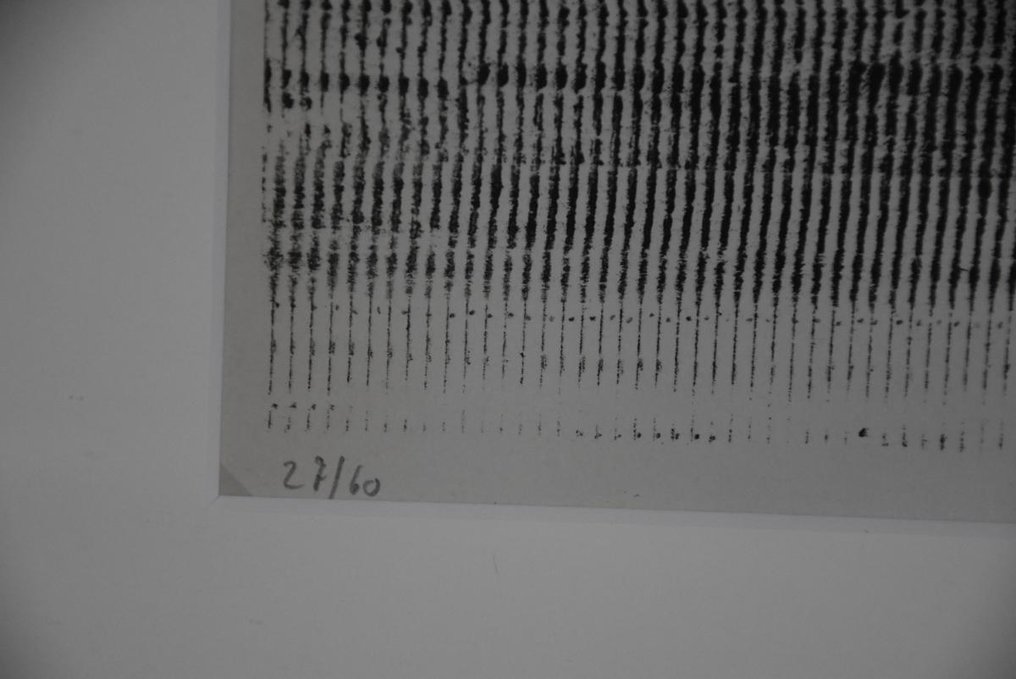
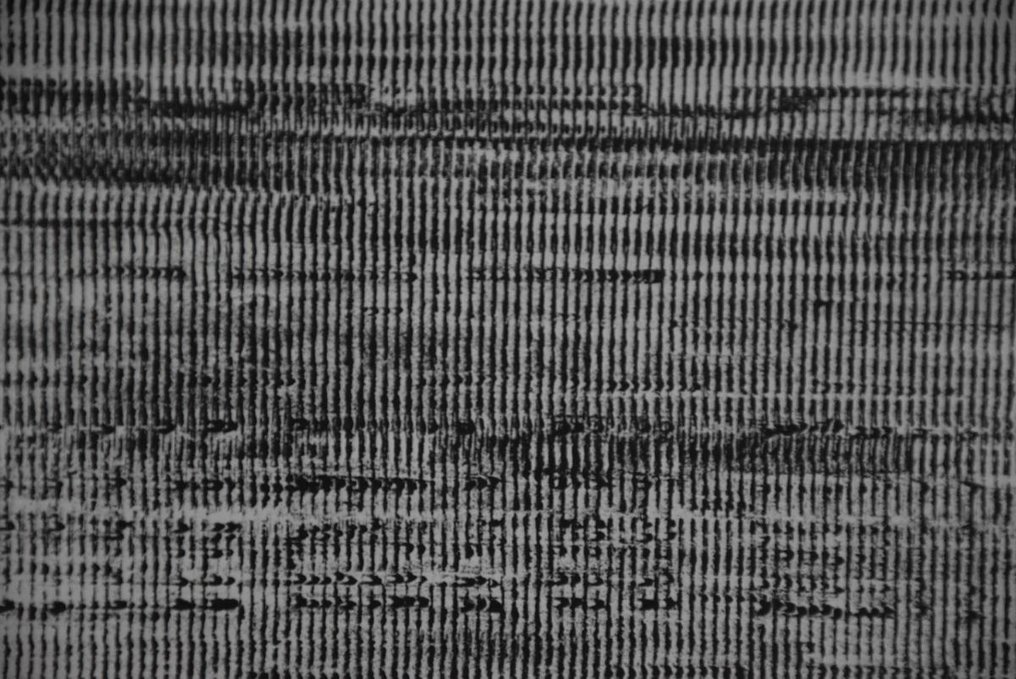
Heinz Mack, Vibration, a 1961 abstract lithograph, edition 27/60, sheet 34 × 34 cm, framed in an original aluminium frame 52 × 48 cm, in excellent condition.
AI-assisted summary
Description from the seller
Heinz Mack (Lollar, Germany - 1931), 'Vibration'. 1961. Original lithograph. Sheet size 34 x 34 cm. Signed and dated by the artist in pencil. Numbered 27/60. Framed in an antique aluminum frame measuring 52 x 48 cm, with signs of age. The lithograph is in perfect condition, unrestored, mounted on matboard with photo corners to avoid using adhesive tape (they are barely visible because they are transparent).
In 1957, Heinz Mack was among the founders of the Gruppo Zero, an artistic movement aimed at creating a free communicative 'space' that would allow artists to 'start from zero,' experimenting with entirely new materials and expressive procedures. When necessary, they incorporated techniques and science so that the artwork would become almost an 'object' with dynamic, reflective, or even luminous characteristics. Notable members of Gruppo Zero include Otto Piene, Gunter Uecker, Yves Klein, Piero Manzoni, Lucio Fontana, Jean Tinguely, Joseph Beuys, and Piero Dorazio. This rare lithograph is a testament to this significant moment in post-war art.
Heinz Mack (born March 8, 1931) is a German artist. Together with Otto Piene, he founded the ZERO movement in 1957. He exhibited works at documenta in 1964 and 1977 and represented Germany at the Venice Biennale in 1970. He is best known for his contributions to op art, light art, and kinetic art.
Biography
Heinz Mack was born in 1931 in the town of Lollar in Germany. Between 1950 and 1956, he studied at the Kunstakademie Düsseldorf. In 1957, together with Otto Piene, he began a series of what were called evening exhibitions at their studio in Düsseldorf. This series was the initial event for the formation of the group ZERO (with Mack, Piene, and Günther Uecker as the core) and the international ZERO movement. Participants in the ZERO movement included Yves Klein, Lucio Fontana, Piero Manzoni, and Jean Tinguely.
In the early 1960s, Mack worked with Gotthard Graubner as an art teacher at the Lessing Gymnasium in Düsseldorf. In 1964, Mack, Piene, and Uecker organized 'ZERO Lichtraum (Hommage à Lucio Fontana)' at the 1964 documenta in Kassel. From 1964 to 1966, Mack lived and worked in New York, where the Howard Wise Gallery held a solo exhibition in 1966.
Although known for his outdoor minimalist sculptures, Mack has also produced smaller works, both static and kinetic. 'Light Dynamo #2' from 1966, in the collection of the Honolulu Museum of Art, is an example of his kinetic sculptures with spinning discs. Since 1991, he has created brightly colored abstract paintings in acrylic.
In 1970, Mack Fu was invited as a guest professor in Osaka, Japan. That same year, he represented Germany at the 1970 Venice Biennale (alongside Günther Uecker, Georg Karl Pfahler, and Thomas Lenk). For the 1972 Summer Olympics in Munich, he created an illuminated 'Water Cloud' (Wasserwolke). In 1972, he was asked to create a 230-foot-high sculpture for the United Nations headquarters in New York (not realized).
Zero magazine and the German avant-garde art group, founded in Düsseldorf in 1958 by O.H. Mack and O. Piene, to which G. Uecker joined in 1961. Aiming to surpass both the subjectivism of informal art and the conventionalism tied to museum tradition, the Z. group proposed a new sensitivity and intensity of emotions, seeking harmony between nature and technology in works characterized by light, movement, and large dimensions (light and water towers, reflector walls, artificial suns in desert or water expanses, etc.). The group, which was joined by other artists, organized exhibitions in Antwerp, Brussels, Amsterdam, London, and made its final appearance in 1966 in Bonn.
Heinz Mack (Lollar, Germany - 1931), 'Vibration'. 1961. Original lithograph. Sheet size 34 x 34 cm. Signed and dated by the artist in pencil. Numbered 27/60. Framed in an antique aluminum frame measuring 52 x 48 cm, with signs of age. The lithograph is in perfect condition, unrestored, mounted on matboard with photo corners to avoid using adhesive tape (they are barely visible because they are transparent).
In 1957, Heinz Mack was among the founders of the Gruppo Zero, an artistic movement aimed at creating a free communicative 'space' that would allow artists to 'start from zero,' experimenting with entirely new materials and expressive procedures. When necessary, they incorporated techniques and science so that the artwork would become almost an 'object' with dynamic, reflective, or even luminous characteristics. Notable members of Gruppo Zero include Otto Piene, Gunter Uecker, Yves Klein, Piero Manzoni, Lucio Fontana, Jean Tinguely, Joseph Beuys, and Piero Dorazio. This rare lithograph is a testament to this significant moment in post-war art.
Heinz Mack (born March 8, 1931) is a German artist. Together with Otto Piene, he founded the ZERO movement in 1957. He exhibited works at documenta in 1964 and 1977 and represented Germany at the Venice Biennale in 1970. He is best known for his contributions to op art, light art, and kinetic art.
Biography
Heinz Mack was born in 1931 in the town of Lollar in Germany. Between 1950 and 1956, he studied at the Kunstakademie Düsseldorf. In 1957, together with Otto Piene, he began a series of what were called evening exhibitions at their studio in Düsseldorf. This series was the initial event for the formation of the group ZERO (with Mack, Piene, and Günther Uecker as the core) and the international ZERO movement. Participants in the ZERO movement included Yves Klein, Lucio Fontana, Piero Manzoni, and Jean Tinguely.
In the early 1960s, Mack worked with Gotthard Graubner as an art teacher at the Lessing Gymnasium in Düsseldorf. In 1964, Mack, Piene, and Uecker organized 'ZERO Lichtraum (Hommage à Lucio Fontana)' at the 1964 documenta in Kassel. From 1964 to 1966, Mack lived and worked in New York, where the Howard Wise Gallery held a solo exhibition in 1966.
Although known for his outdoor minimalist sculptures, Mack has also produced smaller works, both static and kinetic. 'Light Dynamo #2' from 1966, in the collection of the Honolulu Museum of Art, is an example of his kinetic sculptures with spinning discs. Since 1991, he has created brightly colored abstract paintings in acrylic.
In 1970, Mack Fu was invited as a guest professor in Osaka, Japan. That same year, he represented Germany at the 1970 Venice Biennale (alongside Günther Uecker, Georg Karl Pfahler, and Thomas Lenk). For the 1972 Summer Olympics in Munich, he created an illuminated 'Water Cloud' (Wasserwolke). In 1972, he was asked to create a 230-foot-high sculpture for the United Nations headquarters in New York (not realized).
Zero magazine and the German avant-garde art group, founded in Düsseldorf in 1958 by O.H. Mack and O. Piene, to which G. Uecker joined in 1961. Aiming to surpass both the subjectivism of informal art and the conventionalism tied to museum tradition, the Z. group proposed a new sensitivity and intensity of emotions, seeking harmony between nature and technology in works characterized by light, movement, and large dimensions (light and water towers, reflector walls, artificial suns in desert or water expanses, etc.). The group, which was joined by other artists, organized exhibitions in Antwerp, Brussels, Amsterdam, London, and made its final appearance in 1966 in Bonn.
Details
Artist
Heinz Mack (1931)
Sold by
Gallery
Edition
Limited edition
Title of artwork
Vibration
Technique
Lithograph
Signature
Hand signed
Country of Origin
Germany
Year
1961
Condition
Excellent condition
Height
52 cm
Width
48 cm
Style
Abstract
Period
1960-1970
Sold with frame
Yes
Sold by