Emilio Campos Goitia (1931–2003) - Intimate Andalusian garden


10
days
02
hours
06
minutes
04
seconds

No bids placed
Catawiki Buyer Protection
Your payment’s safe with us until you receive your object.View details
Trustpilot 4.4 | 121899 reviews
Rated Excellent on Trustpilot.
Description from the seller
Andalusian intimate garden
Emilio Campos Goitia (1931–2003)
Technical sheet
Author: Emilio Campos Goitia (1931–2003)
Light in the Wellhead. Intimate Andalusian Garden
School: Spanish, second half of the 20th century
Technique: oil on canvas
Measurements: 41 × 33 cm (artwork) · 64 × 56 cm (framed)
Support: Canvas stretched over a frame
Conservation state: Excellent, with a stable pictorial layer and uniform varnish.
Style: Spanish costumbrist realism with luminist sensitivity.
2. Compositional and iconographic description
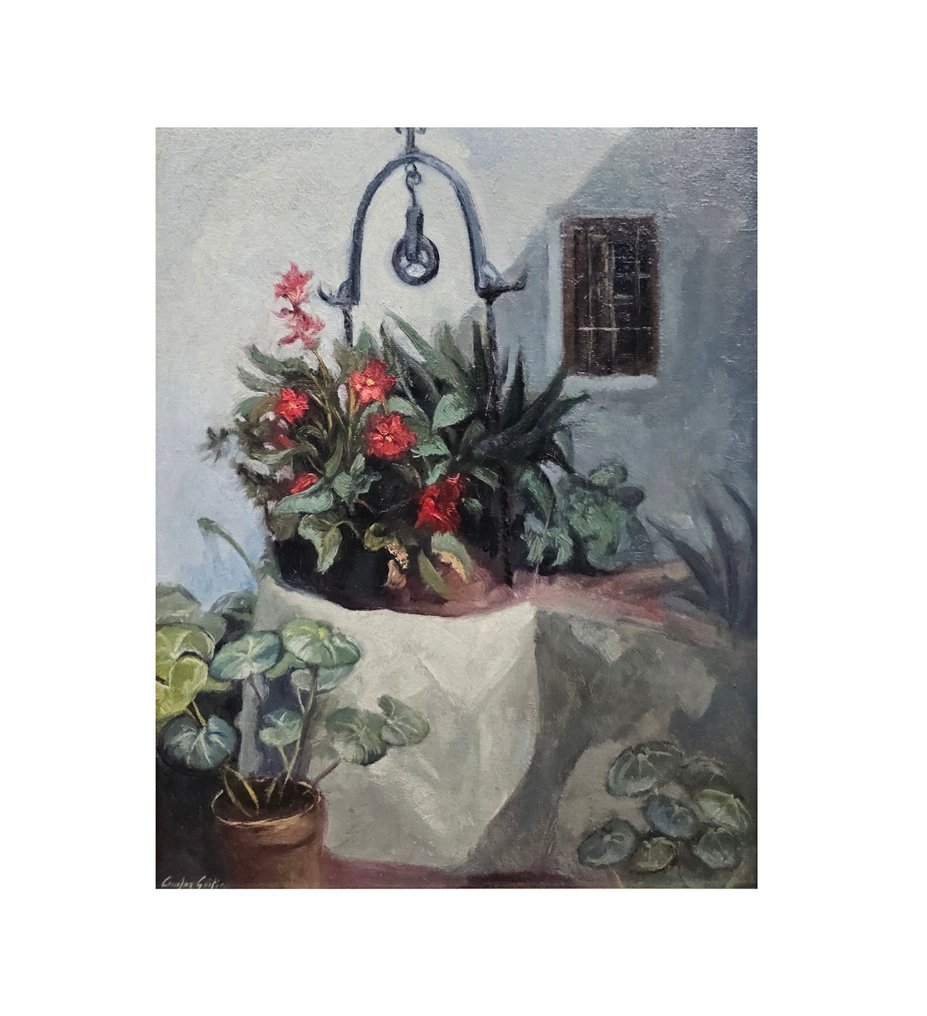
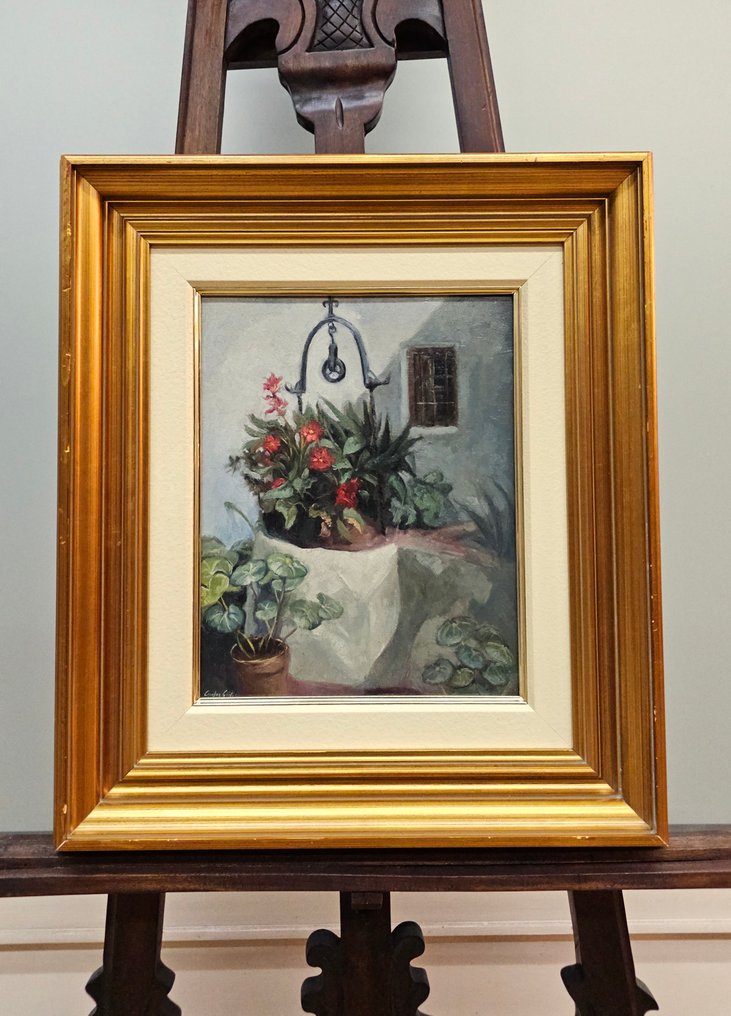
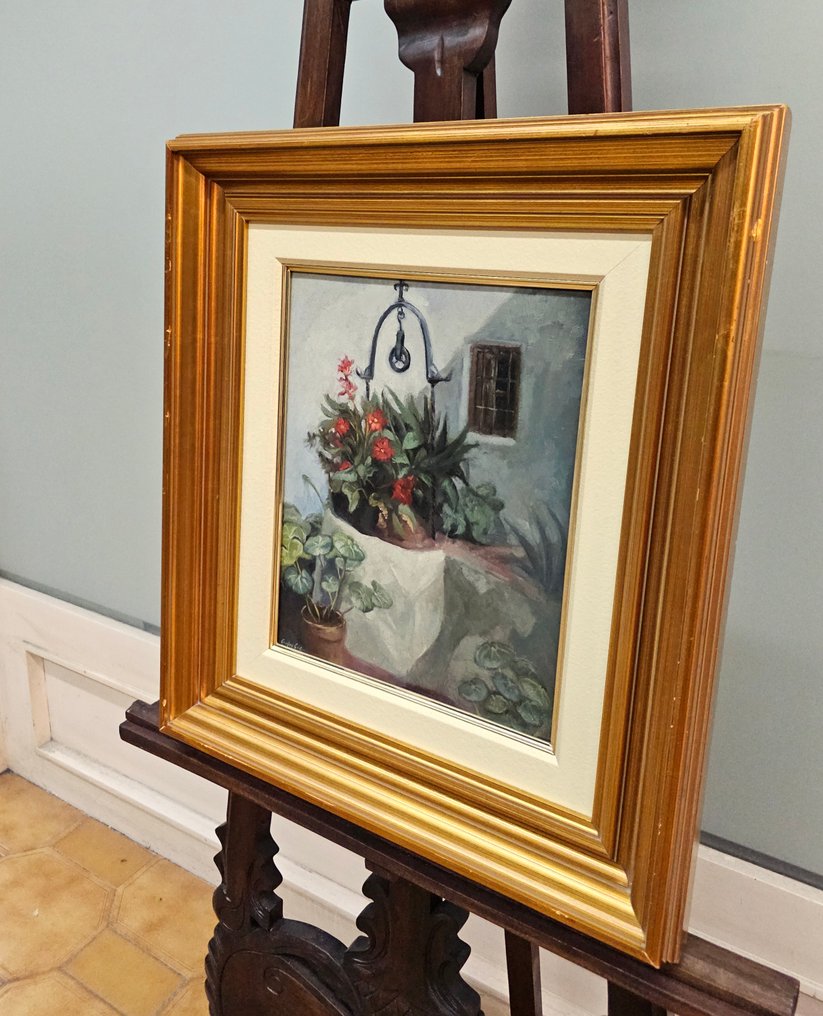
The work depicts a traditional Spanish courtyard, dominated by an old well curb turned flowerpot, overflowing with vibrant red flowers arranged in a lively chromatic balance against a whitewashed background.
The pictorial focus is concentrated on the vegetal mass, where Campos Goitia displays his characteristic mastery of impasto, alternating thick touches with soft glazes that model leaves, stems, and petals.
The wrought iron of the hook and the window in the shadows add verticality and architectural contrast, while the lower flowerpots complete an intimate, domestic, and meditative discourse. The light, filtered yet warm, transforms the scene into a tribute to the Andalusian patio as an emotional space, a theme that the artist approached with tenderness throughout his career.
3. Style, Context, and Comparisons
Campos Goitia develops here a poetic realism, close to the atmospheres captured by Muñoz Degrain, the paused gardens of Santiago Rusiñol, or Joaquín Mir's floral interiors, albeit with a more intimate and everyday sensibility.
Her palette, restrained yet expressive, recalls the Spanish painters of the Valencian school of the 20th century, where light is a silent protagonist.
The brushstroke, firm and enveloping, places the work within the Mediterranean figurative painting movement, which is highly valued today in the market for its decorative character and the evocative strength of its traditional motifs.
Seller's Story
At Barcelona Art Gallery, we are a large family of art collectors in Barcelona who have been acquiring all kinds of paintings for 2 centuries.
Headquartered in the Les Corts neighborhood of Barcelona.
We offer part of our private collection for auction: high period and modern paintings that we have been acquiring over time, mainly from art galleries, antique dealers, auctions, private collections and very diverse origins.
Translated by Google TranslateAndalusian intimate garden
Emilio Campos Goitia (1931–2003)
Technical sheet
Author: Emilio Campos Goitia (1931–2003)
Light in the Wellhead. Intimate Andalusian Garden
School: Spanish, second half of the 20th century
Technique: oil on canvas
Measurements: 41 × 33 cm (artwork) · 64 × 56 cm (framed)
Support: Canvas stretched over a frame
Conservation state: Excellent, with a stable pictorial layer and uniform varnish.
Style: Spanish costumbrist realism with luminist sensitivity.
2. Compositional and iconographic description
The work depicts a traditional Spanish courtyard, dominated by an old well curb turned flowerpot, overflowing with vibrant red flowers arranged in a lively chromatic balance against a whitewashed background.
The pictorial focus is concentrated on the vegetal mass, where Campos Goitia displays his characteristic mastery of impasto, alternating thick touches with soft glazes that model leaves, stems, and petals.
The wrought iron of the hook and the window in the shadows add verticality and architectural contrast, while the lower flowerpots complete an intimate, domestic, and meditative discourse. The light, filtered yet warm, transforms the scene into a tribute to the Andalusian patio as an emotional space, a theme that the artist approached with tenderness throughout his career.
3. Style, Context, and Comparisons
Campos Goitia develops here a poetic realism, close to the atmospheres captured by Muñoz Degrain, the paused gardens of Santiago Rusiñol, or Joaquín Mir's floral interiors, albeit with a more intimate and everyday sensibility.
Her palette, restrained yet expressive, recalls the Spanish painters of the Valencian school of the 20th century, where light is a silent protagonist.
The brushstroke, firm and enveloping, places the work within the Mediterranean figurative painting movement, which is highly valued today in the market for its decorative character and the evocative strength of its traditional motifs.
Seller's Story
At Barcelona Art Gallery, we are a large family of art collectors in Barcelona who have been acquiring all kinds of paintings for 2 centuries.
Headquartered in the Les Corts neighborhood of Barcelona.
We offer part of our private collection for auction: high period and modern paintings that we have been acquiring over time, mainly from art galleries, antique dealers, auctions, private collections and very diverse origins.
Translated by Google TranslateDetails
Artist
Emilio Campos Goitia (1931–2003)
Sold with frame
Yes
Sold by
Gallery
Edition
Original
Title of artwork
Intimate Andalusian garden
Technique
Oil painting
Signature
Hand signed
Country of Origin
Spain
Condition
Excellent condition
Height
64 cm
Width
56 cm
Weight
8 kg
Depiction/Theme
Still life
Style
Romanticism
Period
1960-1970
Sold by
