Francesco Polazzi - La forza interiore


01
day
09
hours
21
minutes
47
seconds
Starting bid
€ 1
No reserve price

Expert
Selected by Egidio Emiliano Bianco
Holds a bachelor’s degree in art history and a master’s degree in arts and cultural management.
Gallery Estimate € 400 - € 500
No bids placed
Catawiki Buyer Protection
Your payment’s safe with us until you receive your object.View details
Trustpilot 4.4 | 122473 reviews
Rated Excellent on Trustpilot.
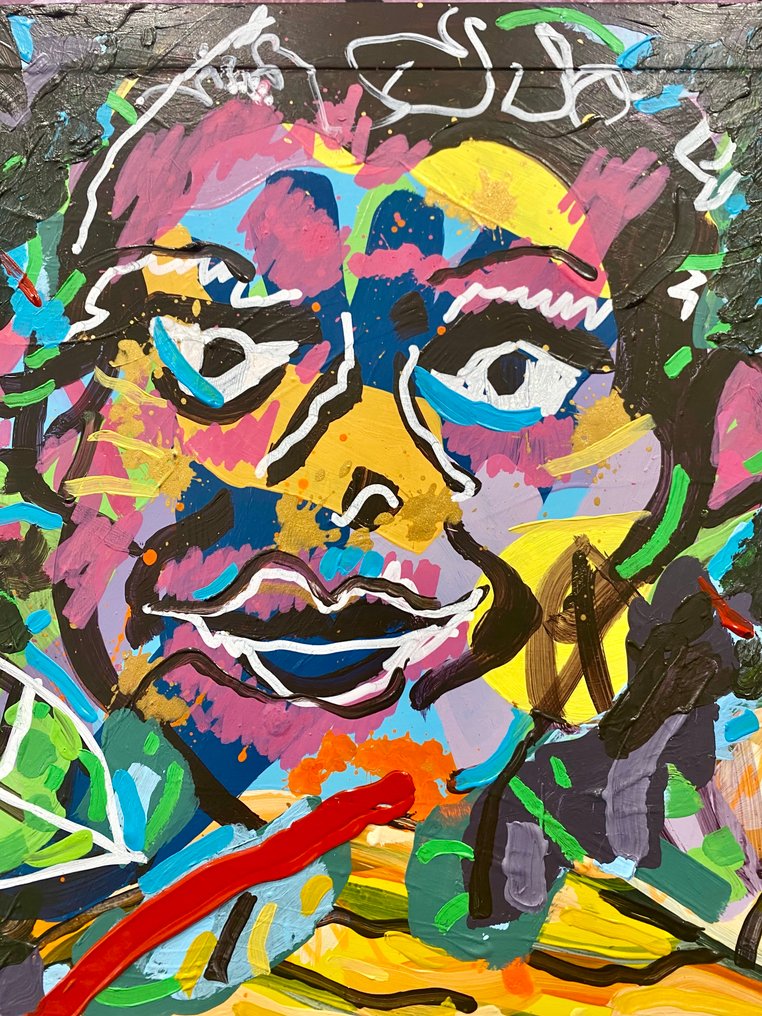
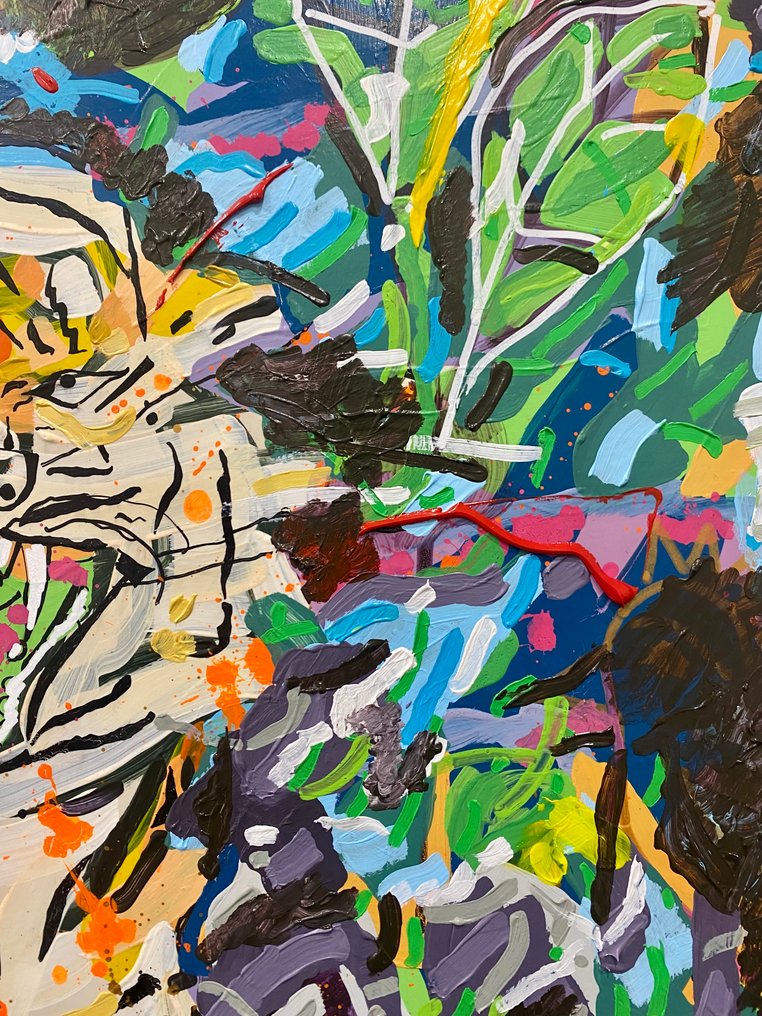
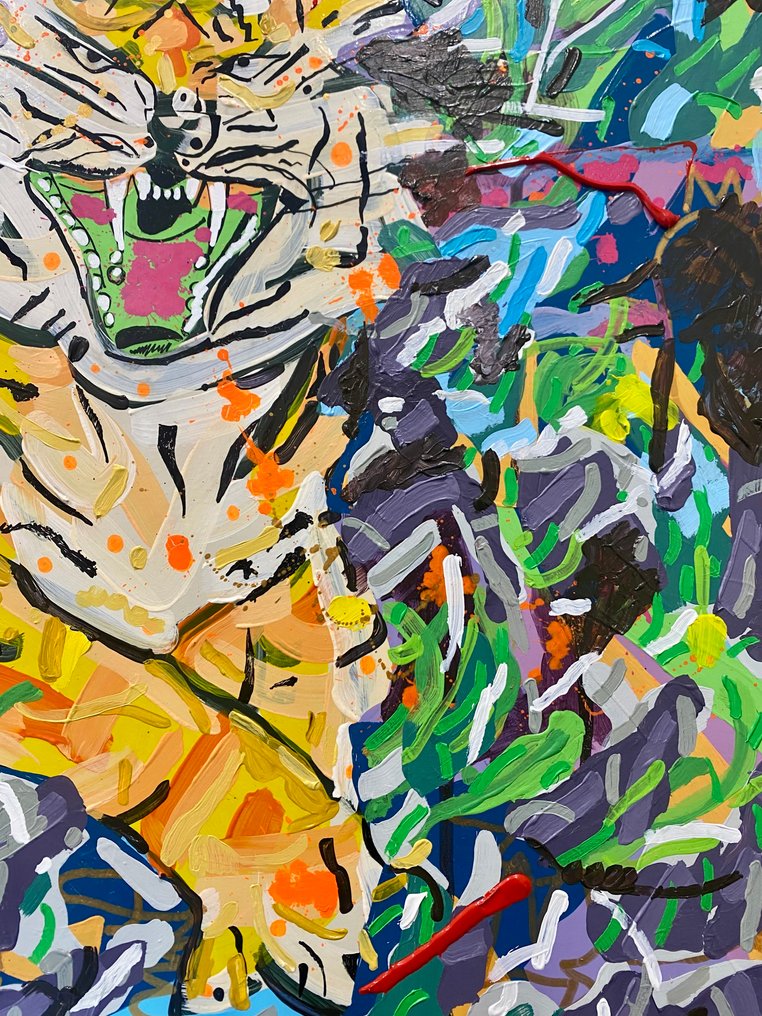
Francesco Polazzi, La forza interiore, 2025, an original acrylic painting on canvas (58 x 98 cm) depicting animals and wildlife, signed by hand, Italy, contemporary, period 2020+, in excellent condition, sold directly by the artist.
AI-assisted summary
Description from the seller
Who is Francesco Polazzi today?
Francesco Polazzi is a young painter from Emilia, active in Bologna where he lives and works.
After earning a degree in Literature and Philosophy in Bologna, he moved to Birmingham for a Master in Fine Arts.
His painting blends figurative and abstract elements, with post-modern, pop, and street art influences.
He conceives of art as 'a liberation,' an inner necessity, and considers painting as a dialogue between mind and body — the act of painting as a vital need.
In his works, animals, human figures, patterns, and flat color fields often coexist: a mix that combines realistic and symbolic elements, abstract and evocative.
This biography and sensitivity make Polazzi particularly suitable for a subject rich in internal symbols, like the one you imagined.
The painting: 'Tiger in the jungle at night' — symbolic vision
The tiger and the night jungle: inner strength as a primal presence
Imagine a scene immersed in a dark jungle, illuminated only by faint glimmers: the real density of the plants, the shadows of the trees, the moonlight or long rays of light filtering through the foliage. In this context, the tiger — large, muscular, fierce — is at the center: intense eyes, tensed muscles, attentive and aware posture.
The tiger represents inner strength: that primordial core residing in the human soul — instinct, courage, power, dignity — even when the rational mind is silent.
The night jungle reinforces this symbolism: it is an archetypal space, wild and dark — like the depths of the unconscious. The dim light becomes a metaphor for the minimal awareness that emerges from that dark inner abyss.
In this context, the tiger is not just an animal, but a visible manifestation of an invisible psychic energy: the force that animates us, that resists, that observes.
The face of the savage in the shadow: sleeping creativity, awaiting rebirth
Behind the tiger, among the leaves, between shadow and light, the face of a savage appears barely — almost whispered — with open eyes, rough features, perhaps with hair and beard blending into the foliage. It does not dominate the scene, does not compete with the tiger: it is part of the landscape, a subtle passage between figure and nature.
This wild one represents latent creativity, the artistic or spiritual potential that rests — sleeps, meditates — but is alive, alert in stillness.
Its position in the shadows suggests that creativity doesn't always have to be active or explosive: sometimes it must be guarded, kept in silence until the conditions are right for it to emerge.
The contrast between the tiger in the foreground and the hidden face evokes the dialectic between force and quiet, instinct and reflection: the inner power that supports creative calm.
Atmosphere, colors, style: a balance between realism and symbolic evocation.
In an interpretation akin to Polazzi's — blending figurative and abstract elements — the jungle and the tiger could be depicted with evocative realism: intense outlines for the animal, leaves and vegetation sketched with free brushstrokes, abstract color patterns that suggest the oscillation between order and chaos.
The nocturnal tones—deep blues, muted greens, dense blacks—contrast with flashes of ochre or moonlight: light as a symbol of awareness, present yet fragile. The face in the shadows might emerge as a smudge, an unusual, imperfect sign—a reminder that dormant creativity is not clear, but vague, in the form of intuition.
Overall, the color palette and style—which combines animal figuration, nature, and abstract suggestion—create a suspended atmosphere: between dream and wakefulness, between instinct and reflection—a space where soul and nature touch.
Philosophical and inner meanings
This painting can be read as an internal map.
Some of its symbolic keys:
Strength and vulnerability: the tiger displays power, but is immersed in a fragile context—the night, the shadows. An inner strength that doesn't vent itself, but exists in balance with uncertainty.
Instinct and consciousness: the tiger represents instinct, physicality; the jungle and darkness represent the unconscious; the hidden face represents creativity as a bridge between the conscious and the unconscious—an energy waiting to be awakened.
A moment of silence as a space for germination: creativity isn't always explosive: it can be silent, hidden, latent. The painting invites us to respect those moments of quiet, to see the value of inner rest as a hotbed of imagination.
Unity between man and nature, soul and instinct: in the primitive setting, man (or the archetypal savage) is not detached from nature: he is part of it. This evokes a vision according to which the human being—in his most authentic form—is not above nature, but in communion with it.
Polazzi loves to combine animal, human, and abstract elements, giving shape to “emotional views” rather than simple realistic representations.
He sees art as a manifestation of what is inside, a need to bring out “ways of feeling, perspectives, layers” of his sensitivity.
His openness to symbolism, abstraction and free expression makes him well-suited to elaborating a subject full of internal metaphors such as that of the tiger-night-savage.
Who is Francesco Polazzi today?
Francesco Polazzi is a young painter from Emilia, active in Bologna where he lives and works.
After earning a degree in Literature and Philosophy in Bologna, he moved to Birmingham for a Master in Fine Arts.
His painting blends figurative and abstract elements, with post-modern, pop, and street art influences.
He conceives of art as 'a liberation,' an inner necessity, and considers painting as a dialogue between mind and body — the act of painting as a vital need.
In his works, animals, human figures, patterns, and flat color fields often coexist: a mix that combines realistic and symbolic elements, abstract and evocative.
This biography and sensitivity make Polazzi particularly suitable for a subject rich in internal symbols, like the one you imagined.
The painting: 'Tiger in the jungle at night' — symbolic vision
The tiger and the night jungle: inner strength as a primal presence
Imagine a scene immersed in a dark jungle, illuminated only by faint glimmers: the real density of the plants, the shadows of the trees, the moonlight or long rays of light filtering through the foliage. In this context, the tiger — large, muscular, fierce — is at the center: intense eyes, tensed muscles, attentive and aware posture.
The tiger represents inner strength: that primordial core residing in the human soul — instinct, courage, power, dignity — even when the rational mind is silent.
The night jungle reinforces this symbolism: it is an archetypal space, wild and dark — like the depths of the unconscious. The dim light becomes a metaphor for the minimal awareness that emerges from that dark inner abyss.
In this context, the tiger is not just an animal, but a visible manifestation of an invisible psychic energy: the force that animates us, that resists, that observes.
The face of the savage in the shadow: sleeping creativity, awaiting rebirth
Behind the tiger, among the leaves, between shadow and light, the face of a savage appears barely — almost whispered — with open eyes, rough features, perhaps with hair and beard blending into the foliage. It does not dominate the scene, does not compete with the tiger: it is part of the landscape, a subtle passage between figure and nature.
This wild one represents latent creativity, the artistic or spiritual potential that rests — sleeps, meditates — but is alive, alert in stillness.
Its position in the shadows suggests that creativity doesn't always have to be active or explosive: sometimes it must be guarded, kept in silence until the conditions are right for it to emerge.
The contrast between the tiger in the foreground and the hidden face evokes the dialectic between force and quiet, instinct and reflection: the inner power that supports creative calm.
Atmosphere, colors, style: a balance between realism and symbolic evocation.
In an interpretation akin to Polazzi's — blending figurative and abstract elements — the jungle and the tiger could be depicted with evocative realism: intense outlines for the animal, leaves and vegetation sketched with free brushstrokes, abstract color patterns that suggest the oscillation between order and chaos.
The nocturnal tones—deep blues, muted greens, dense blacks—contrast with flashes of ochre or moonlight: light as a symbol of awareness, present yet fragile. The face in the shadows might emerge as a smudge, an unusual, imperfect sign—a reminder that dormant creativity is not clear, but vague, in the form of intuition.
Overall, the color palette and style—which combines animal figuration, nature, and abstract suggestion—create a suspended atmosphere: between dream and wakefulness, between instinct and reflection—a space where soul and nature touch.
Philosophical and inner meanings
This painting can be read as an internal map.
Some of its symbolic keys:
Strength and vulnerability: the tiger displays power, but is immersed in a fragile context—the night, the shadows. An inner strength that doesn't vent itself, but exists in balance with uncertainty.
Instinct and consciousness: the tiger represents instinct, physicality; the jungle and darkness represent the unconscious; the hidden face represents creativity as a bridge between the conscious and the unconscious—an energy waiting to be awakened.
A moment of silence as a space for germination: creativity isn't always explosive: it can be silent, hidden, latent. The painting invites us to respect those moments of quiet, to see the value of inner rest as a hotbed of imagination.
Unity between man and nature, soul and instinct: in the primitive setting, man (or the archetypal savage) is not detached from nature: he is part of it. This evokes a vision according to which the human being—in his most authentic form—is not above nature, but in communion with it.
Polazzi loves to combine animal, human, and abstract elements, giving shape to “emotional views” rather than simple realistic representations.
He sees art as a manifestation of what is inside, a need to bring out “ways of feeling, perspectives, layers” of his sensitivity.
His openness to symbolism, abstraction and free expression makes him well-suited to elaborating a subject full of internal metaphors such as that of the tiger-night-savage.
Details
Artist
Francesco Polazzi
Sold with frame
No
Sold by
Direct from the artist
Edition
Original
Title of artwork
La forza interiore
Technique
Acrylic painting
Signature
Hand signed
Country of Origin
Italy
Year
2025
Condition
Excellent condition
Height
58 cm
Width
98 cm
Depiction/Theme
Animals and wildlife
Style
Contemporary
Period
2020+
Sold by
