Italian school (XVII) - Pietà


05
days
17
hours
52
minutes
47
seconds
Current bid
€ 250
Reserve price not met

14 other people are watching this object
 Bidder 7157 Bidder 7157 | €250 |
|---|
Catawiki Buyer Protection
Your payment’s safe with us until you receive your object.View details
Trustpilot 4.4 | 122553 reviews
Rated Excellent on Trustpilot.
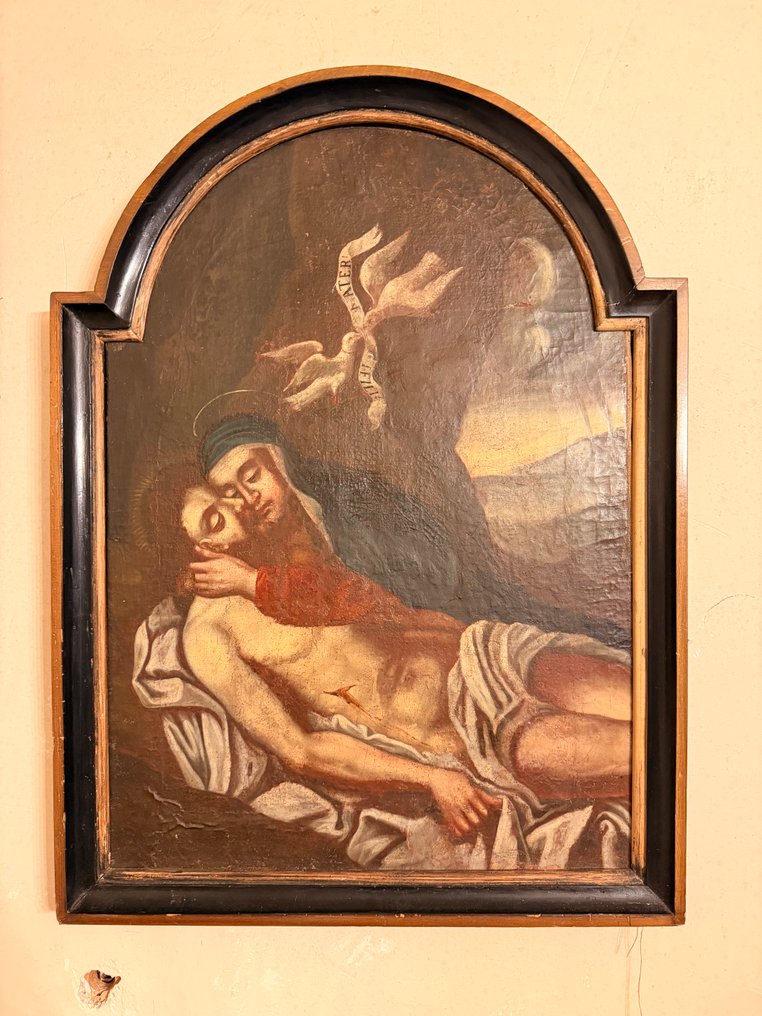
Pietà, an oil painting on canvas by the Italian school from the early Baroque period, circa 1600, unsigned, 70 × 50 cm, sold with frame.
AI-assisted summary
Description from the seller
Title
The Holy Embrace: Lamentation of Christ / Compassion of the Madonna (Iconographic type of Mater Amabilis or Pietà)
Object
Oil painting on canvas, stretched and framed in a rounded antique-style frame. Dimensions: approximately 50cm x 69cm. Measurements were taken using the Apple iPhone Measure App and may vary slightly.
German-speaking area, especially Austria or Upper Italy/South Tyrol. Dating: around 1600–1630. Unsigned.
Representation
The painting depicts an intimate, dark-toned composition of two closely embracing figures: Jesus Christ (the deceased) and Mary, his mother (the mourner).
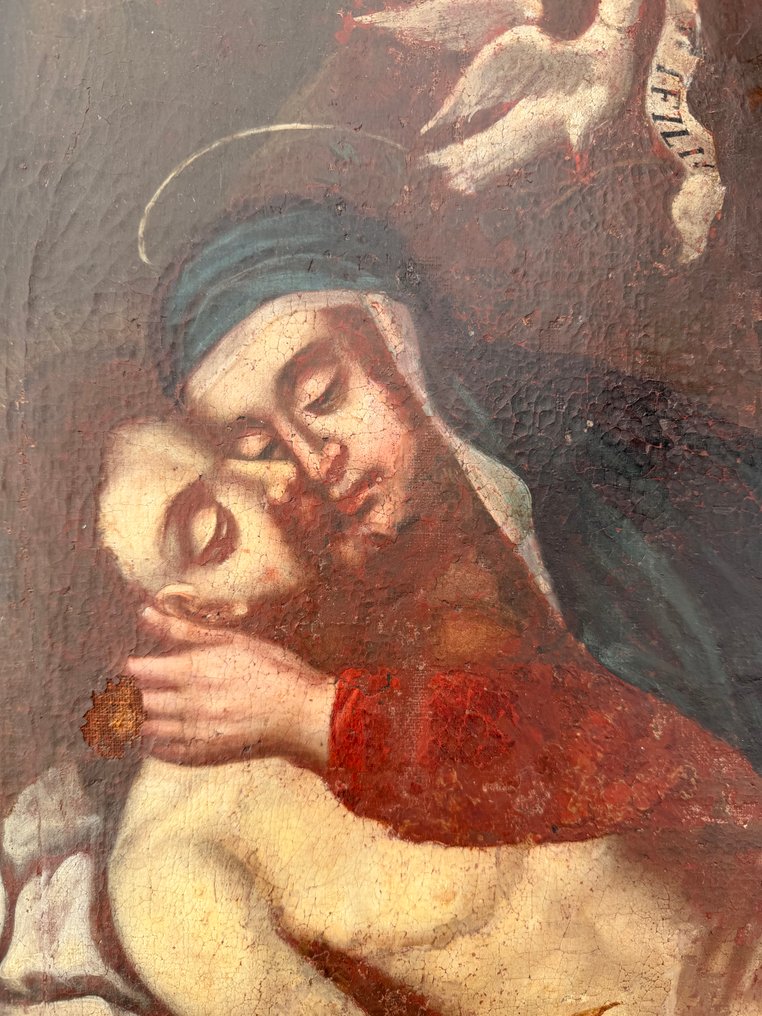
Christ: He is depicted lying on a white cloth or shroud. His upper body is bare, with only a loincloth around his hips. The physiognomy of the body, especially the muscular depiction and the slightly ashen complexion, reflects the hardships of the Passion. His head rests in Mary's arm, with closed eyes signaling his death.
Mary: The Mother of God wears a dark, deep red garment (symbolic of passion and maternal love) and a dark veil. She is adorned with a simple halo. Her posture is characterized by deep yet composed meekness and sorrow. The embrace of her son's head in this way intensifies the motif of maternal pain (Mater Dolorosa) to Mater Amabilis (loving mother) beyond death.
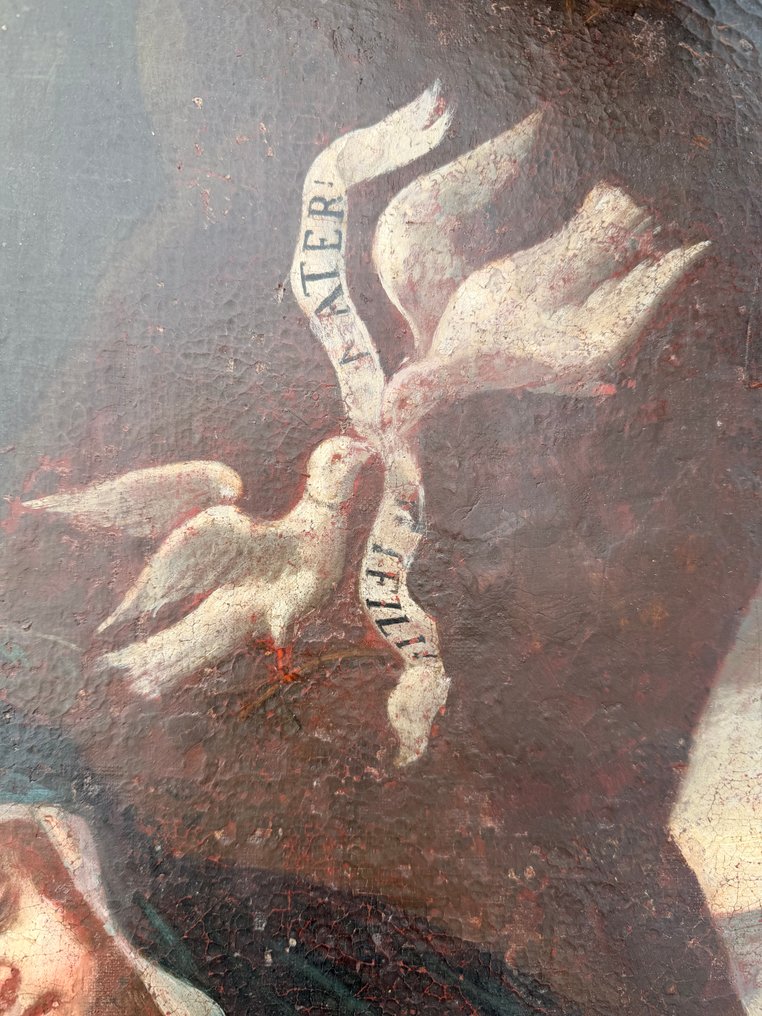
In the upper part of the image, dramatic clouds dominate. A celestial appearance is recognizable: two bright, flowing bands held by a dark figure (possibly an angel or a symbolic presence). On one of these bands, there is a poorly readable inscription cartouche, which in the context of mourning may contain the initials I.N.R.I. or a Latin verse from the Passion story.
The image functions as a deeply moving devotional image that highlights the human tragedy of Christ's suffering and Mary's pain.
Technique and painting style
The painting is executed in oil on canvas. Canvas as a support allowed for a more flexible and often quicker painting style during this period than the wooden panel.
Incarnate: The Incarnate of Christ is rendered in pale, subtly modeled gray-brown tones that depict the state of the corpse. The transitions are finely glazed to achieve a natural plasticity.
Maria's deep red garment features rich tones. The draping is voluminous and is highlighted by the use of lighter highlights and dark, glazing shadow areas, indicating the style of the early Baroque. The white/grayish shroud creates a clear light-dark contrast.
Background: The background is extremely dark (almost black-brown), making the figures appear more monumental and dramatic. It serves as an abstract, transcendent backdrop.
Painting style: The execution is energetic and opaque. The use of chiaroscuro (strong light-dark contrasts) is characteristic to enhance the emotion and drama of the scene. The canvas texture could influence the visible texture of the painting in some areas.
Composition
The composition is closed and focused on the central group of figures.
Central diagonal: The two figures are arranged along a slanted axis, which gives the scene a dynamic tension that, in the Crucifixion scene, transitions into a peaceful silence.
Intimacy and focus: The frame is tightly chosen to maximize the emotional interaction of the heads and bodies. The embrace is the emotional and visual focal point of the work.
Color iconography: The juxtaposition of red (maternal love/passion) and the cold tones of the corpse and the cloth enhances the theological and emotional message.
Framing: The edge of the frame also encloses the motif and enhances the meditative character of the devotional image.
Stylistic classification
The work is to be classified as belonging to the German-speaking or Upper Italian early Baroque (17th century).
Influences: The emotional intensity, the vivid naturalism, and the dramatic use of light demonstrate influences from the northern Alpine successors of late Mannerism and early Baroque, particularly the schools that adapted Italian chiaroscuro.
Geographical context: Such representations aimed at emotional devotion were very popular in the Catholic regions of Central Europe (Bavaria, Austria, Bohemia, South Tyrol) during the Counter-Reformation and were often created in smaller, portable formats (also on canvas) for private piety.
Framing
The picture is framed by a historical border with a characteristic, rounded top edge. The dark color of the frame (black or dark brown) provides a strong visual contrast to the scene and enhances the dignity and seriousness of the depiction.
Condition
The condition is good for its age.
Canvas surface: The canvas shows the typical age craquelure. Doubling (stabilization by stretching onto a second canvas or panel) is likely in works on canvas of this age.
Colorfulness: Overall, the painting has been darkened, which enhances its profound, nighttime atmosphere.
Authenticity: The painting is to be regarded in its substance as an original work from the early 17th century. Minor retouches and conservation work are common.
The picture has an authentic patina and is very impressive despite the signs of aging.
art historical significance
The painting has high artistic and cultural-historical value as a document of Baroque devotional practices.
Emotional Theology: The departure from the static Pietà to the intimate embrace reflects the emphasis on the emotional connection to Christ and Mary, which was a central element of the piety of the Counter-Reformation.
Chiaroscuro as a message: the targeted use of light and shadow serves not only aesthetics but also to focus on the essential – sacrifice and pain – and promotes contemplation.
Transcendence: The dark clouds and the celestial inscription visibly connect earthly suffering with the divine, eternal dimension.
Conclusion
The present oil painting on canvas is an outstanding, emotionally profound example of an early Baroque devotional image of the mourning of Christ. It combines:
Art-historical quality in composition and painting technique.
Theological depth in the depiction of human suffering and maternal love.
Cultural-historical relevance as a testimony to the intensified piety culture of the early 17th century.
Summary for auction context (short text, 5–6 sentences).
Oil painting on canvas, mounted on wood, with a bow frame, German-speaking / Upper Italian early Baroque, circa 1600–1630. Depicted is an intimate Deposition of Christ (Pietà): Mary holds her dead son in a gesture of deep maternal love. The painting style is characterized by dramatic chiaroscuro and plastic modeling, typical of the early Baroque. In the upper area, a heavenly apparition with an inscription alludes to salvation. The work is an expressive devotional image that combines human tragedy and Christian hope. Well preserved for its age, of high art and cultural historical value.
Title
The Holy Embrace: Lamentation of Christ / Compassion of the Madonna (Iconographic type of Mater Amabilis or Pietà)
Object
Oil painting on canvas, stretched and framed in a rounded antique-style frame. Dimensions: approximately 50cm x 69cm. Measurements were taken using the Apple iPhone Measure App and may vary slightly.
German-speaking area, especially Austria or Upper Italy/South Tyrol. Dating: around 1600–1630. Unsigned.
Representation
The painting depicts an intimate, dark-toned composition of two closely embracing figures: Jesus Christ (the deceased) and Mary, his mother (the mourner).
Christ: He is depicted lying on a white cloth or shroud. His upper body is bare, with only a loincloth around his hips. The physiognomy of the body, especially the muscular depiction and the slightly ashen complexion, reflects the hardships of the Passion. His head rests in Mary's arm, with closed eyes signaling his death.
Mary: The Mother of God wears a dark, deep red garment (symbolic of passion and maternal love) and a dark veil. She is adorned with a simple halo. Her posture is characterized by deep yet composed meekness and sorrow. The embrace of her son's head in this way intensifies the motif of maternal pain (Mater Dolorosa) to Mater Amabilis (loving mother) beyond death.
In the upper part of the image, dramatic clouds dominate. A celestial appearance is recognizable: two bright, flowing bands held by a dark figure (possibly an angel or a symbolic presence). On one of these bands, there is a poorly readable inscription cartouche, which in the context of mourning may contain the initials I.N.R.I. or a Latin verse from the Passion story.
The image functions as a deeply moving devotional image that highlights the human tragedy of Christ's suffering and Mary's pain.
Technique and painting style
The painting is executed in oil on canvas. Canvas as a support allowed for a more flexible and often quicker painting style during this period than the wooden panel.
Incarnate: The Incarnate of Christ is rendered in pale, subtly modeled gray-brown tones that depict the state of the corpse. The transitions are finely glazed to achieve a natural plasticity.
Maria's deep red garment features rich tones. The draping is voluminous and is highlighted by the use of lighter highlights and dark, glazing shadow areas, indicating the style of the early Baroque. The white/grayish shroud creates a clear light-dark contrast.
Background: The background is extremely dark (almost black-brown), making the figures appear more monumental and dramatic. It serves as an abstract, transcendent backdrop.
Painting style: The execution is energetic and opaque. The use of chiaroscuro (strong light-dark contrasts) is characteristic to enhance the emotion and drama of the scene. The canvas texture could influence the visible texture of the painting in some areas.
Composition
The composition is closed and focused on the central group of figures.
Central diagonal: The two figures are arranged along a slanted axis, which gives the scene a dynamic tension that, in the Crucifixion scene, transitions into a peaceful silence.
Intimacy and focus: The frame is tightly chosen to maximize the emotional interaction of the heads and bodies. The embrace is the emotional and visual focal point of the work.
Color iconography: The juxtaposition of red (maternal love/passion) and the cold tones of the corpse and the cloth enhances the theological and emotional message.
Framing: The edge of the frame also encloses the motif and enhances the meditative character of the devotional image.
Stylistic classification
The work is to be classified as belonging to the German-speaking or Upper Italian early Baroque (17th century).
Influences: The emotional intensity, the vivid naturalism, and the dramatic use of light demonstrate influences from the northern Alpine successors of late Mannerism and early Baroque, particularly the schools that adapted Italian chiaroscuro.
Geographical context: Such representations aimed at emotional devotion were very popular in the Catholic regions of Central Europe (Bavaria, Austria, Bohemia, South Tyrol) during the Counter-Reformation and were often created in smaller, portable formats (also on canvas) for private piety.
Framing
The picture is framed by a historical border with a characteristic, rounded top edge. The dark color of the frame (black or dark brown) provides a strong visual contrast to the scene and enhances the dignity and seriousness of the depiction.
Condition
The condition is good for its age.
Canvas surface: The canvas shows the typical age craquelure. Doubling (stabilization by stretching onto a second canvas or panel) is likely in works on canvas of this age.
Colorfulness: Overall, the painting has been darkened, which enhances its profound, nighttime atmosphere.
Authenticity: The painting is to be regarded in its substance as an original work from the early 17th century. Minor retouches and conservation work are common.
The picture has an authentic patina and is very impressive despite the signs of aging.
art historical significance
The painting has high artistic and cultural-historical value as a document of Baroque devotional practices.
Emotional Theology: The departure from the static Pietà to the intimate embrace reflects the emphasis on the emotional connection to Christ and Mary, which was a central element of the piety of the Counter-Reformation.
Chiaroscuro as a message: the targeted use of light and shadow serves not only aesthetics but also to focus on the essential – sacrifice and pain – and promotes contemplation.
Transcendence: The dark clouds and the celestial inscription visibly connect earthly suffering with the divine, eternal dimension.
Conclusion
The present oil painting on canvas is an outstanding, emotionally profound example of an early Baroque devotional image of the mourning of Christ. It combines:
Art-historical quality in composition and painting technique.
Theological depth in the depiction of human suffering and maternal love.
Cultural-historical relevance as a testimony to the intensified piety culture of the early 17th century.
Summary for auction context (short text, 5–6 sentences).
Oil painting on canvas, mounted on wood, with a bow frame, German-speaking / Upper Italian early Baroque, circa 1600–1630. Depicted is an intimate Deposition of Christ (Pietà): Mary holds her dead son in a gesture of deep maternal love. The painting style is characterized by dramatic chiaroscuro and plastic modeling, typical of the early Baroque. In the upper area, a heavenly apparition with an inscription alludes to salvation. The work is an expressive devotional image that combines human tragedy and Christian hope. Well preserved for its age, of high art and cultural historical value.
Details
Artist
Italian school (XVII)
Sold with frame
Yes
Title of artwork
Pietà
Technique
Oil painting
Signature
Not signed
Country of Origin
Italy
Year
1600
Condition
Good condition
Height
70 cm
Width
50 cm
Depiction/Theme
Religion
Style
Baroque
Period
17th century
Sold by
