Geza Perneczky (1936) - Untitled



02
dagen
14
uren
01
minuut
19
seconden
Huidig bod
€ 65
Minimumprijs niet bereikt

Expert
Geselecteerd door Giulia Couzzi
Master in Innovatie en Organisatie van Cultuur en Kunst, tien jaar ervaring met Italiaanse kunst.
Geschatte waarde € 1.400 - € 1.800
26 andere personen volgen dit object
 Bieder 5089 Bieder 5089 | € 65 | |
|---|---|---|
 Bieder 5461 Bieder 5461 | € 60 | |
| Bieder 5089 | € 55 | |
Catawiki Kopersbescherming
Je betaling is veilig bij ons totdat je het object hebt ontvangen.Bekijk details
Trustpilot 4.4 | 124046 reviews
Beoordeeld als "Uitstekend" op Trustpilot.
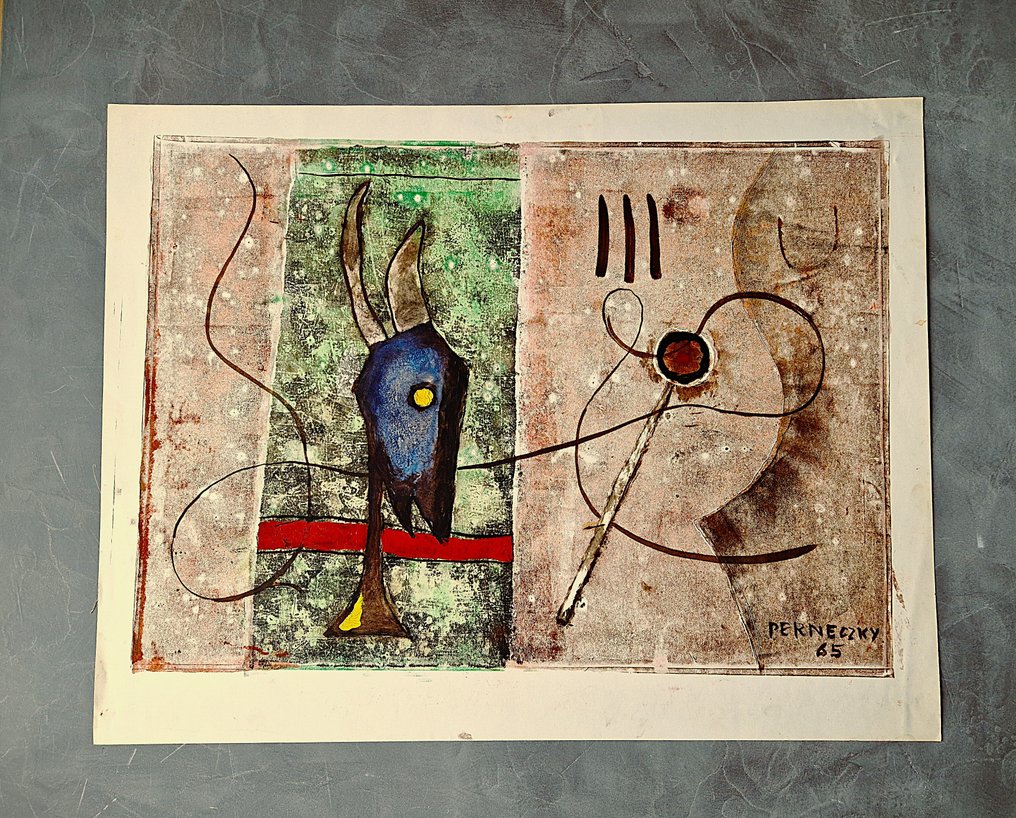
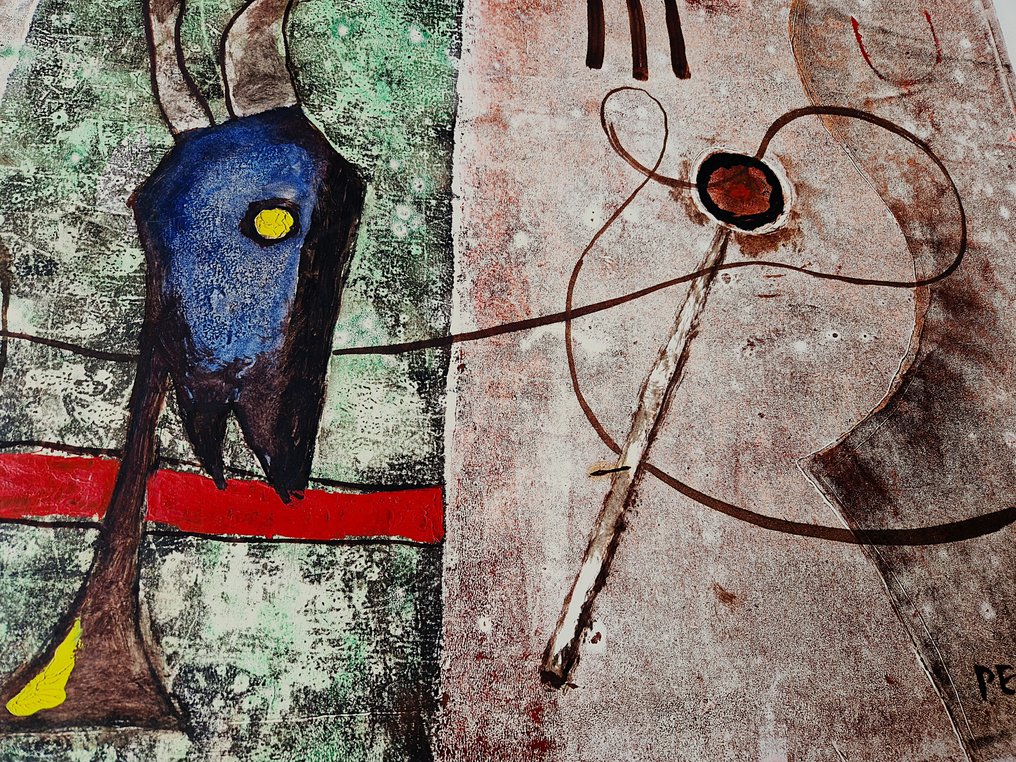
Geza Perneczky (1936, Keszthely, Hongarije) maakte een losse blad tekening met gemengde techniek (gouache, aquarel, verf en inkt) uit 1965, bladmaat 50,5 x 65 cm, gesigneerd rechtsonder met gouache, Origineel, Hongarije.
AI-gegenereerde samenvatting
Beschrijving van de verkoper
Kunstenaar: Geza PERNECZKY (1936- KESZTHELY HUNGARY)
Medium: gemengde techniek (gouache, aquarel, verf, inkt)
Datering: 1965
Genummerd:
Gesigneerd: met gouache rechtsonder
Conditie: In goede staat
Getiteld: untitled
losbladig - bladmaat 50 x 65 cm
Géza Perneczky (1936, Keszthely) is one of the Hungarian Neo-Avant-garde conceptual art's key protagonists.
In 1957 he graduated from the piano and choirmaster department at the Bartók Béla Music Academy in Budapest. From 1957 to 1962 he studied art history and Hungarian language and literature at the Loránd Eötvös Science University (ELTE) in Budapest. From 1962 on he was an editor at the Hungary Art Publishing House and worked as an art critic.
Perneczky's work can be divided into several categories, the most prominent being conceptual photography. He created artists' books between 1973 and 1974. He would distribute the artists' books in A4 folders with eight works on sheets on paper. His use of rubber stamps is seen in his conceptual works created mostly on A4 sheets of paper.
Some of his photographic series include Identification Programme (1971), Concepts Like Commentary (1971), Art Balls (1971), the Yes-No series of works (1971 – 1972), Art Bubble (1972), Snail Action (1972) and others. Perneczky's use of mirrors is constitutive for his photographic work, which at the same time represents a mirror image of art in its time. From 1987 to 1994 Perneczky created The Story of the Colorful Ribbons, a series of conceptual book-objects made from wood, cardboard and ribbons. From 1984 he became increasingly interested in painting, creating a large body of works titled String Pictures (on canvas, paper, and woodworks).
In 1970, he moved to Cologne. From 1973 he took part more intensively in the Post-Fluxus movements, created Stamp Art, Mail Art, Artist's Books.
Kunstenaar: Geza PERNECZKY (1936- KESZTHELY HUNGARY)
Medium: gemengde techniek (gouache, aquarel, verf, inkt)
Datering: 1965
Genummerd:
Gesigneerd: met gouache rechtsonder
Conditie: In goede staat
Getiteld: untitled
losbladig - bladmaat 50 x 65 cm
Géza Perneczky (1936, Keszthely) is one of the Hungarian Neo-Avant-garde conceptual art's key protagonists.
In 1957 he graduated from the piano and choirmaster department at the Bartók Béla Music Academy in Budapest. From 1957 to 1962 he studied art history and Hungarian language and literature at the Loránd Eötvös Science University (ELTE) in Budapest. From 1962 on he was an editor at the Hungary Art Publishing House and worked as an art critic.
Perneczky's work can be divided into several categories, the most prominent being conceptual photography. He created artists' books between 1973 and 1974. He would distribute the artists' books in A4 folders with eight works on sheets on paper. His use of rubber stamps is seen in his conceptual works created mostly on A4 sheets of paper.
Some of his photographic series include Identification Programme (1971), Concepts Like Commentary (1971), Art Balls (1971), the Yes-No series of works (1971 – 1972), Art Bubble (1972), Snail Action (1972) and others. Perneczky's use of mirrors is constitutive for his photographic work, which at the same time represents a mirror image of art in its time. From 1987 to 1994 Perneczky created The Story of the Colorful Ribbons, a series of conceptual book-objects made from wood, cardboard and ribbons. From 1984 he became increasingly interested in painting, creating a large body of works titled String Pictures (on canvas, paper, and woodworks).
In 1970, he moved to Cologne. From 1973 he took part more intensively in the Post-Fluxus movements, created Stamp Art, Mail Art, Artist's Books.
Details
Kunstenaar
Geza Perneczky (1936)
Aangeboden met lijst
Nee
Verkocht door
Eigenaar of wederverkoper
Editie
Origineel
Titel van kunstwerk
Untitled
Techniek
Gemengde techniek
Signatuur
Gesigneerd
Land van herkomst
Hongarije
Jaar
1965
Staat
In goede staat
Kleur
Blauw, Bruin, Geel, Groen, Rood
Hoogte
50,5 cm
Breedte
65 cm
Gewicht
200 g
Stijl
Abstract
Periode
1960-1970
Verkocht door
