Nr 102572279

Sprzedane
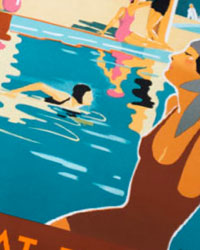
Alexander Calder - "Fetes III" & "Arbre fruitier" - Lata 70.
Ostateczna oferta
€ 55
Bez ceny minimalnej
10 tygodni temu

Alexander Calder - "Fetes III" & "Arbre fruitier" - Lata 70.

Two original lithographs by Alexander Calder. 1. Lithograph titled "Fetes III". This lithograph was produced in 1971 in Paris by Maeght Editeur. Color lithograph on vellum paper 38 x 28 cm 1971 Provenance This piece was acquired from a New York estate. 2. Lithograph titled "Arbre fruitier". This lithograph was produced in 1971 in Paris by Maeght Editeur. Lithograph on vellum paper 38 x 28 cm 1971 Bio Alexander Calder was born July 22, 1898, in Lawnton, Pennsylvania, into a family of artists. In 1919, he received an engineering degree from Stevens Institute of Technology, Hoboken. Calder attended the Art Students League, New York, from 1923 to 1926, studying briefly with Thomas Hart Benton and John Sloan, among others. As a freelance artist for the National Police Gazette in 1925, he spent two weeks sketching at the circus; his fascination with the subject dates from this time. He also made his first sculpture in 1925; the following year he made several constructions of animals and figures with wire and wood. Calder's first exhibition of paintings took place in 1926 at the Artist's Gallery, New York. Later that year, he went to Paris and attended the Académie de la Grande Chaumière. In Paris, he met Stanley William Hayter, exhibited at the 1926 Salon des Indépendants, and in 1927 began giving performances of his miniature circus. The first show of his wire animals and caricature portraits was held at the Weyhe Gallery, New York, in 1928. That same year, he met Joan Miro, who became his lifelong friend. Subsequently, Calder divided his time between France and the United States. In 1929, the Galerie Billiet gave him his first solo show in Paris. He met Frederick Kiesler, Fernand Léger, and Theo van Doesburg and visited Piet Mondrian's studio in 1930. Calder began to experiment with abstract sculpture at this time and in 1931 and 1932 introduced moving parts into his work. These moving sculptures were called "mobiles"; the stationary constructions were to be named "stabiles." He exhibited with the Abstraction-Création group in Paris in 1933. In 1943, the Museum of Modern Art, New York, gave him a solo exhibition. During the 1950s, Calder traveled widely and executed Towers (wall mobiles) and Gongs (sound mobiles). He won the Grand Prize for Sculpture at the 1952 Venice Biennale. Late in the decade, the artist worked extensively with gouache; from this period, he executed numerous major public commissions. In 1964-65, the Solomon R. Guggenheim Museum, New York, presented a Calder retrospective. He began the Totems in 1966 and the Animobiles in 1971; both are variations on the standing mobile. A Calder exhibition was held at the Whitney Museum of American Art, New York, in 1976. Calder died November 11, 1976, in New York.

Nr 102572279

Sprzedane
Alexander Calder - "Fetes III" & "Arbre fruitier" - Lata 70.

Alexander Calder - "Fetes III" & "Arbre fruitier" - Lata 70.

Two original lithographs by Alexander Calder.

1.
Lithograph titled "Fetes III".

This lithograph was produced in 1971 in Paris by Maeght Editeur.

Color lithograph on vellum paper

38 x 28 cm

1971

Provenance
This piece was acquired from a New York estate.


2.
Lithograph titled "Arbre fruitier".

This lithograph was produced in 1971 in Paris by Maeght Editeur.

Lithograph on vellum paper

38 x 28 cm

1971


Bio
Alexander Calder was born July 22, 1898, in Lawnton, Pennsylvania, into a family of artists. In 1919, he received an engineering degree from Stevens Institute of Technology, Hoboken. Calder attended the Art Students League, New York, from 1923 to 1926, studying briefly with Thomas Hart Benton and John Sloan, among others. As a freelance artist for the National Police Gazette in 1925, he spent two weeks sketching at the circus; his fascination with the subject dates from this time. He also made his first sculpture in 1925; the following year he made several constructions of animals and figures with wire and wood. Calder's first exhibition of paintings took place in 1926 at the Artist's Gallery, New York. Later that year, he went to Paris and attended the Académie de la Grande Chaumière. In Paris, he met Stanley William Hayter, exhibited at the 1926 Salon des Indépendants, and in 1927 began giving performances of his miniature circus. The first show of his wire animals and caricature portraits was held at the Weyhe Gallery, New York, in 1928. That same year, he met Joan Miro, who became his lifelong friend. Subsequently, Calder divided his time between France and the United States. In 1929, the Galerie Billiet gave him his first solo show in Paris. He met Frederick Kiesler, Fernand Léger, and Theo van Doesburg and visited Piet Mondrian's studio in 1930. Calder began to experiment with abstract sculpture at this time and in 1931 and 1932 introduced moving parts into his work. These moving sculptures were called "mobiles"; the stationary constructions were to be named "stabiles." He exhibited with the Abstraction-Création group in Paris in 1933. In 1943, the Museum of Modern Art, New York, gave him a solo exhibition. During the 1950s, Calder traveled widely and executed Towers (wall mobiles) and Gongs (sound mobiles). He won the Grand Prize for Sculpture at the 1952 Venice Biennale. Late in the decade, the artist worked extensively with gouache; from this period, he executed numerous major public commissions. In 1964-65, the Solomon R. Guggenheim Museum, New York, presented a Calder retrospective. He began the Totems in 1966 and the Animobiles in 1971; both are variations on the standing mobile. A Calder exhibition was held at the Whitney Museum of American Art, New York, in 1976. Calder died November 11, 1976, in New York.

Ostateczna oferta
€ 55
Bez ceny minimalnej
Juan Antonio Rodríguez
Ekspert
Estymacja  € 150 - € 200

Podobne przedmioty

Dla Ciebie w

Plakaty i dekoracje ścienne

Ustaw alert wyszukiwania
Ustaw alert wyszukiwania, aby otrzymywać powiadomienia o nowych dopasowaniach.

Ten przedmiot został zaprezentowany w


Jak kupować w serwisie Catawiki

Dowiedz się więcej o naszej ochronie nabywców

      1. Odkryj coś wyjątkowego

      Przeglądaj tysiące wyjątkowych przedmiotów wybranych przez ekspertów. Zobacz zdjęcia, szczegóły i wartość szacunkową każdego wyjątkowego przedmiotu. 

      2. Złóż najwyższą ofertę

      Znajdź coś, co Ci się podoba i złóż najwyższą ofertę. Możesz śledzić aukcję do końca lub pozwolić naszemu systemowi licytować za Ciebie. Wszystko, co musisz zrobić, to ustawić ofertę na maksymalną kwotę, którą planujesz wydać. 

      3. Dokonaj bezpiecznej płatności

      Zapłać za swój wyjątkowy przedmiot, a my zabezpieczymy Twoją płatność, dopóki Twój przedmiot nie dotrze bezpiecznie do Ciebie. Używamy zaufanego systemu płatności do obsługi wszystkich transakcji. 

Masz coś podobnego do sprzedania?

Niezależnie od tego, czy dopiero zaczynasz przygodę z aukcjami internetowymi, czy sprzedajesz już profesjonalnie, możemy pomóc Ci sprzedać Twoje wyjątkowe przedmioty za wyższe kwoty, tak abyś mógł zarobić więcej.

Sprzedaj swój przedmiot