Nr 98253721

Sprzedane
Finlandia - Nagroda - Freedom Cross lV Class - 1941
Ostateczna oferta
€ 130
9 tygodni temu

Finlandia - Nagroda - Freedom Cross lV Class - 1941

Cross of the Order of the Cross of Liberty, 4th class (degree) for military merit on a mourning ribbon (for those who died in the war), 1941, Finland. Description: The Order of the Cross of Liberty, 4th class (class) for military merit on a mourning ribbon (for those killed in war) with the date 1941. Original name in Finnish: Vapaudenristin ritarikunta. The Order of the Cross of Liberty was established on 4 March 1918 on the initiative of the Commander-in-Chief of the Finnish Armed Forces, General Baron Carl Gustaf Emil Mannerheim (1867–1951). It is Finland's highest award. In total, the Order had (with exceptions in the form of additions) seven classes: Grand Cross of the Order of the Cross of Liberty with Star (worn on a ribbon over the shoulder and on the chest). Cross of Liberty, 1st class with Star (worn around the neck on a ribbon and on the chest). Cross of Liberty, 2nd class (chest). Cross of Liberty, 3rd class (chest). Cross of Liberty, 4th class (chest). Medal of Freedom, 1st class (chest clasp). Medal for Merit, 1st class (worn on the chest). Medal of Freedom, 2nd class (chest clasp). Medal for Merit, 2nd class (worn on the chest). The degrees (classes) were further divided into the Order's insignia: for military merit during wartime, for military merit in peacetime, and for civilian merit. There were also different types of insignia for medical personnel and the relatives of those killed in combat. Separately, there are the so-called " Mannerheim Crosses ," consisting of two classes (established on July 22, 1941). The crosses bear various dates of Finland's wars with the enemy : 1918, 1939, and 1941. Clasps for bravery during combat and miniature versions of the awards were also introduced. The design of the award was developed by the Finnish artist of Swedish origin Akseli Waldemar Gallen-Kallela (years of life; 1865-1931; including a pendant with the image of hands with a sword and sabre ). Current award status: active (being awarded). This model of the Cross of Liberty, 4th class, was awarded to relatives of fallen soldiers and officers of the Finnish Army (the so-called “Cross of Sorrow”) during the Soviet-Finnish War (June 25, 1941 to September 19, 1944) and the Lapland War (against the German occupation in northern Finland, the province of Lapland; September 15, 1944 – April 27, 1945). Production year 1941-1945. Guaranteed original, genuine. Condition: good collectible condition, slight wear on the tape. Material and manufacturing technique: casting, iron, stamping, blackening (blueing), drawing, fabric, thread, sewing, light metal alloy. The cross dimensions, excluding the mounting eye, are 40 x 40 mm. The badge thickness is 1 mm. The ribbon width is 30 mm. Description: made in the form of an equal-armed cross (a variant of the Patti Cross) with an eyelet, an intermediate ring, a pendant and a ribbon. Obverse: In the central part of the cross is the heraldic " Finnish Rose ." The heraldic symbol is branched off in the form of four hooks, which together form the ancient Finnish pagan symbol of the sun's movement—the swastika. Reverse: in the center is the image of the date - 1941 (the date of the beginning of the Soviet-Finnish War). Pendant: an image of two hands, holding a straight sword and a curved sabre, clad in plate and chainmail armor, in a slashing motion, symbolizing the famous confrontation between enlightened Europe and barbaric Asia (by Asia, the Finnish heraldist meant the USSR, and by Europe, Finland). The frame of the composition consists of a laurel wreath of the victors—heroes. Ribbon: made in the shape of a bow, moire, black mourning color. For illustration Only: Photographs of Finnish sniper and Finnish Army Junior Lieutenant Simo Häyhä (1905-2002), who was awarded the Order of Liberty Crosses, 3rd and 4th classes, during combat operations with the USSR. The photograph shows a healed wound sustained when an explosive bullet struck the left side of his face. During combat operations with the Red Army of the USSR, the sniper killed over 500 people (according to other sources, even more). For his skillful actions during the Winter War (November 30, 1939 – March 13, 1940) with the USSR, Simo Häyhä earned the nickname " White Death . " For comparison, the famous " Lady Death " , aka sniper, Major of the Red Army of the USSR Lyudmila Mikhailovna Pavlichenko (years of life; 1916-1974) destroyed 309 Nazi soldiers during the Great Patriotic War (1941-1945). Careful Packing and Free Shipping from JMEDALS -Jerusalem !!!

Nr 98253721

Sprzedane
Finlandia - Nagroda - Freedom Cross lV Class - 1941

Finlandia - Nagroda - Freedom Cross lV Class - 1941

Cross of the Order of the Cross of Liberty, 4th class (degree) for military merit on a mourning ribbon (for those who died in the war), 1941, Finland.
Description:

The Order of the Cross of Liberty, 4th class (class) for military merit on a mourning ribbon (for those killed in war) with the date 1941. Original name in Finnish: Vapaudenristin ritarikunta. The Order of the Cross of Liberty was established on 4 March 1918 on the initiative of the Commander-in-Chief of the Finnish Armed Forces, General Baron Carl Gustaf Emil Mannerheim (1867–1951). It is Finland's highest award.


In total, the Order had (with exceptions in the form of additions) seven classes:

Grand Cross of the Order of the Cross of Liberty with Star (worn on a ribbon over the shoulder and on the chest).

Cross of Liberty, 1st class with Star (worn around the neck on a ribbon and on the chest).

Cross of Liberty, 2nd class (chest).

Cross of Liberty, 3rd class (chest).

Cross of Liberty, 4th class (chest).

Medal of Freedom, 1st class (chest clasp).

Medal for Merit, 1st class (worn on the chest).

Medal of Freedom, 2nd class (chest clasp).

Medal for Merit, 2nd class (worn on the chest).

The degrees (classes) were further divided into the Order's insignia: for military merit during wartime, for military merit in peacetime, and for civilian merit. There were also different types of insignia for medical personnel and the relatives of those killed in combat. Separately, there are the so-called " Mannerheim Crosses ," consisting of two classes (established on July 22, 1941). The crosses bear various dates of Finland's wars with the enemy : 1918, 1939, and 1941. Clasps for bravery during combat and miniature versions of the awards were also introduced.

The design of the award was developed by the Finnish artist of Swedish origin Akseli Waldemar Gallen-Kallela (years of life; 1865-1931; including a pendant with the image of hands with a sword and sabre ).

Current award status: active (being awarded).

This model of the Cross of Liberty, 4th class, was awarded to relatives of fallen soldiers and officers of the Finnish Army (the so-called “Cross of Sorrow”) during the Soviet-Finnish War (June 25, 1941 to September 19, 1944) and the Lapland War (against the German occupation in northern Finland, the province of Lapland; September 15, 1944 – April 27, 1945).

Production year 1941-1945.

Guaranteed original, genuine.

Condition: good collectible condition, slight wear on the tape.

Material and manufacturing technique: casting, iron, stamping, blackening (blueing), drawing, fabric, thread, sewing, light metal alloy.

The cross dimensions, excluding the mounting eye, are 40 x 40 mm. The badge thickness is 1 mm. The ribbon width is 30 mm.

Description: made in the form of an equal-armed cross (a variant of the Patti Cross) with an eyelet, an intermediate ring, a pendant and a ribbon.

Obverse: In the central part of the cross is the heraldic " Finnish Rose ." The heraldic symbol is branched off in the form of four hooks, which together form the ancient Finnish pagan symbol of the sun's movement—the swastika.


Reverse: in the center is the image of the date - 1941 (the date of the beginning of the Soviet-Finnish War).


Pendant: an image of two hands, holding a straight sword and a curved sabre, clad in plate and chainmail armor, in a slashing motion, symbolizing the famous confrontation between enlightened Europe and barbaric Asia (by Asia, the Finnish heraldist meant the USSR, and by Europe, Finland). The frame of the composition consists of a laurel wreath of the victors—heroes.


Ribbon: made in the shape of a bow, moire, black mourning color.

For illustration Only:
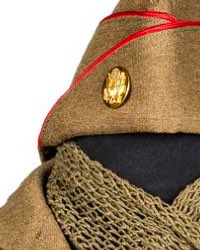
Photographs of Finnish sniper and Finnish Army Junior Lieutenant Simo Häyhä (1905-2002), who was awarded the Order of Liberty Crosses, 3rd and 4th classes, during combat operations with the USSR. The photograph shows a healed wound sustained when an explosive bullet struck the left side of his face. During combat operations with the Red Army of the USSR, the sniper killed over 500 people (according to other sources, even more). For his skillful actions during the Winter War (November 30, 1939 – March 13, 1940) with the USSR, Simo Häyhä earned the nickname " White Death . " For comparison, the famous " Lady Death " , aka sniper, Major of the Red Army of the USSR Lyudmila Mikhailovna Pavlichenko (years of life; 1916-1974) destroyed 309 Nazi soldiers during the Great Patriotic War (1941-1945).

Careful Packing and Free Shipping from JMEDALS -Jerusalem !!!


Ostateczna oferta
€ 130
Edgar Clin
Ekspert
Szacunkowa wartość  € 150 - € 220

Podobne przedmioty

Dla Ciebie w

Pamiątki historyczne

Ustaw alert wyszukiwania
Ustaw alert wyszukiwania, aby otrzymywać powiadomienia o nowych dopasowaniach.

Ten przedmiot został zaprezentowany w


Jak kupować w serwisie Catawiki

Dowiedz się więcej o naszej ochronie nabywców

      1. Odkryj coś wyjątkowego

      Przeglądaj tysiące wyjątkowych przedmiotów wybranych przez ekspertów. Zobacz zdjęcia, szczegóły i wartość szacunkową każdego wyjątkowego przedmiotu. 

      2. Złóż najwyższą ofertę

      Znajdź coś, co Ci się podoba i złóż najwyższą ofertę. Możesz śledzić aukcję do końca lub pozwolić naszemu systemowi licytować za Ciebie. Wszystko, co musisz zrobić, to ustawić ofertę na maksymalną kwotę, którą planujesz wydać. 

      3. Dokonaj bezpiecznej płatności

      Zapłać za swój wyjątkowy przedmiot, a my zabezpieczymy Twoją płatność, dopóki Twój przedmiot nie dotrze bezpiecznie do Ciebie. Używamy zaufanego systemu płatności do obsługi wszystkich transakcji. 

Masz coś podobnego do sprzedania?

Niezależnie od tego, czy dopiero zaczynasz przygodę z aukcjami internetowymi, czy sprzedajesz już profesjonalnie, możemy pomóc Ci sprzedać Twoje wyjątkowe przedmioty za wyższe kwoty, tak abyś mógł zarobić więcej.

Sprzedaj swój przedmiot