N.º 100154021

Vendido
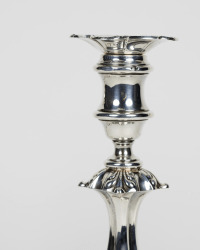
Erik Nordvall, Sundsvall, (1754–1805) - 1779, "Charka" - Chávena - Prata - copo de licor / destilado
Licitação final
€ 55
Há 2 dias

Erik Nordvall, Sundsvall, (1754–1805) - 1779, "Charka" - Chávena - Prata - copo de licor / destilado

This appears to be a small antique Swedish charka (a traditional spirit or liqueur cup), likely from the late 18th century, based on its design, engravings, and the details you provided. I'll break down the identification step by step, drawing from the visible features in the images, standard Swedish silver marking practices of the era, and historical context. Overall Description and Style Shape and Dimensions: The cup has a classic charka form—flared bowl tapering to a narrow stem with a circular foot. Your measurements (height 12 cm, rim diameter 5 cm) are consistent with 18th-century Swedish liqueur cups, which were typically small (1-2 oz capacity) for serving aquavit or other spirits. The stem shows signs of hand-forming, with slight irregularities and a visible seam or join at the base, suggesting manual craftsmanship rather than modern machine production. Material: silver, The weight of 50.4 grams is light for solid silver of this size, indicating thin walls (common in period pieces to conserve metal). If silver, it would likely be .800 or .830 fineness, standard in Sweden at the time. The interior shows some pitting and oxidation, typical of age and use. The bottom view reveals no lining or plating, and the foot has wear from handling. Decoration: The bowl features engraved motifs, including what looks like a stylized insect (possibly a dragonfly or bee) and foliate or vine patterns with dotted borders. These are hand-engraved, not cast, and evoke Rococo influences popular in Scandinavian silverware around 1750-1790. The engravings are shallow and worn, consistent with 200+ years of age. Hallmarks and Maker Identification Date letter: Partially gone, but its V for 1779 Maker's mark: "EN" for a maker Erik Nordvall) Sundsvall town mark Regarding the maker Erik Nordvall: Historical records of Swedish silversmiths from Sundsvall in the 1780s are sparse online, and no direct matches for "Erik Nordvall" appear in hallmark directories or auction archives. Sundsvall had active guilds, and makers like Johan Berg or others are documented, but Nordvall may have been a local artisan not widely recorded. If "E N" is the mark, it could fit (Swedish makers often used initials). Alternatively, it might be a misreading—similar names like "Anders Nordwall" (a 20th-century silversmith) exist, but not from 1780.

N.º 100154021

Vendido
Erik Nordvall, Sundsvall, (1754–1805) - 1779, "Charka" - Chávena - Prata - copo de licor / destilado

Erik Nordvall, Sundsvall, (1754–1805) - 1779, "Charka" - Chávena - Prata - copo de licor / destilado

This appears to be a small antique Swedish charka (a traditional spirit or liqueur cup), likely from the late 18th century, based on its design, engravings, and the details you provided. I'll break down the identification step by step, drawing from the visible features in the images, standard Swedish silver marking practices of the era, and historical context.
Overall Description and Style

Shape and Dimensions: The cup has a classic charka form—flared bowl tapering to a narrow stem with a circular foot. Your measurements (height 12 cm, rim diameter 5 cm) are consistent with 18th-century Swedish liqueur cups, which were typically small (1-2 oz capacity) for serving aquavit or other spirits. The stem shows signs of hand-forming, with slight irregularities and a visible seam or join at the base, suggesting manual craftsmanship rather than modern machine production.
Material: silver, The weight of 50.4 grams is light for solid silver of this size, indicating thin walls (common in period pieces to conserve metal). If silver, it would likely be .800 or .830 fineness, standard in Sweden at the time. The interior shows some pitting and oxidation, typical of age and use. The bottom view reveals no lining or plating, and the foot has wear from handling.
Decoration: The bowl features engraved motifs, including what looks like a stylized insect (possibly a dragonfly or bee) and foliate or vine patterns with dotted borders. These are hand-engraved, not cast, and evoke Rococo influences popular in Scandinavian silverware around 1750-1790. The engravings are shallow and worn, consistent with 200+ years of age.

Hallmarks and Maker Identification

Date letter: Partially gone, but its V for 1779
Maker's mark: "EN" for a maker Erik Nordvall)
Sundsvall town mark

Regarding the maker Erik Nordvall:

Historical records of Swedish silversmiths from Sundsvall in the 1780s are sparse online, and no direct matches for "Erik Nordvall" appear in hallmark directories or auction archives. Sundsvall had active guilds, and makers like Johan Berg or others are documented, but Nordvall may have been a local artisan not widely recorded. If "E N" is the mark, it could fit (Swedish makers often used initials). Alternatively, it might be a misreading—similar names like "Anders Nordwall" (a 20th-century silversmith) exist, but not from 1780.

Licitação final
€ 55
Jeroen Zoetmulder
Especialista
Estimativa  € 150 - € 200

Objetos semelhantes

Para si em

Decoração de prata e ouro

Definir um alerta de pesquisa
Defina um alerta de pesquisa para ser notificado quando surgirem novos resultados.

Este objeto foi mostrado em


Como comprar na Catawiki

Saber mais sobre a nossa proteção do comprador

      1. Descubra algo especial

      Navegue por milhares de objetos especiais selecionados por especialistas. Veja as fotos, os detalhes e o valor estimado de cada objeto especial. 

      2. Faça a licitação vencedora

      Encontre algo que adora e faça a licitação vencedora. Pode acompanhar o leilão até ao fim ou deixar o nosso sistema licitar por si. Apenas tem de definir o valor máximo que está disposto a pagar. 

      3. Faça um pagamento seguro

      Pague o seu objeto especial e mantemos o seu pagamento seguro até o seu objeto chegar são e salvo. Utilizamos um sistema de pagamento confiável para processar todas as transações. 

Tem algo parecido para vender?

Quer tenha entrado agora no mundo dos leilões online ou venda a título profissional, podemos ajudá-lo a ganhar mais pelos seus objetos especiais.

Venda o seu objeto