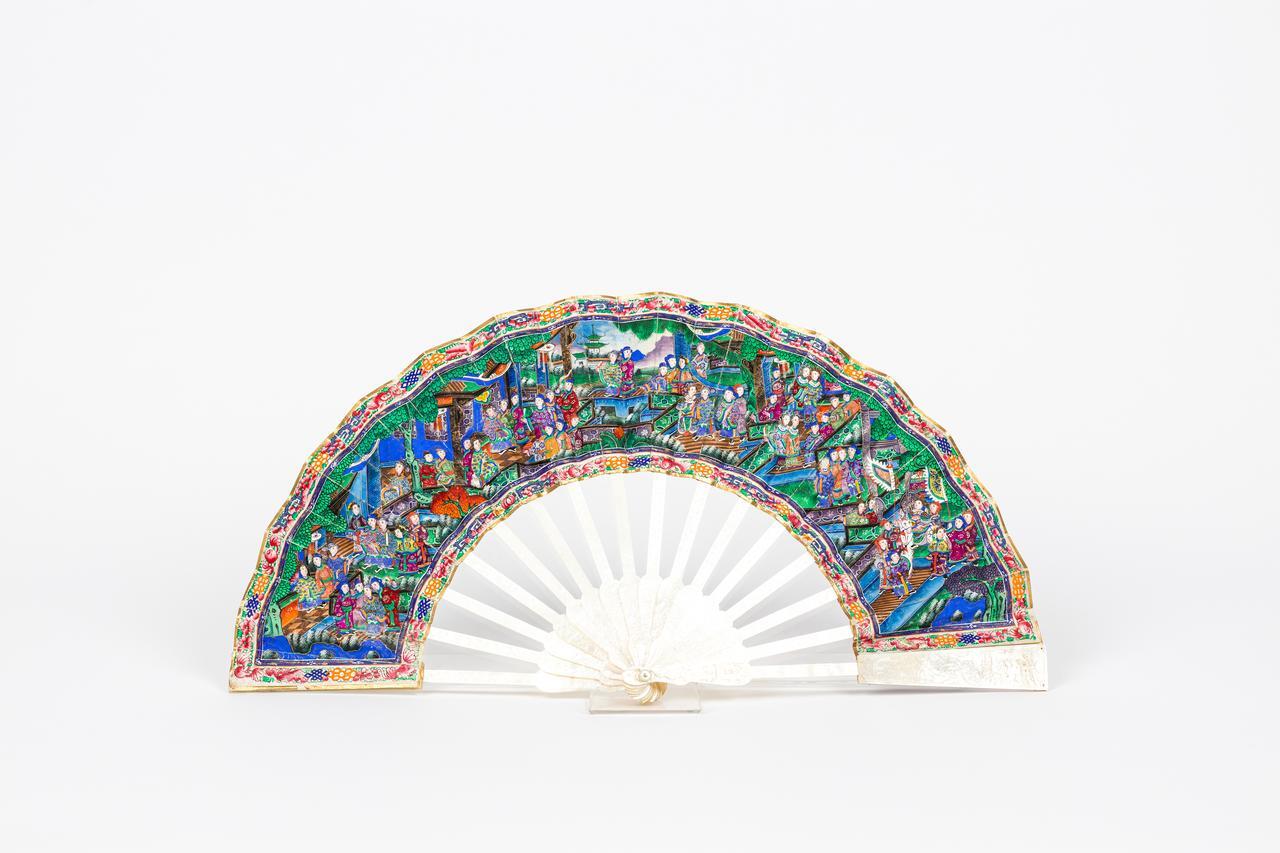
Scrumieră - Smalț, Cupru - Email Canton rar


A studiat arta asiatică și managementul pieței de artă; cercetare în Taipei; experiență în licitații.
Protecția cumpărătorului Catawiki
Plata dvs. este în siguranță la noi până când primiți obiectul. Afișare detalii
Trustpilot 4.4 | 136553 recenzii
Evaluat excelent pe Trustpilot.
Țigăc Canton din email verde cu cupru, provenind din Canton (Guangzhou), China, din anii 1950–1960, cu dimensiunile 21 cm lățime, 1,5 cm înălțime și 1 cm adâncime, în stare excelentă, motiv rar Canton email cu scene de curte.
Descriere de la vânzător
Ashtray, Canton (Guangzhou), China, 1950s–1960s
Canton enamel is a decorative technique that developed in the 18th century in Canton (Guangzhou). It is distinguished by its vibrant colors and meticulously painted floral motifs, birds, and figural scenes on metal or porcelain objects.
This ashtray is decorated with court scenes. The motif of court ladies in Chinese art symbolizes elegance, refinement, and the aristocratic life of the imperial court, evoking the sophistication of court culture and traditional ideals of feminine beauty.
Elegant Chinese ashtrays were often crafted from porcelain, jade, bronze, or lacquer and adorned with traditional motifs such as dragons, phoenixes, peonies, and calligraphy, emphasizing their decorative appeal. During the 20th century, particularly in the Republican period and the early decades of the People's Republic of China, ornate ashtrays became popular furnishings in reception rooms and studies, combining practical function with artistic craftsmanship.
For many decades in China, cigarette smoking played an important role in social relations and etiquette. Offering someone a cigarette was considered a gesture of respect, hospitality, and a means of establishing social connections. Today, however, this custom is gradually fading as awareness of the health risks associated with nicotine and tobacco smoke continues to grow.
Dimensions: 16 × 11 cm.
Ashtray, Canton (Guangzhou), China, 1950s–1960s
Canton enamel is a decorative technique that developed in the 18th century in Canton (Guangzhou). It is distinguished by its vibrant colors and meticulously painted floral motifs, birds, and figural scenes on metal or porcelain objects.
This ashtray is decorated with court scenes. The motif of court ladies in Chinese art symbolizes elegance, refinement, and the aristocratic life of the imperial court, evoking the sophistication of court culture and traditional ideals of feminine beauty.
Elegant Chinese ashtrays were often crafted from porcelain, jade, bronze, or lacquer and adorned with traditional motifs such as dragons, phoenixes, peonies, and calligraphy, emphasizing their decorative appeal. During the 20th century, particularly in the Republican period and the early decades of the People's Republic of China, ornate ashtrays became popular furnishings in reception rooms and studies, combining practical function with artistic craftsmanship.
For many decades in China, cigarette smoking played an important role in social relations and etiquette. Offering someone a cigarette was considered a gesture of respect, hospitality, and a means of establishing social connections. Today, however, this custom is gradually fading as awareness of the health risks associated with nicotine and tobacco smoke continues to grow.
Dimensions: 16 × 11 cm.