Nr 100206275

Inte längre tillgänglig
Etruskiska Keramik OIpe
Budgivning avslutad
12 veckor sedan

Etruskiska Keramik OIpe

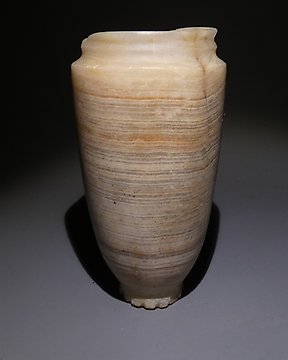
ITEM: Olpe MATERIAL: Pottery CULTURE: Etruscan PERIOD: 4th – 3rd Century B.C DIMENSIONS: 95 mm x 90 mm CONDITION: Good condition PROVENANCE: Ex European private collection, Ex Lakythos S.A.R.L (1987), Ex Galerie Hydra, Geneva, Switzerland (1984) The most distinct and recognizable form of Etruscan pottery is Bucchero (c. 7th to 5th centuries BCE), often considered the "national" pottery of ancient Etruria. This black, high-gloss ceramic is instantly identifiable by its striking, metallic appearance. The unique color was achieved through a process called reduction firing, where the kiln's oxygen supply was drastically restricted. This starvation of oxygen converted the iron oxide in the clay from its natural red to a rich, carbonized black throughout the vessel's fabric. The final, lustrous sheen was attained by diligently burnishing the surface before firing. Bucchero, therefore, served as an affordable imitation of the highly prized metalwork—particularly silver and bronze vessels—used by the Etruscan elite for banquets and as wealthy grave goods. While Bucchero represents an indigenous Etruscan invention, their pottery tradition was significantly shaped by contact with the Greek world, particularly the Greek colonies in Southern Italy. Etruscan potters actively engaged with and imitated the popular painted styles of Greece, producing their own versions of Black-Figure and, later, Red-Figure techniques. However, Etruscan adaptations often retained distinct local characteristics, and their versions of Red-Figure painting (sometimes called "pseudo-Red-Figure") utilized different methods, such as painting lighter figures directly onto a black slip, instead of reserving the red clay. These painted vases, like their Greek models, often featured mythological scenes, animal friezes, or depictions of symposia, and were highly valued and often interred with the dead. Etruscan pottery evolved from the earlier local tradition of Impasto ware, a coarser, reddish-brown clay mixed with impurities like mica or stone, which was hand-made and fired at low temperatures. Impasto was primarily used for utilitarian vessels, like storage jars and cooking pots, but it also served an important funerary role. Early Etruscan funerary urns were often shaped like small huts (hut urns), reflecting the dwellings of the deceased. Throughout the ceramic tradition, from coarse Impasto to the sophisticated Bucchero and the painted vases, Etruscan pottery remained profoundly connected to the funerary context. Vast quantities of fine ceramic vessels were deliberately placed in tombs, providing modern archaeologists with essential insights into Etruscan religious beliefs, daily life, and the elite’s conspicuous consumption. Comes with Certificate of Authenticity and European Union export license If you bid outside European Union and win the item, we must request a new export license to your country and the shipment will delay between 3 - 5 weeks.

Nr 100206275

Inte längre tillgänglig
Etruskiska Keramik OIpe

Etruskiska Keramik OIpe

ITEM: Olpe
MATERIAL: Pottery
CULTURE: Etruscan
PERIOD: 4th – 3rd Century B.C
DIMENSIONS: 95 mm x 90 mm
CONDITION: Good condition
PROVENANCE: Ex European private collection, Ex Lakythos S.A.R.L (1987), Ex Galerie Hydra, Geneva, Switzerland (1984)

The most distinct and recognizable form of Etruscan pottery is Bucchero (c. 7th to 5th centuries BCE), often considered the "national" pottery of ancient Etruria. This black, high-gloss ceramic is instantly identifiable by its striking, metallic appearance. The unique color was achieved through a process called reduction firing, where the kiln's oxygen supply was drastically restricted. This starvation of oxygen converted the iron oxide in the clay from its natural red to a rich, carbonized black throughout the vessel's fabric. The final, lustrous sheen was attained by diligently burnishing the surface before firing. Bucchero, therefore, served as an affordable imitation of the highly prized metalwork—particularly silver and bronze vessels—used by the Etruscan elite for banquets and as wealthy grave goods.

While Bucchero represents an indigenous Etruscan invention, their pottery tradition was significantly shaped by contact with the Greek world, particularly the Greek colonies in Southern Italy. Etruscan potters actively engaged with and imitated the popular painted styles of Greece, producing their own versions of Black-Figure and, later, Red-Figure techniques. However, Etruscan adaptations often retained distinct local characteristics, and their versions of Red-Figure painting (sometimes called "pseudo-Red-Figure") utilized different methods, such as painting lighter figures directly onto a black slip, instead of reserving the red clay. These painted vases, like their Greek models, often featured mythological scenes, animal friezes, or depictions of symposia, and were highly valued and often interred with the dead.

Etruscan pottery evolved from the earlier local tradition of Impasto ware, a coarser, reddish-brown clay mixed with impurities like mica or stone, which was hand-made and fired at low temperatures. Impasto was primarily used for utilitarian vessels, like storage jars and cooking pots, but it also served an important funerary role. Early Etruscan funerary urns were often shaped like small huts (hut urns), reflecting the dwellings of the deceased. Throughout the ceramic tradition, from coarse Impasto to the sophisticated Bucchero and the painted vases, Etruscan pottery remained profoundly connected to the funerary context. Vast quantities of fine ceramic vessels were deliberately placed in tombs, providing modern archaeologists with essential insights into Etruscan religious beliefs, daily life, and the elite’s conspicuous consumption.

Comes with Certificate of Authenticity and European Union export license

If you bid outside European Union and win the item, we must request a new export license to your country and the shipment will delay between 3 - 5 weeks.

Budgivning avslutad
Ruth Garrido Vila
Expert
Uppskattat pris  € 500 - € 650

Liknande objekt

För dig i

Arkeologi

Skapa en sökbevakning
Skapa en sökbevakning för att få ett meddelande när nya matchningar är tillgängliga.

Detta objekt förekom i


Hur du köper på Catawiki

Läs mer om vårt Köparskydd

      1. Upptäck något speciellt

      Bläddra bland tusentals speciella objekt som valts ut av experter. Se foton, detaljer och uppskattat värde för varje speciellt objekt. 

      2. Lägg det högsta budet

      Hitta något du älskar och lägg det högsta budet. Du kan följa auktionen till slutet eller låta vårt system sköta budgivningen åt dig. Allt du behöver göra är att ställa in ett bud på det maximala belopp du vill betala. 

      3. Gör en säker betalning

      Betala för ditt speciella objekt så håller vi din betalning säker tills det anländer välbehållet. Vi använder ett pålitligt betalningssystem för att hantera alla transaktioner. 

Har du något liknande att sälja?

Oavsett om du är ny på onlineauktioner eller säljer professionellt kan vi hjälpa dig att tjäna mer på dina speciella föremål.

Sälj ditt objekt