Nr. 100206269

Nicht mehr verfügbar
Römisches Reich. Philip I (244-249 n.u.Z.). Sestertius Rome - FORTVNA REDVX
Auktion beendet
Vor 2 Tagen

Römisches Reich. Philip I (244-249 n.u.Z.). Sestertius Rome - FORTVNA REDVX

RULER: Philip I 'The Arab' DATE: 244 - 249 A.D DENOMINATION: Sestertius MATERIAL: Bronze, AE SIZE & WEIGHT: 28 mm, 17,6 gr OBVERSE: IMP M IVL PHILIPPVS AVG. Laureate, draped and cuirassed bust right. REVERSE: FORTVNA REDVX / S - C. Fortuna seated left, holding rudder and cornucopia, wheel below seat. REFERENCES: RIC IV.3#?174A, OCRE#?ric.4.ph_i.174A Comes with Certificate of Authenticity and Export Licence. If you are from outside the European Union, we will have to apply for the export licence again for your country, this takes 3 to 5 weeks and has a cost of 5% of the hammer price, this amount will be added to the final invoice. Marcus Julius Philippus, famously known as Philip the Arab (Philippus Arabs), was Roman Emperor from 244 to 249 CE during the turbulent period known as the Crisis of the Third Century. Born around 204 CE in the province of Arabia Petraea (modern-day Syria/Jordan), he was the first Roman emperor to hail from a non-European province, earning his distinctive epithet. His origins are obscure, though he rose from a local equestrian family and advanced rapidly through the military ranks, highlighting a key characteristic of the era where provincial generals increasingly seized power. His brother, Gaius Julius Priscus, also held high office, demonstrating the family’s growing influence. Philip’s ascent to the purple was secured during the Persian campaign of Emperor Gordian III. While serving as the Praetorian Prefect—a position he gained in 243 CE—Philip was instrumental in the logistical failure and subsequent political turmoil that led to Gordian III’s death. Following the mysterious circumstances of the young emperor’s demise in Mesopotamia, Philip was proclaimed emperor by the troops in 244 CE. His first major act was to negotiate a peace treaty with the powerful Sasanian King Shapur I, which, though unpopular in Rome for involving a large indemnity payment and a withdrawal from some eastern territory, allowed Philip to return swiftly to the capital to secure the Senate's confirmation of his rule. The brief reign of Philip is perhaps best remembered for the lavish celebration of Rome's millennium (the 1000th anniversary of its legendary founding) in April 248 CE, an event he commemorated with extensive games, festivals, and special coinage known as the Saeculares Augustorum. This extravagant display was a deliberate attempt to project stability and confidence during a time of extreme insecurity, though the massive spending further strained the empire's already dire finances. Despite his efforts to secure the empire against the Carpi and Germanic tribes on the Danube, his failure to fully satisfy the legions' demands ultimately fueled resentment. In 249 CE, one of his appointed generals, Decius, was proclaimed emperor by the rebellious Danubian army, leading to Philip's defeat and death at the Battle of Verona, ending his brief and crisis-laden reign.

Nr. 100206269

Nicht mehr verfügbar
Römisches Reich. Philip I (244-249 n.u.Z.). Sestertius Rome - FORTVNA REDVX

Römisches Reich. Philip I (244-249 n.u.Z.). Sestertius Rome - FORTVNA REDVX

RULER: Philip I 'The Arab'
DATE: 244 - 249 A.D
DENOMINATION: Sestertius
MATERIAL: Bronze, AE
SIZE & WEIGHT: 28 mm, 17,6 gr
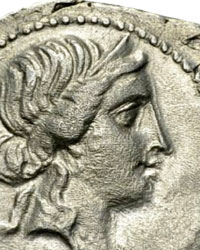
OBVERSE: IMP M IVL PHILIPPVS AVG.
Laureate, draped and cuirassed bust right.
REVERSE: FORTVNA REDVX / S - C.
Fortuna seated left, holding rudder and cornucopia, wheel below seat.
REFERENCES: RIC IV.3#?174A, OCRE#?ric.4.ph_i.174A

Comes with Certificate of Authenticity and Export Licence. If you are from outside the European Union, we will have to apply for the export licence again for your country, this takes 3 to 5 weeks and has a cost of 5% of the hammer price, this amount will be added to the final invoice.

Marcus Julius Philippus, famously known as Philip the Arab (Philippus Arabs), was Roman Emperor from 244 to 249 CE during the turbulent period known as the Crisis of the Third Century. Born around 204 CE in the province of Arabia Petraea (modern-day Syria/Jordan), he was the first Roman emperor to hail from a non-European province, earning his distinctive epithet. His origins are obscure, though he rose from a local equestrian family and advanced rapidly through the military ranks, highlighting a key characteristic of the era where provincial generals increasingly seized power. His brother, Gaius Julius Priscus, also held high office, demonstrating the family’s growing influence.

Philip’s ascent to the purple was secured during the Persian campaign of Emperor Gordian III. While serving as the Praetorian Prefect—a position he gained in 243 CE—Philip was instrumental in the logistical failure and subsequent political turmoil that led to Gordian III’s death. Following the mysterious circumstances of the young emperor’s demise in Mesopotamia, Philip was proclaimed emperor by the troops in 244 CE. His first major act was to negotiate a peace treaty with the powerful Sasanian King Shapur I, which, though unpopular in Rome for involving a large indemnity payment and a withdrawal from some eastern territory, allowed Philip to return swiftly to the capital to secure the Senate's confirmation of his rule.

The brief reign of Philip is perhaps best remembered for the lavish celebration of Rome's millennium (the 1000th anniversary of its legendary founding) in April 248 CE, an event he commemorated with extensive games, festivals, and special coinage known as the Saeculares Augustorum. This extravagant display was a deliberate attempt to project stability and confidence during a time of extreme insecurity, though the massive spending further strained the empire's already dire finances. Despite his efforts to secure the empire against the Carpi and Germanic tribes on the Danube, his failure to fully satisfy the legions' demands ultimately fueled resentment. In 249 CE, one of his appointed generals, Decius, was proclaimed emperor by the rebellious Danubian army, leading to Philip's defeat and death at the Battle of Verona, ending his brief and crisis-laden reign.

Auktion beendet
Carmen Vera Gutiérrez
Experte
Schätzung  € 150 - € 200

Ähnliche Objekte

Für Sie aus der Kategorie

Antike Münzen

Suchalarm einrichten
Richten Sie einen Suchalarm ein, um benachrichtigt zu werden, sobald neue passende Objekte verfügbar sind.

Dieses Objekt wurde vorgestellt in:


So kaufen Sie auf Catawiki

Mehr zum Käuferschutz erfahren

      1. Etwas Besonderes entdecken

      Entdecken Sie in unseren Auktionen Tausende von besonderen Objekten, die von Experten ausgewählt wurden. Sehen Sie sich die Fotos, die ausführliche Beschreibung und den Schätzwert der besonderen Objekte an, die Sie interessieren. 

      2. Höchstgebot abgeben

      Finden Sie etwas, das Sie begeistert, und geben Sie das Höchstgebot ab. Sie können die Auktion bis zum Schluss mitverfolgen oder unser System für Sie bieten lassen. Dazu müssen Sie einfach nur den Maximalbetrag eingeben, den Sie für das jeweilige Objekt ausgeben möchten. 

      3. Sichere Zahlung durchführen

      Bezahlen Sie Ihr besonderes Objekt und wir verwahren Ihre Zahlung, bis Ihr Objekt unversehrt bei Ihnen angekommen ist. Wir wickeln alle Transaktionen mit einem zuverlässigen und sicheren Zahlungssystem ab. 

Haben Sie etwas Ähnliches zu verkaufen?

Unabhängig davon, ob Online-Auktionen Neuland für Sie sind oder ob Sie gewerblich verkaufen – wir helfen Ihnen, mehr mit Ihren besonderen Objekten zu verdienen.

Objekt verkaufen