Nr. 101222790

Nicht mehr verfügbar
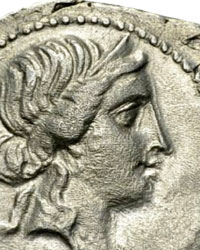
Römische Republik. AE Aes Grave. Uncia 3rd Century B.C
Auktion beendet
Vor 22 min

Römische Republik. AE Aes Grave. Uncia 3rd Century B.C

RULER: AE AES Grave DATE: 3rd Century B.C DENOMINATION: Uncia MATERIAL: Bronze, AE SIZE & WEIGHT: 30 mm x 29 mm, 30 gr OBVERSE: Knucklebone REVERSE: Knucklebone Comes with Certificate of Authenticity The Aes Grave Uncia represents a fascinating evolutionary step in early Roman currency, dating back to the 3rd century BCE. Unlike the struck silver coins of later periods, these were heavy, cast bronze pieces that relied on their physical weight—based on the Libral standard—to establish value. The "Uncia" was a fractional unit representing one-twelfth of a Roman As. These coins are characterized by their rugged, primitive aesthetic and substantial feel in the hand, serving as a reminder of a time when Rome was still a rising Italian power transitioning from a system of raw metal chunks to standardized, circular currency. One of the most iconic and sought-after varieties of this denomination features the knucklebone (or astragalus) as its primary motif. In the ancient world, knucklebones were not merely anatomical remnants but were deeply symbolic, used widely in games of chance and for divination. On the Uncia, the knucklebone is typically rendered in high relief on both the obverse and reverse, often accompanied by a single globule or "pellet" to denote its value as one unit. The choice of the astragalus reflects the everyday cultural fabric of the Roman Republic, blending the mundane world of leisure and gaming with the formal requirements of trade and state-issued money. The casting process used to create these coins resulted in unique, organic textures that are highly prized by collectors today. Because they were poured into clay molds rather than struck with dies, no two specimens are exactly alike; many still retain the "sprue" marks where the molten bronze entered the mold. These heavy bronze pieces eventually gave way to smaller, more practical struck coinage as Rome's economy expanded across the Mediterranean, but the Knucklebone Uncia remains a definitive artifact of the Republic’s early economic identity—a literal and metaphorical heavyweight of ancient numismatics.

Nr. 101222790

Nicht mehr verfügbar
Römische Republik. AE Aes Grave. Uncia 3rd Century B.C

Römische Republik. AE Aes Grave. Uncia 3rd Century B.C

RULER: AE AES Grave
DATE: 3rd Century B.C
DENOMINATION: Uncia
MATERIAL: Bronze, AE
SIZE & WEIGHT: 30 mm x 29 mm, 30 gr
OBVERSE: Knucklebone
REVERSE: Knucklebone

Comes with Certificate of Authenticity

The Aes Grave Uncia represents a fascinating evolutionary step in early Roman currency, dating back to the 3rd century BCE. Unlike the struck silver coins of later periods, these were heavy, cast bronze pieces that relied on their physical weight—based on the Libral standard—to establish value. The "Uncia" was a fractional unit representing one-twelfth of a Roman As. These coins are characterized by their rugged, primitive aesthetic and substantial feel in the hand, serving as a reminder of a time when Rome was still a rising Italian power transitioning from a system of raw metal chunks to standardized, circular currency.

One of the most iconic and sought-after varieties of this denomination features the knucklebone (or astragalus) as its primary motif. In the ancient world, knucklebones were not merely anatomical remnants but were deeply symbolic, used widely in games of chance and for divination. On the Uncia, the knucklebone is typically rendered in high relief on both the obverse and reverse, often accompanied by a single globule or "pellet" to denote its value as one unit. The choice of the astragalus reflects the everyday cultural fabric of the Roman Republic, blending the mundane world of leisure and gaming with the formal requirements of trade and state-issued money.

The casting process used to create these coins resulted in unique, organic textures that are highly prized by collectors today. Because they were poured into clay molds rather than struck with dies, no two specimens are exactly alike; many still retain the "sprue" marks where the molten bronze entered the mold. These heavy bronze pieces eventually gave way to smaller, more practical struck coinage as Rome's economy expanded across the Mediterranean, but the Knucklebone Uncia remains a definitive artifact of the Republic’s early economic identity—a literal and metaphorical heavyweight of ancient numismatics.

Auktion beendet
Carmen Vera Gutiérrez
Experte
Schätzung  € 350 - € 400

Ähnliche Objekte

Für Sie aus der Kategorie

Antike Münzen

Suchalarm einrichten
Richten Sie einen Suchalarm ein, um benachrichtigt zu werden, sobald neue passende Objekte verfügbar sind.

Dieses Objekt wurde vorgestellt in:


So kaufen Sie auf Catawiki

Mehr zum Käuferschutz erfahren

      1. Etwas Besonderes entdecken

      Entdecken Sie in unseren Auktionen Tausende von besonderen Objekten, die von Experten ausgewählt wurden. Sehen Sie sich die Fotos, die ausführliche Beschreibung und den Schätzwert der besonderen Objekte an, die Sie interessieren. 

      2. Höchstgebot abgeben

      Finden Sie etwas, das Sie begeistert, und geben Sie das Höchstgebot ab. Sie können die Auktion bis zum Schluss mitverfolgen oder unser System für Sie bieten lassen. Dazu müssen Sie einfach nur den Maximalbetrag eingeben, den Sie für das jeweilige Objekt ausgeben möchten. 

      3. Sichere Zahlung durchführen

      Bezahlen Sie Ihr besonderes Objekt und wir verwahren Ihre Zahlung, bis Ihr Objekt unversehrt bei Ihnen angekommen ist. Wir wickeln alle Transaktionen mit einem zuverlässigen und sicheren Zahlungssystem ab. 

Haben Sie etwas Ähnliches zu verkaufen?

Unabhängig davon, ob Online-Auktionen Neuland für Sie sind oder ob Sie gewerblich verkaufen – wir helfen Ihnen, mehr mit Ihren besonderen Objekten zu verdienen.

Objekt verkaufen