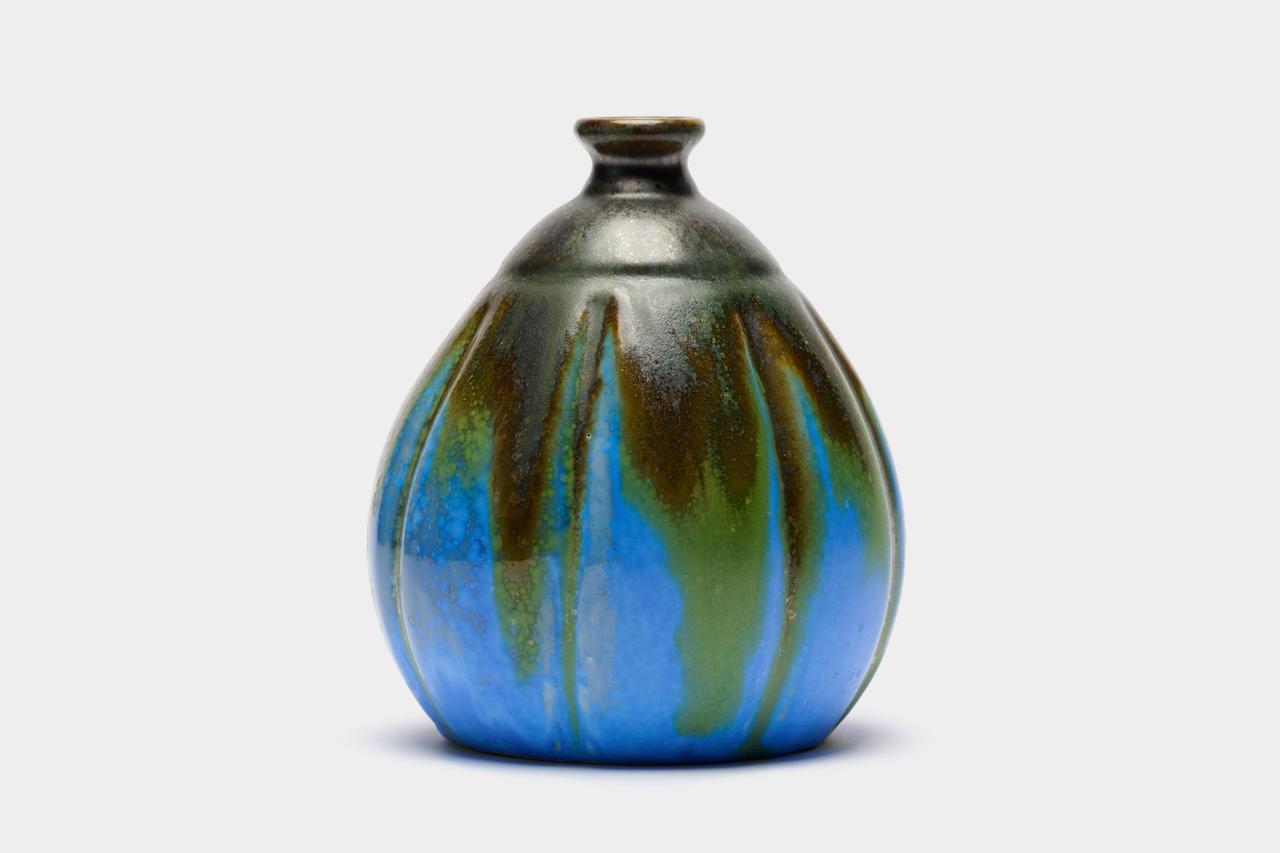
Sardische Terrakotta-Amphore, Carmen Nuoro zugeschrieben, aus den 1970er-Jahren. - Carmen Nuoro - Italien - 20. Jahrhundert


04
Tage
09
Stunden
34
Minuten
17
Sekunden
Startgebot
€ 1
Mindestpreis nicht erreicht

Experte
Von Florentin Brunz Gaborieau ausgewählt
Besitzt einen Masterabschluss in Kunstgeschichte mit Schwerpunkt Zweites Französisches Kaiserreich und Goldene Niederlande.
Schätzung € 330 - € 380
Es wurden keine Gebote abgegeben
Käuferschutz auf Catawiki
Ihre Zahlung wird von uns sicher verwahrt, bis Sie Ihr Objekt erhalten.Details ansehen
Trustpilot 4.4 | 143539 Bewertungen
Auf Trustpilot als hervorragend bewertet.
Vom Verkäufer bereitgestellte Beschreibung
Terrakotta-Amphora-Vase von Del Carmen in Sardinien: "Del Carmen" (Nuoro/Dorgali, Sardinien)
Traditionelle sardische Amphorenvase mit zweihändigem Henkel (Vaso anforetta), von Hand aus Terracotta gedreht und im volkstümlichen Stil der Barbagia-Region in Sardinien handbemalt, der Werkstatttradition Del Carmens zugeordnet, mit Sitz in Dorgali, Provinz Nuoro, ein in den sardischen Keramikern, die in diesem figurativen, sgraffito-dekorierten Stil arbeiten, bekannter Name.
Form
Klassische Silhouette einer Amphora mit doppeltem Henkel: kugeliger Körper, der sich zu einem schmalen Hals verengt, flankiert von einem Paar hoher, breiter Bandhenkel, die über den Rand hinausragen. Fußring mit glänzend schwarzer Glasur, im Kontrast zum matte Körper aus Terracotta.
Dekoration
Die Vase ist handbemalt im traditionellen sardischen Kostüm‑Idiom ("costume sardo"):
Der Hals der Vase trägt eine einzelne Figur in regionaler Volkstracht – eine Vase zeigt eine männliche Figur im traditionellen schwarzen und roten Barbagia‑Kostüm, die andere eine weibliche Figur mit dunklem Rock, rotem Mieder und blauem Saumband der Schürze – beide in einem stilisierten, volkstümlichen Stil, wie er typisch für die sardische Souvenir‑ und Kunstkeramik der Mitte des 20. Jahrhunderts ist.
Der Körper der Vase ist mit einem spiegelbildlichen Paar aufsteigender Pferde in dunkelbrauner Glasur dekoriert, fein ausgekratzt (sgraffito), um Mähne, Muskulatur und Zaumzeug darzustellen, neben einem zentralen stilisierten Motiv eines grünen Feigenkaktus/Feigenkaktus (fico d’India), ein wiederkehrendes Emblem in sardischer dekorativer Keramik.
Die Henkel sind mit einem Muster aus Schuppen oder Blättern in Schwarz-Weiß auf rotem Grund verziert, das an traditionelle textile Muster erinnert.
Eine feine creme- und terrakottafarbene Randlinie trennt die figürliche Szene am Hals vom darunterliegenden Pferdefries.
Die gesamte Fläche unter den Figuren ist mit feinen horizontalen Linienrillen (Rigatura) bearbeitet, ein charakteristisches Merkmal der von Hand gedrehten sardischen Terrakotta dieses Typs, das der Glasur Textur und Tiefe verleiht.
Basis
Unglasierte Terracotta, unten am Boden, entsprechend der traditionellen Drehscheibenfertigung; sichtbare Drehringe und leichte Brandspuren; kein sichtbarers Herstellerzeichen in den gezeigten Fotografien – prüfen Sie bitte vor der endgültigen Attribution auf ein eingedrücktes oder aufgemaltes Signaturzeichen.
Die Vase ist selten, weil die feine Sgraffito-Linienführung in Kombination mit freier Handbemalung der Figuren und Pferde eine arbeitsintensive Technik ist, die heute nur noch von sehr wenigen verbliebenen Werkstätten in der Umgebung von Dorgali und Nuoro praktiziert wird. Im zeitgenössischen Interieur harmoniert die schlanke Silhouette und die skulpturalen doppelten Henkel perfekt als eigenständiges Kunstobjekt.
Zustand
Guter Zustand
Abmessungen
Höhe: 28 cm
Breite zwischen den Henkel: 14 cm
Durchmesser Boden: 3,5 cm
---
Sardinian Hand-Painted Terracotta Amphora Vase, "Del Carmen" (Nuoro/Dorgali, Sardinia)
Traditional Sardinian double-handled amphora vases (vasi anforetta), hand-thrown in terracotta and hand-painted in the folk style of the Barbagia region of Sardinia, attributed to the workshop tradition of Del Carmen, based in Dorgali, province of Nuoro, a well-known name among Sardinian ceramicists working in this figurative, sgraffito-decorated style.
Form
Classic two-handled anfora silhouette: a bulbous body tapering to a narrow neck, flanked by a pair of tall, squared strap handles rising above the rim. Foot ring finished in glossy black glaze, contrasting with the matte terracotta body.
Decoration
Vase is decorated by hand in the traditional Sardinian costume ("costume sardo") idiom:
The neck of the vase bears a single figure in regional folk dress, one vase depicts a male figure in traditional black-and-red Barbagia costume, the other a female figure in a dark skirt, red bodice, and blue apron trim, both rendered in a stylized, folk-art manner typical of mid-20th-century Sardinian souvenir and artistic ceramics.
The body of the vase vase is decorated with a mirrored pair of rearing horses in dark brown glaze, finely incised with sgraffito hatching to render mane, musculature, and harness detail, flanking a central stylized green cactus/prickly-pear motif (fico d'India), a recurring emblem in Sardinian decorative ceramics.
The handles are decorated with a black-and-white "scale" or leaf motif on a red ground, echoing traditional textile patterning.
A narrow banded border in cream and terracotta separates the figurative neck scene from the horse frieze below.
The whole surface below the figures is worked with fine incised horizontal hatching (rigadura), a hallmark of hand-thrown Sardinian terracotta of this type, giving texture and depth to the glaze.
Base
Unglazed terracotta well to the underside, consistent with traditional wheel-thrown production; visible throwing rings and light kiln firing marks, no visible maker's stamp in the photographs provided — please verify for an impressed or painted signature before listing as attributed.
The vase is rare because the fine sgraffito line-work combined with freehand figure and horse painting is a labor-intensive technique now practiced by very few remaining workshops around Dorgali and Nuoro. In modern decor, the tall silhouette and sculptural double handles make each vase work beautifully as a standalone statement object.
Condition
Good
Dimensions
height: 28 cm
width across handles: 14 cm
base diameter: 3,5 cm
Details
Dynastischer Stil/Epoche
20. Jahrhundert
Anzahl der Artikel
1
Künstler
Carmen Nuoro
Herkunftsland
Italien
Attribution
Zugeschrieben
Height
28 cm
Titel des Kunstwerks
Sardinian terracotta amphora attributed to Carmen Nuoro, 1970s
Condition
Guter Zustand
Herkunft
Privatsammlung
Authentizität
Original/offiziell
Verkauft von