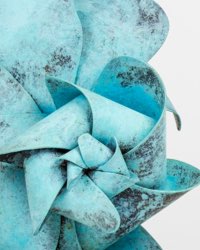
Soly Cissé (1969) - Serie Héritage 5


05
days
10
hours
50
minutes
22
seconds
Current bid
€ 200
Reserve price not met

Expert
Selected by Giulia Couzzi
Master’s in culture and arts innovation, with a decade in 20th-21st century Italian art.
Estimate € 430 - € 500
 | €200 |
|---|
Catawiki Buyer Protection
Your payment’s safe with us until you receive your object.View details
Trustpilot 4.4 | 137810 reviews
Rated Excellent on Trustpilot.
Soly Cissé, Series Héritage 5, an original edition created in 1998, an acrylic painting measuring 20 by 20 cm, from Senegal.
AI-assisted summary
Description from the seller
In his collages and paintings, he stages figures tortured by doubt, beset by the caprices of a Nature deranged by Humankind.
Soly Cissé is an artist of protean work... His art extends across diverse media: collages, paintings, installations, video, sculptures, ... In each of his creations, as a guiding thread, are his hybrid beings, his animals, his spirits, pictograms, graffiti, and Senoufo silhouettes. Forms emerge, caught in the movement of color in fusion, on the edge of figuration.
Unfinished creatures and characters belonging to an undetermined stage of humanity (earlier or later?)—Children, animals, all are presented frontal and their faces are half-sketchy. He paints, sculpt[s], shapes kraft, clay; he works canvases in graphic series, recycles wood. Soly Cissé explores risky, unprecedented paths. He is possessed by a healthy anger, confident enough in his influences not to name them. Attentive to the urban world, he is among those who can calmly shed the adjective “African,” without regret or repentance, since Africa today is in him, as a factor of modernity. The line, Cissé’s decided, nervous, agile, takes up the charcoal where his distant ancestors left off. Quick, he captures the being by default; the figures thus arise from the formless without forcing it. Just a wink of fate.
Soly Cissé’s work is remarkable for its singular, spontaneous graf‑language (graphy). In his collages, the spirits and the troubling or protective figures do not reveal the deities of a culture, but a phantasmagoria.
There is in him a clear will to provoke a fertile and dynamic tension. The deeper one penetrates his microcosm populated by spirits and monsters, the more the great confrontations between intense blues and jarring yellows assert themselves. It is in the slow and patient discovery of his plastic language that harmony gradually re-establishes itself, balancing its equilibrium.
“There is, without hesitation, a major artist who goes straight to the point.”
Philippe Dagen (Le Monde)
Seller's Story
Association for the Promotion of Contemporary Art
Translated by Google TranslateIn his collages and paintings, he stages figures tortured by doubt, beset by the caprices of a Nature deranged by Humankind.
Soly Cissé is an artist of protean work... His art extends across diverse media: collages, paintings, installations, video, sculptures, ... In each of his creations, as a guiding thread, are his hybrid beings, his animals, his spirits, pictograms, graffiti, and Senoufo silhouettes. Forms emerge, caught in the movement of color in fusion, on the edge of figuration.
Unfinished creatures and characters belonging to an undetermined stage of humanity (earlier or later?)—Children, animals, all are presented frontal and their faces are half-sketchy. He paints, sculpt[s], shapes kraft, clay; he works canvases in graphic series, recycles wood. Soly Cissé explores risky, unprecedented paths. He is possessed by a healthy anger, confident enough in his influences not to name them. Attentive to the urban world, he is among those who can calmly shed the adjective “African,” without regret or repentance, since Africa today is in him, as a factor of modernity. The line, Cissé’s decided, nervous, agile, takes up the charcoal where his distant ancestors left off. Quick, he captures the being by default; the figures thus arise from the formless without forcing it. Just a wink of fate.
Soly Cissé’s work is remarkable for its singular, spontaneous graf‑language (graphy). In his collages, the spirits and the troubling or protective figures do not reveal the deities of a culture, but a phantasmagoria.
There is in him a clear will to provoke a fertile and dynamic tension. The deeper one penetrates his microcosm populated by spirits and monsters, the more the great confrontations between intense blues and jarring yellows assert themselves. It is in the slow and patient discovery of his plastic language that harmony gradually re-establishes itself, balancing its equilibrium.
“There is, without hesitation, a major artist who goes straight to the point.”
Philippe Dagen (Le Monde)
Seller's Story
Association for the Promotion of Contemporary Art
Translated by Google TranslateDetails
Artist
Soly Cissé (1969)
Sold with frame
No
Sold by
Gallery
Edition
Original
Title of artwork
Serie Héritage 5
Technique
Acrylic painting
Signature
Hand signed, Signed
Country of origin
Senegal
Year
1998
Sold with stand
No
Condition
Excellent condition
Height
20 cm
Width
20 cm
Style
Contemporary
Period
2020+