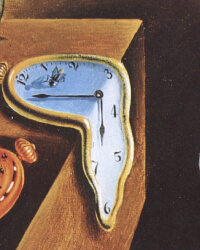
George Csato (1910 - 1983) - Composition


05
days
15
hours
59
minutes
31
seconds
Current bid
€ 1
No reserve price

Expert
Selected by Silvia Possanza
Held senior specialist role at Finarte for 12 years, specialising in modern prints.
Estimate € 150 - € 200
 | €1 |
|---|
Catawiki Buyer Protection
Your payment’s safe with us until you receive your object.View details
Trustpilot 4.4 | 138658 reviews
Rated Excellent on Trustpilot.
George Csato, Composition, a lithograph from 1980, limited edition 141/150, hand-signed, 76 x 46 cm, 500 g, Hungary, abstract style, excellent condition.
AI-assisted summary
Description from the seller
Georges Csato (1910 Budapest - 1983 Paris 18th, Villa des Arts) of Hungarian nationality.
Superb lithograph in very good condition, signed in pencil at the bottom right and numbered at the bottom left 141 / 150.
Provenance Private collection, 1980s.
Csató wonderfully expresses the avant-garde spirit of the postwar era and had a remarkable life. He was lucky to meet very early some of the great cultural figures of the 20th century. He grew up in Budapest and studied at the Vienna School of Arts in 1929, then in Berlin with Archipenko, Kollwitz, Feininger and Klee.
With the rise of the Nazi party, Csató left Germany for Prague with several avant-garde artists who shared the same ideas, fleeing the cultural tyranny dominant in Germany, notably Oskar Kokoschka with whom he worked from 1936 to 1938. As the Nazis advanced, he returned to Budapest, where he soon found himself in a labor camp. He survived a series of extraordinary ordeals, including escaping, fighting with partisans, being captured by the Russians, taken to a remote place and forced to paint a portrait of Stalin. “While I was drawing him, he never spoke a single word, he sat there chain-smoking. The only movement he made was to push a bottle of vodka and a pack of cigarettes over the table.
When the war finally ended, Csató returned to Budapest and picked up his brush again, but Hungary fell under Stalinist rule and abstract painting was strictly forbidden, so he left and arrived in Paris as a refugee where he would live for the rest of his life.
Csató’s bold and provocative work was well received in Paris and in 1948 Jean Cocteau organized an exhibition for him at the Librairie Paul Morihien.
He quickly established himself among the Paris avant-garde, participated in the most radical salons such as the Salon des Réalités Nouvelles, the Salon Comparaisons, and carried out numerous notable exhibitions, notably: Galerie Silvagni, 1951; Galerie de Berri, 1954; Galerie Fürstenberg, 1956; Galerie Mariac, 1959; Galerie di Meo, 1962.
In the 1970s, he gained international renown by successfully exhibiting in London, New York, Sydney, Melbourne, Amsterdam, Bonn and Canada.
The artist’s work is now represented in several major public collections, including the Musée d’Art Moderne de la Ville de Paris; Bibliothèque Nationale; Marseille; Museo de Arte Moderno, Bogota, Colombia; Mendel Art Gallery, Canada.
Georges Csato (1910 Budapest - 1983 Paris 18th, Villa des Arts) of Hungarian nationality.
Superb lithograph in very good condition, signed in pencil at the bottom right and numbered at the bottom left 141 / 150.
Provenance Private collection, 1980s.
Csató wonderfully expresses the avant-garde spirit of the postwar era and had a remarkable life. He was lucky to meet very early some of the great cultural figures of the 20th century. He grew up in Budapest and studied at the Vienna School of Arts in 1929, then in Berlin with Archipenko, Kollwitz, Feininger and Klee.
With the rise of the Nazi party, Csató left Germany for Prague with several avant-garde artists who shared the same ideas, fleeing the cultural tyranny dominant in Germany, notably Oskar Kokoschka with whom he worked from 1936 to 1938. As the Nazis advanced, he returned to Budapest, where he soon found himself in a labor camp. He survived a series of extraordinary ordeals, including escaping, fighting with partisans, being captured by the Russians, taken to a remote place and forced to paint a portrait of Stalin. “While I was drawing him, he never spoke a single word, he sat there chain-smoking. The only movement he made was to push a bottle of vodka and a pack of cigarettes over the table.
When the war finally ended, Csató returned to Budapest and picked up his brush again, but Hungary fell under Stalinist rule and abstract painting was strictly forbidden, so he left and arrived in Paris as a refugee where he would live for the rest of his life.
Csató’s bold and provocative work was well received in Paris and in 1948 Jean Cocteau organized an exhibition for him at the Librairie Paul Morihien.
He quickly established himself among the Paris avant-garde, participated in the most radical salons such as the Salon des Réalités Nouvelles, the Salon Comparaisons, and carried out numerous notable exhibitions, notably: Galerie Silvagni, 1951; Galerie de Berri, 1954; Galerie Fürstenberg, 1956; Galerie Mariac, 1959; Galerie di Meo, 1962.
In the 1970s, he gained international renown by successfully exhibiting in London, New York, Sydney, Melbourne, Amsterdam, Bonn and Canada.
The artist’s work is now represented in several major public collections, including the Musée d’Art Moderne de la Ville de Paris; Bibliothèque Nationale; Marseille; Museo de Arte Moderno, Bogota, Colombia; Mendel Art Gallery, Canada.
Details
Artist
George Csato (1910 - 1983)
Sold by
Owner or reseller
Edition
Limited edition
Edition number
141 / 150
Title of artwork
Composition
Technique
Lithograph
Signature
Hand signed
Country of origin
Hungary
Year
1980
Condition
Excellent condition
Height
76 cm
Width
46 cm
Weight
500 g
Style
Abstract
Period
1970-1980
Sold with frame
No
Sold by