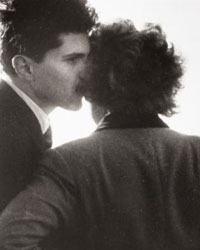
Carlo Pisa - Dvortsovy Most #1


05
days
18
hours
59
minutes
10
seconds
Starting bid
€ 1
Reserve price not met

Expert
Selected by Elena Vaninetti
Has over ten years of experience in art, specialising in post-war photography and contemporary art.
Estimate € 300 - € 380
No bids placed
Catawiki Buyer Protection
Your payment’s safe with us until you receive your object.View details
Trustpilot 4.4 | 146353 reviews
Rated Excellent on Trustpilot.
Carlo Pisa’s 2005 Giclée photograph *Dvortsovy Most #1* depicts Russian tricolour flags on Palace Bridge in St Petersburg.
AI-assisted summary
Description from the seller
Carlo Pisa - Italian - 69 years old
Dvortsovy Most #1 (Дворцовый мост #1). Small flags in the colors of the Russian Federation on Palace Bridge (the Winter Palace, now the Hermitage Museum). St. Petersburg (Russian Federation) - 2005
Giclée print on Marrutt 230 gsm Archival Matte Paper - Size: 210 x 297 mm
Edition 4 of 50
Hand-signed on the lower back and stamped by the artist
Certificate of Authenticity
Condition: SPL Excellent
Carlo Pisa was born in Bologna in 1957 and lives in Lucca. He has lived and worked in Florence, Milan, Rome, Val d’Orcia and Val di Cecina, and from 2004 until the end of 2011 in Russia, in Moscow and St. Petersburg. From 1989 to 2004, he worked professionally as a photojournalist. In 2004, he began an individual research project, the first step on a path devoted exclusively to art.
- 2004 . Group exhibition at the Goethe Contemporary Art Gallery, Bolzano.
- 2004 . Solo exhibition at the Fabbrica Eos Contemporary Art Gallery, Milan.
- 2004 . International Biennale of Photography, Contemporary Art Section, Brescia.
- 2005 . MiArt with Fabbrica Eos, Milan.
- 2006 . Solo exhibition at Marina Gisich Gallery, St. Petersburg (Russia).
- 2011 . Solo exhibition at the Museum of the History of Photography, St. Petersburg (Russia).
- 2011 . 54th International Art Exhibition, La Biennale di Venezia, Italian Pavilion in Venice and I.I.C. St. Petersburg (Russia).
- 2012 . Light of Silence - Group exhibition with Gennady Zubkov at Iragui Gallery, Moscow (Russia).
- 2012 . MIA - Milan Image Art Fair with Iragui Gallery (Moscow and Paris).
- 2013 . Group exhibition at the Goethe Contemporary Art Gallery, Bolzano.
- 2013 . 20 Years or 5 Minutes – Group exhibition at the Fabbrica Eos Contemporary Art Gallery, Milan.
- 2015 . Solo exhibition at the Summer Gallery at Castello Ginori in Querceto - Pisa.
CONCEPT: THROUGH THE SENSES by Carlo Pisa
I feel ill at ease and distant from the dynamics that govern modernity. Very often, in contemporary art, I perceive intense visual saturations as unbalanced perceptual storms. There are also wounds that change the way we see the world, the way we think, assess and understand people and things—from the everyday routines we are accustomed to, to artistic expressions that were once kindred and have since become distant. They provoke a reaction that has changed my “paradigms,” leading me toward a shift in perspective. A “leap” capable of confronting the adverse events of the human condition and channeling them into something positive. They have become the path and means through which the interpretation of sensations arising from an image takes on the delicacy and language of the “unspoken” that has formed in the mind. I have managed to express it through photography, turning it into intimate reflections, spiritual tension, testimony and signs of an act of resistance.
By nature and temperament, I have always wondered how much the realm of intimacy and the work we do on ourselves could help us seek, in the essence of things, the key to a conscious understanding of our own lived experience; and how a path of silence and introspection could become a means of observing and confronting it, while also penetrating its meaning, accepting it and renewing ourselves.
And how photographs, as complements that distill and communicate impressions, can transpose reality and develop new forms and points of reference, leading the essence of the things depicted in images to establish an emotional connection with the viewer’s inner self, making them an open window onto the world and a gateway to what lies within us.
Some years ago, at the beginning of my research, I focused on these concepts as the genesis of my instinctive discovery of myself, between reason and the senses. In the hidden space between sight and essence, I imagined a language for telling the difference between what seems to be and what is.
A language that does not wander through representable dimensions, that shuns “truth” as it appears. It is the structure of sensations that last only as long as they are perceived, and of the ephemeral state of things in constant change. It is the projection of ideas broken down into geometries and cryptic elements that reveal new hypotheses which, within the parameters of substance, bring confusion to a halt by depicting and extending those ideal moments. Light compositions of lines and marks that, by eliminating every superfluous and distracting stroke, reveal the aesthetics of simplicity and make my world visible.
The images are the sounds of sensitivity in the face of the atmospheres of the places at whose latitudes I have lived and photographed: so ethereal in the northern light that the neutralizing dissolution of color and space evokes a feeling of irreparable loss; or stronger and starker in the light of the south, redefining clear geometries and color tones that nonetheless remain unexpressed in their full meaning. Through these phases of time and contemplation, I find the thread that joins and reassembles my story.
The photographs do not seek to amaze, provoke or impress through their large dimensions. Instead, they are analog images, sometimes small in format, of subjects that are always commonplace, which a constant search for beauty transforms into moments of harmony and lightness. With a sense of modesty, they ask to be observed in silence and contemplated, so that one may perceive their intimate, poetic essence in the lightness of the marks and colors of which they are composed. Or they ask to be taken apart into the geometries of their whole, while remaining undefined in that state, to show how much complexity and how many hidden details things can contain within themselves and, by observing their existence in relation to everything else, to recognize their openness to doubt, glimpse a different narrative and decipher them.
Details
Date of print
2005
Artist
Carlo Pisa
Sold by
Direct from the artist
Title of artwork
Dvortsovy Most #1
Condition
Extremely fine
Technique
Giclée
Height
210 mm
Edition
4 of 50
Width
297 mm
Signature
Hand signed
Genre
Fine art photography
Sold by