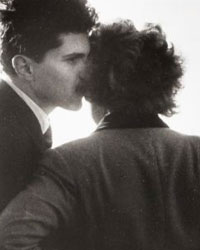
Luigi Ghirri - Hergiswil - 1973


06
days
19
hours
03
minutes
14
seconds
Current bid
€ 5
Reserve price not met

Expert
Selected by Elena Vaninetti
Has over ten years of experience in art, specialising in post-war photography and contemporary art.
Estimate € 7,500 - € 9,000
 | €5 | |
|---|---|---|
| €4 | |
| €3 | |
Catawiki Buyer Protection
Your payment’s safe with us until you receive your object.View details
Trustpilot 4.4 | 141904 reviews
Rated Excellent on Trustpilot.
Luigi Ghirri, Hergiswil - 1973, an unsigned C‑print photograph 17 × 12 cm in SPL (Splendido) condition.
AI-assisted summary
Description from the seller
“Hergiswil, 1973” by Luigi Ghirri, interpreted. It is a photograph included in the project Diaframma f/11, 1/25, natural light, one of the series Ghirri realized in the seventies; the Luigi Ghirri Foundation catalogues it precisely as Hergiswil, 1973.
Hergiswil is a Swiss locality on Lake Lucerne. At that time Ghirri often photographed during trips in Italy and Europe, but his interest was not so much the traditional “beautiful landscape” as the relationship between reality, images, signs, architecture, and the way of looking. The Diaframma f/11, 1/25, natural light series indeed includes photographs taken in different places such as Bologna, Amsterdam, Venice, Salzburg, and Hergiswil.
1973 is a central year in Ghirri’s research: in the same period he worked on projects such as Kodachrome, Italia Ailati, Colazione sull’erba, and Il paese dei balocchi. Color, often subdued and seemingly everyday, becomes for him a way to challenge the distinction between the world and its representation: signs, shop windows, photographs within photographs, ambiguous perspectives, and ordinary details become the real subject.
If you send me the photo of Hergiswil that you’re looking at, I can also give you a precise visual reading of the work: composition, colors, meaning, and why it’s important in Ghirri’s oeuvre.
Yes: the photo you uploaded corresponds to Hergiswil, 1973 by Luigi Ghirri. It is attributed to the Diaframma 11 series, 1/125, natural light. A vintage print is documented as a C-print; there are copies in different sizes, including about 13 × 18 cm and a smaller vintage print of 11.6 × 8 cm.
The scene is very typical of Ghirri’s seventies period: an ordinary advertising object — here the Camel Filters panel with the camel’s head — is isolated in the landscape until it becomes almost surreal. It is not simply a photograph “of an advertisement”: Ghirri is interested in the point where artificial image and real world blur. The drawn camel seems almost a character physically present in space, while the road lines and the dark backdrop make it hard to immediately tell where the sign ends and the landscape begins.
This is precisely one of the central themes of his research: billboards, shop windows, and images already present in the world become a kind of “photomontage of reality,” without the photographer having to construct anything.
Color is also important: browns, cream, pink, and black are subdued, far from bright commercial color. This slightly suspended tone turns a banal scene into something ambiguous and ironic. The fact that the sign sits almost alone, surrounded by a lot of empty space, gives it a nearly theatrical presence.
Hergiswil is in Switzerland, and the photograph also ties to the travel theme present in Ghirri’s work: in his travels he did not seek grand monuments so much as anonymous signs, objects, and images capable of altering our perception of the place.
“Hergiswil, 1973” by Luigi Ghirri, interpreted. It is a photograph included in the project Diaframma f/11, 1/25, natural light, one of the series Ghirri realized in the seventies; the Luigi Ghirri Foundation catalogues it precisely as Hergiswil, 1973.
Hergiswil is a Swiss locality on Lake Lucerne. At that time Ghirri often photographed during trips in Italy and Europe, but his interest was not so much the traditional “beautiful landscape” as the relationship between reality, images, signs, architecture, and the way of looking. The Diaframma f/11, 1/25, natural light series indeed includes photographs taken in different places such as Bologna, Amsterdam, Venice, Salzburg, and Hergiswil.
1973 is a central year in Ghirri’s research: in the same period he worked on projects such as Kodachrome, Italia Ailati, Colazione sull’erba, and Il paese dei balocchi. Color, often subdued and seemingly everyday, becomes for him a way to challenge the distinction between the world and its representation: signs, shop windows, photographs within photographs, ambiguous perspectives, and ordinary details become the real subject.
If you send me the photo of Hergiswil that you’re looking at, I can also give you a precise visual reading of the work: composition, colors, meaning, and why it’s important in Ghirri’s oeuvre.
Yes: the photo you uploaded corresponds to Hergiswil, 1973 by Luigi Ghirri. It is attributed to the Diaframma 11 series, 1/125, natural light. A vintage print is documented as a C-print; there are copies in different sizes, including about 13 × 18 cm and a smaller vintage print of 11.6 × 8 cm.
The scene is very typical of Ghirri’s seventies period: an ordinary advertising object — here the Camel Filters panel with the camel’s head — is isolated in the landscape until it becomes almost surreal. It is not simply a photograph “of an advertisement”: Ghirri is interested in the point where artificial image and real world blur. The drawn camel seems almost a character physically present in space, while the road lines and the dark backdrop make it hard to immediately tell where the sign ends and the landscape begins.
This is precisely one of the central themes of his research: billboards, shop windows, and images already present in the world become a kind of “photomontage of reality,” without the photographer having to construct anything.
Color is also important: browns, cream, pink, and black are subdued, far from bright commercial color. This slightly suspended tone turns a banal scene into something ambiguous and ironic. The fact that the sign sits almost alone, surrounded by a lot of empty space, gives it a nearly theatrical presence.
Hergiswil is in Switzerland, and the photograph also ties to the travel theme present in Ghirri’s work: in his travels he did not seek grand monuments so much as anonymous signs, objects, and images capable of altering our perception of the place.
Details
Artist
Luigi Ghirri
Sold by
Owner or reseller
Title of artwork
Hergiswil - 1973
Condition
Extremely fine
Technique
C-Print
Height
17 cm
Width
12 cm
Signature
Not signed
Genre
Fine art photography
Sold by