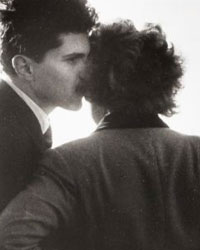
Malick Sidibé (1935–2016) - nessun titolo


12
days
06
hours
10
minutes
53
seconds
Starting bid
€ 1
Reserve price not met

Expert
Selected by Elena Vaninetti
Has over ten years of experience in art, specialising in post-war photography and contemporary art.
Estimate € 1,000 - € 1,200
No bids placed
Catawiki Buyer Protection
Your payment’s safe with us until you receive your object.View details
Trustpilot 4.4 | 141255 reviews
Rated Excellent on Trustpilot.
Description from the seller
Extraordinary photograph of the great Malick Sidibé (1936-2016). Vintage gelatin silver print on coated paper, perfect, a jewel for collectors.
Spedisco con DHL Express
Malick Sidibé was a Malian photographer renowned for his black-and-white portraits and for documenting youth life and popular culture in Mali in the years following independence. Known as the “eye of Bamako,” he captured the spirit of a modern, free Africa.
Malick Sidibé was born in 1935 in Soloba, a village in the Kaya region of Mali (then French West Africa). He studied art at the École des Arts de Bamako, where he specialized in drawing. In 1955 he began working as an apprentice in the studio of the French photographer Gérard Guillat-Guignard, nicknamed “Gégé la Pellicule.” There he learned photographic techniques and began to develop his own style.
In 1962 he opened his own photography studio, Studio Malick, in the Bagadadji district of Bamako, the capital of Mali. We are in a crucial historical moment: Mali had just freed itself from French colonial rule (independence in 1960), and there was an atmosphere of enthusiasm, pride, and change.
Sidibé specialized in studio portraits and coverage of youth celebrations, photographing the city’s boys and girls as they danced, enjoyed themselves, dressed fashionably, and asserted a new African cultural identity—modern and cosmopolitan.
His images are vital, joyful, elegant, and helped break stereotypes about Africa, showing an urban generation full of style and aware of its modernity.
Despite local success, Sidibé’s work was rediscovered and internationally valued only in the 1990s, when the art world began to take an interest in African photography.
In the following years, he was featured in major museums and photography festivals around the world, including:
• Venice Biennale,
• Fondation Cartier (Paris),
• Museum of Modern Art (New York),
• Rencontres de la Photographie Africaine (Bamako).
Sidibé received numerous awards, including: Golden Lion for Career at the Venice Biennale (2007)—the first photographer to receive it; Hasselblad Award (2003), one of the highest international recognitions in photography; Infinity Award (2000) from the ICP in New York.
Malick Sidibé died on April 14, 2016, in Bamako, at about 81 years old. He is today regarded as a pioneer of African photography, a master of portraiture, and a unique witness to the cultural transformation of post-colonial Africa.
Sidibé is often paired with other great African photographers such as Seydou Keïta (his contemporary and fellow citizen), but he stands out for the more dynamic, youthful, and relaxed tone of his work.
His photos are an extraordinary visual archive of an urban Africa in the 1960s and 1970s—unpublished, full of joy, elegance, and a zest for life.
A quote from Malick: “Joy is one of the most important things in life. If you can capture it in a photograph, then you have done a good job.”
Extraordinary photograph of the great Malick Sidibé (1936-2016). Vintage gelatin silver print on coated paper, perfect, a jewel for collectors.
Spedisco con DHL Express
Malick Sidibé was a Malian photographer renowned for his black-and-white portraits and for documenting youth life and popular culture in Mali in the years following independence. Known as the “eye of Bamako,” he captured the spirit of a modern, free Africa.
Malick Sidibé was born in 1935 in Soloba, a village in the Kaya region of Mali (then French West Africa). He studied art at the École des Arts de Bamako, where he specialized in drawing. In 1955 he began working as an apprentice in the studio of the French photographer Gérard Guillat-Guignard, nicknamed “Gégé la Pellicule.” There he learned photographic techniques and began to develop his own style.
In 1962 he opened his own photography studio, Studio Malick, in the Bagadadji district of Bamako, the capital of Mali. We are in a crucial historical moment: Mali had just freed itself from French colonial rule (independence in 1960), and there was an atmosphere of enthusiasm, pride, and change.
Sidibé specialized in studio portraits and coverage of youth celebrations, photographing the city’s boys and girls as they danced, enjoyed themselves, dressed fashionably, and asserted a new African cultural identity—modern and cosmopolitan.
His images are vital, joyful, elegant, and helped break stereotypes about Africa, showing an urban generation full of style and aware of its modernity.
Despite local success, Sidibé’s work was rediscovered and internationally valued only in the 1990s, when the art world began to take an interest in African photography.
In the following years, he was featured in major museums and photography festivals around the world, including:
• Venice Biennale,
• Fondation Cartier (Paris),
• Museum of Modern Art (New York),
• Rencontres de la Photographie Africaine (Bamako).
Sidibé received numerous awards, including: Golden Lion for Career at the Venice Biennale (2007)—the first photographer to receive it; Hasselblad Award (2003), one of the highest international recognitions in photography; Infinity Award (2000) from the ICP in New York.
Malick Sidibé died on April 14, 2016, in Bamako, at about 81 years old. He is today regarded as a pioneer of African photography, a master of portraiture, and a unique witness to the cultural transformation of post-colonial Africa.
Sidibé is often paired with other great African photographers such as Seydou Keïta (his contemporary and fellow citizen), but he stands out for the more dynamic, youthful, and relaxed tone of his work.
His photos are an extraordinary visual archive of an urban Africa in the 1960s and 1970s—unpublished, full of joy, elegance, and a zest for life.
A quote from Malick: “Joy is one of the most important things in life. If you can capture it in a photograph, then you have done a good job.”
Details
Artist
Malick Sidibé (1935–2016)
Sold by
Gallery
Title of artwork
nessun titolo
Condition
Extremely fine
Technique
Gelatin-silver print
Height
12.8 cm
Edition
vintage
Width
17.7 cm
Signature
Stamped
Genre
Documentary photography