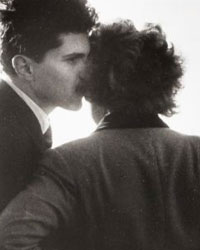
Julio Álvarez Yagüe - “Origen”


10
days
05
hours
24
minutes
52
seconds
Starting bid
€ 1
Reserve price not met

Expert
Selected by Elena Vaninetti
Has over ten years of experience in art, specialising in post-war photography and contemporary art.
Estimate € 1,500 - € 1,800
No bids placed
Catawiki Buyer Protection
Your payment’s safe with us until you receive your object.View details
Trustpilot 4.4 | 141736 reviews
Rated Excellent on Trustpilot.
Three black and white digital Fine Art photographs by Julio Álvarez Yagüe, titled “Origen,” signed by hand and issued as P.A. 3/3, with dimensions 48.5 × 33 cm.
AI-assisted summary
Description from the seller
Three wonderful photographs by the great photographer Julián Álvarez Yagüe, signed by hand and numbered P.A. 3/3 for exquisite collectors.
These three striking black-and-white images are part of the visual and conceptual universe of Julio Álvarez Yagüe, a reference in contemporary photography in Spain and historically linked to the Real Sociedad Fotográfica.
The photographs reflect very pure the pillars of his work: expressive use of contrasts, minimalist language, texture, and a deep emotional and conceptual connection with light and earth (elements very present in his project “Origen”).
The hand and the weathered ground
shows a very close-up detail shot where a knobby hand firmly grips a staff or crook over dry, cracked earth, contrasting strongly with the darkness of the clothing.
It evokes the rooted connection with the land, hard work, and the passage of time. It is a direct metaphor of roots, veteran status, and the human essence tied to the countryside or rural environment, recalling the primordial concept of “origin.”
The high contrast in black and white characteristic of the author stands out, where the textures of skin, wood, and dry clay take on a nearly sculptural tactile prominence.
The solitary tree under the eave
presents a shot where a densely leafed, dark canopy tree is cut out against a bright background, crowned at the top by a black wavy shape that simulates the edge of a roof or shelter.
It plays with the duality between what is natural and what is built, or between the outdoors and the refuge. The tree appears as a solitary totem, a symbol of resilience and rootedness in the landscape.
Aesthetics: The clean geometric composition and the use of a low-angle shot reaffirm Álvarez Yagüe’s interest in structuring space with pure lines and shadows cut with surgical precision.
The textile texture and the dynamic sky
A shot in a very close-up and low-angle plane where a garment with a checkered (or Vichy) pattern occupies the lower part, while the background is dominated by a textured, breezy or highly grainy sky.
This work subverts traditional scale: a daily, close detail (the clothing) visually blends with the atmospheric vastness of the sky. It suggests an intimate integration between the individual and their environment, a direct dialogue between the texture of the domestic and the vastness of nature.
The pronounced grain and the almost graphic treatment of the sky give the photograph a dreamlike and timeless atmosphere.
The meaning of the trilogy
The series that make up works from this stage (Geometry, Shadows of Light, and Origin) span decades of the Madrid photographer’s career. His return to black and white in these pieces is not merely nostalgia, but a need to strip the image of artifices to concentrate on the essential: light as emotional and conceptual pulse.
Álvarez Yagüe’s photographs are highly sought-after by collectors and investors who seek Spanish postwar and contemporary photography of high quality.
Analogue black and white photography / Fine Art digital printing on high‑weight archival paper
Julio Álvarez Yagüe is a fundamental figure of contemporary Spanish photography. His work, acclaimed internationally and represented in museum collections such as the Museo Nacional Centro de Arte Reina Sofía (MNCARS), the Instituto Valenciano de Arte Moderno (IVAM), and the Fundación Telefónica, is distinguished by exquisite technical rigor and a profound poetic sensibility toward the everyday.
Álvarez Yagüe’s work moves between geometric abstraction and architectural photography, seeking the essence of forms in the environment. His gaze disassembles reality, extracting textures and volumes that become abstract elements. He is a master of chiaroscuro, using light not only to illuminate but as a brush that draws lines, triangles, and circles that alter our perception of space.
Three wonderful photographs by the great photographer Julián Álvarez Yagüe, signed by hand and numbered P.A. 3/3 for exquisite collectors.
These three striking black-and-white images are part of the visual and conceptual universe of Julio Álvarez Yagüe, a reference in contemporary photography in Spain and historically linked to the Real Sociedad Fotográfica.
The photographs reflect very pure the pillars of his work: expressive use of contrasts, minimalist language, texture, and a deep emotional and conceptual connection with light and earth (elements very present in his project “Origen”).
The hand and the weathered ground
shows a very close-up detail shot where a knobby hand firmly grips a staff or crook over dry, cracked earth, contrasting strongly with the darkness of the clothing.
It evokes the rooted connection with the land, hard work, and the passage of time. It is a direct metaphor of roots, veteran status, and the human essence tied to the countryside or rural environment, recalling the primordial concept of “origin.”
The high contrast in black and white characteristic of the author stands out, where the textures of skin, wood, and dry clay take on a nearly sculptural tactile prominence.
The solitary tree under the eave
presents a shot where a densely leafed, dark canopy tree is cut out against a bright background, crowned at the top by a black wavy shape that simulates the edge of a roof or shelter.
It plays with the duality between what is natural and what is built, or between the outdoors and the refuge. The tree appears as a solitary totem, a symbol of resilience and rootedness in the landscape.
Aesthetics: The clean geometric composition and the use of a low-angle shot reaffirm Álvarez Yagüe’s interest in structuring space with pure lines and shadows cut with surgical precision.
The textile texture and the dynamic sky
A shot in a very close-up and low-angle plane where a garment with a checkered (or Vichy) pattern occupies the lower part, while the background is dominated by a textured, breezy or highly grainy sky.
This work subverts traditional scale: a daily, close detail (the clothing) visually blends with the atmospheric vastness of the sky. It suggests an intimate integration between the individual and their environment, a direct dialogue between the texture of the domestic and the vastness of nature.
The pronounced grain and the almost graphic treatment of the sky give the photograph a dreamlike and timeless atmosphere.
The meaning of the trilogy
The series that make up works from this stage (Geometry, Shadows of Light, and Origin) span decades of the Madrid photographer’s career. His return to black and white in these pieces is not merely nostalgia, but a need to strip the image of artifices to concentrate on the essential: light as emotional and conceptual pulse.
Álvarez Yagüe’s photographs are highly sought-after by collectors and investors who seek Spanish postwar and contemporary photography of high quality.
Analogue black and white photography / Fine Art digital printing on high‑weight archival paper
Julio Álvarez Yagüe is a fundamental figure of contemporary Spanish photography. His work, acclaimed internationally and represented in museum collections such as the Museo Nacional Centro de Arte Reina Sofía (MNCARS), the Instituto Valenciano de Arte Moderno (IVAM), and the Fundación Telefónica, is distinguished by exquisite technical rigor and a profound poetic sensibility toward the everyday.
Álvarez Yagüe’s work moves between geometric abstraction and architectural photography, seeking the essence of forms in the environment. His gaze disassembles reality, extracting textures and volumes that become abstract elements. He is a master of chiaroscuro, using light not only to illuminate but as a brush that draws lines, triangles, and circles that alter our perception of space.
Details
Artist
Julio Álvarez Yagüe
Sold by
Direct from the artist
Title of artwork
“Origen”
Condition
Extremely fine
Technique
Digital print
Height
48.5 cm
Edition
P.A. 3/3
Width
33 cm
Signature
Hand signed
Genre
Fine art photography
Sold by