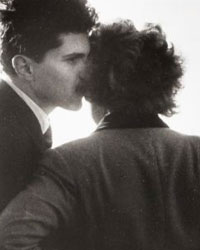
Dorothea Lange (1895–1965) - Salvation Army, San Francisco, California April 1939


04
days
10
hours
05
minutes
55
seconds
Current bid
€ 1
No reserve price

Expert
Selected by Elena Vaninetti
Has over ten years of experience in art, specialising in post-war photography and contemporary art.
Estimate € 300 - € 380
 | €1 |
|---|
Catawiki Buyer Protection
Your payment’s safe with us until you receive your object.View details
Trustpilot 4.4 | 142553 reviews
Rated Excellent on Trustpilot.
Dorothea Lange, Salvation Army, San Francisco, California, April 1939; gelatin-silver print, date of print 2004, edition 1, 40 cm high by 30 cm wide, very fine condition, stamped signature, portrait.
AI-assisted summary
Description from the seller
Salvation Army, San Francisco, California
April 1939
Exhibition print from DOROTHEA LANGE - PHOTOGRAPHIEN, Galerie Bilderwelt, Berlin 1998
The Great Depression was a dark chapter in American history for many.
After the stock market crash of 1929 and the ensuing bank runs and cutoffs in investment, unemployment reached a peak of 25 percent, upending the lives of many and turning stable families into roving migrant workers.
To show the success of their programs, the federal government sent photographers out across the country between 1935 and 1944 to document the nation.
The federal government hired some of the most influential photographers of the day to take the photos, including Dorothea Lange, Arthur Rothstein and Walker Evans, among many others.
Lange became famous for her work documenting the effects of the Depression for the FSA. Her photos taken in San Francisco provide a snapshot of the times and a haunting reminder about how conditions for some in S.F. haven't changed.
Many workers got jobs on federal Works Progress Administration projects or started farms through loans or other help from the Farm Security Administration.
Dorothea Lange documented the Salvation Army in San Francisco, California, in April 1939, creating a haunting series of images that captured the social dynamics of the Great Depression. These photographs, part of the FSA-OWI Collection at the Library of Congress, depict scenes such as unemployed men loitering near the army, street bands singing to attract crowds on Minna Street, and members preaching or engaging in self-denial practices.
Lange’s work from this period highlights the stark contrast between the Salvation Army’s efforts to provide aid and the pervasive poverty of the era, including scenes of men panhandling or relying on "bummed" meals. Her images serve as a historical record of how the Salvation Army operated in San Francisco during the height of the economic crisis, offering a glimpse into the lives of the unemployed and the charitable organizations that supported them.
Salvation Army, San Francisco, California
April 1939
Exhibition print from DOROTHEA LANGE - PHOTOGRAPHIEN, Galerie Bilderwelt, Berlin 1998
The Great Depression was a dark chapter in American history for many.
After the stock market crash of 1929 and the ensuing bank runs and cutoffs in investment, unemployment reached a peak of 25 percent, upending the lives of many and turning stable families into roving migrant workers.
To show the success of their programs, the federal government sent photographers out across the country between 1935 and 1944 to document the nation.
The federal government hired some of the most influential photographers of the day to take the photos, including Dorothea Lange, Arthur Rothstein and Walker Evans, among many others.
Lange became famous for her work documenting the effects of the Depression for the FSA. Her photos taken in San Francisco provide a snapshot of the times and a haunting reminder about how conditions for some in S.F. haven't changed.
Many workers got jobs on federal Works Progress Administration projects or started farms through loans or other help from the Farm Security Administration.
Dorothea Lange documented the Salvation Army in San Francisco, California, in April 1939, creating a haunting series of images that captured the social dynamics of the Great Depression. These photographs, part of the FSA-OWI Collection at the Library of Congress, depict scenes such as unemployed men loitering near the army, street bands singing to attract crowds on Minna Street, and members preaching or engaging in self-denial practices.
Lange’s work from this period highlights the stark contrast between the Salvation Army’s efforts to provide aid and the pervasive poverty of the era, including scenes of men panhandling or relying on "bummed" meals. Her images serve as a historical record of how the Salvation Army operated in San Francisco during the height of the economic crisis, offering a glimpse into the lives of the unemployed and the charitable organizations that supported them.
Details
Date of print
2004
Artist
Dorothea Lange (1895–1965)
Sold by
Owner or reseller
Title of artwork
Salvation Army, San Francisco, California April 1939
Condition
Very fine
Technique
Gelatin-silver print
Height
40 cm
Edition
1
Width
30 cm
Signature
Stamped
Genre
Portrait
Sold by