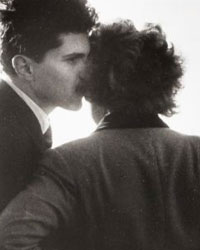
Dorothea Lange (1895–1965) - Sunday morning revival of the Victory through Christ Society in a garage. Dos Palos, Merced County,


02
days
09
hours
48
minutes
03
seconds
Starting bid
€ 1
No reserve price

Expert
Selected by Elena Vaninetti
Has over ten years of experience in art, specialising in post-war photography and contemporary art.
Estimate € 300 - € 380
No bids placed
Catawiki Buyer Protection
Your payment’s safe with us until you receive your object.View details
Trustpilot 4.4 | 142734 reviews
Rated Excellent on Trustpilot.
Dorothea Lange, Sunday morning revival of the Victory through Christ Society in a garage. Dos Palos, Merced County, a 2004 silver gelatin print (edition 1) measuring 30 × 40 cm, signed with a stamp.
AI-assisted summary
Description from the seller
Sunday morning revival of the Victory through Christ Society in a garage.
Dos Palos, Merced County, California
1938 June
Exhibition print from DOROTHEA LANGE - PHOTOGRAPHIEN, Galerie Bilderwelt, Berlin 1998
Dorothea Lange is a pioneering American documentary photographer whose work is deeply intertwined with the social and economic history of California during the 20th century. Born in New Jersey in 1895, she moved to California in 1918 and initially established a successful portrait studio in San Francisco, where she documented the city's affluent society.
During the Great Depression, Lange shifted her focus to social documentary photography, working for the Resettlement Administration and later the Farm Security Administration (FSA). Her most famous work, Migrant Mother (1936), was taken in Nipomo, California, and became an iconic image of the era's hardship. She extensively documented migrant workers, agricultural laborers, and the displaced poor throughout the state, including areas like Kern County, the Salinas Valley, and Imperial Valley.
In 1942, Lange photographed the forced removal and incarceration of Japanese Americans in California for the War Relocation Authority, capturing images from assembly centers like Tanforan and the Manzanar camp. Later in her career, she continued to document California's changing landscape, including the post-war industrial boom and environmental threats such as the flooding of the Napa Valley in the 1950s. Her extensive archive of over 25,000 negatives was donated to the Oakland Museum of California, ensuring her legacy as a chronicler of the state's most critical social issues.
Sunday morning revival of the Victory through Christ Society in a garage.
Dos Palos, Merced County, California
1938 June
Exhibition print from DOROTHEA LANGE - PHOTOGRAPHIEN, Galerie Bilderwelt, Berlin 1998
Dorothea Lange is a pioneering American documentary photographer whose work is deeply intertwined with the social and economic history of California during the 20th century. Born in New Jersey in 1895, she moved to California in 1918 and initially established a successful portrait studio in San Francisco, where she documented the city's affluent society.
During the Great Depression, Lange shifted her focus to social documentary photography, working for the Resettlement Administration and later the Farm Security Administration (FSA). Her most famous work, Migrant Mother (1936), was taken in Nipomo, California, and became an iconic image of the era's hardship. She extensively documented migrant workers, agricultural laborers, and the displaced poor throughout the state, including areas like Kern County, the Salinas Valley, and Imperial Valley.
In 1942, Lange photographed the forced removal and incarceration of Japanese Americans in California for the War Relocation Authority, capturing images from assembly centers like Tanforan and the Manzanar camp. Later in her career, she continued to document California's changing landscape, including the post-war industrial boom and environmental threats such as the flooding of the Napa Valley in the 1950s. Her extensive archive of over 25,000 negatives was donated to the Oakland Museum of California, ensuring her legacy as a chronicler of the state's most critical social issues.
Details
Date of print
2004
Artist
Dorothea Lange (1895–1965)
Sold by
Owner or reseller
Title of artwork
Sunday morning revival of the Victory through Christ Society in a garage. Dos Palos, Merced County,
Condition
Very fine
Technique
Gelatin-silver print
Height
30 cm
Edition
1
Width
40 cm
Signature
Stamped
Genre
Documentary photography
Sold by