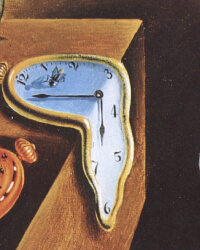
Nunzio Di Stefano (1954) - Acquaforte e punta secca 1985


07
days
22
hours
06
minutes
56
seconds

 | €1 |
|---|
Catawiki Buyer Protection
Your payment’s safe with us until you receive your object.View details
Trustpilot 4.4 | 142038 reviews
Rated Excellent on Trustpilot.
Nunzio Di Stefano, Acquaforte e punta secca 1985, an etching in aquaforte and drypoint, 50 × 35 cm sheet, edition 26/100, signed by hand, Italy, in excellent condition.
AI-assisted summary
Description from the seller
Nunzio Di Stefano (1954)
Etching and drypoint.
Plate 24 x 19.5 cm.
Sheet 50 x 35 cm, in editorial folder.
Signed and numbered (Esemplare 26/100) in pencil on the front.
Bezuga Editions 1985.
From the historic Capodopera folder, introductory text by Achille Bonito Oliva.
Nunzio, pseudonym of Nunzio Di Stefano (1954), is an Italian artist, sculptor and set designer.
In 1977 he graduated in Set Design with T. Scialoja. He is among the artists who establish their studio in the former Cerere pasta factory, in Rome’s San Lorenzo district, which becomes a vital center of the city’s artistic culture both locally and internationally. Together with D. Bianchi, B. Ceccobelli, G. Dessì, G. Gallo and P. Pizzi Cannella he helps found the Scuola di San Lorenzo. In these years he creates irregular forms in plaster and works in wood and in lead sheets cast into regular shapes. He first exhibited at Galleria Spazio in Bolzano (1981), then mounted his first Rome solo show at Galleria L’Attico (1984) where he returned to exhibit in 1986 and 1988. He participates in many of the most important national and international exhibitions, including: “Ateliers” at the Pastificio Cerere in Rome (1984), “Italie aujourd’hui” at the Centre National d’Art Contemporain in Nice (1985), “Nuove trame dell’arte” at Gennazzano, “Anniottanta” in Imola, Ravenna and Rimini, “La nuova scuola romana” at Galerie Bleich-Rossi in Graz, the Venice Biennale in the “Aperto” section (1986), the Rome Quadriennale (1986), “Geometrie dionisiache” at the Rotunda of Via Besana in Milan (1988), “Ottanta-Novanta” in Monreale (1992), “Cose d’Arte per Casa d’Arte” at A.A.M. Architettura Arte Moderna of Rome (1995), “Partito Preso: L’architetto e l’artista a confronto su un tema emblematico. L’ampliamento di spazi e funzioni della GNAM” in Rome (1996-1997). In later years he has presented numerous solo exhibitions in Italy and abroad, including the most important: at the Civica Galleria d’Arte Moderna in Modena (1987) and at Galleria dell’Oca in Rome (1991) where he showed a series of abstract works on paper. Confirming the critical reception of his artistic path, he has received several official awards including: the 2000 Prize for Best Young Artist in the “Aperto” section of the Venice Biennale (1986) and the President of the Republic Award for Sculpture (1998) on the nomination of the National Academy of Saint Luke, of which he has been a member since 2008.
Nunzio Di Stefano (1954)
Etching and drypoint.
Plate 24 x 19.5 cm.
Sheet 50 x 35 cm, in editorial folder.
Signed and numbered (Esemplare 26/100) in pencil on the front.
Bezuga Editions 1985.
From the historic Capodopera folder, introductory text by Achille Bonito Oliva.
Nunzio, pseudonym of Nunzio Di Stefano (1954), is an Italian artist, sculptor and set designer.
In 1977 he graduated in Set Design with T. Scialoja. He is among the artists who establish their studio in the former Cerere pasta factory, in Rome’s San Lorenzo district, which becomes a vital center of the city’s artistic culture both locally and internationally. Together with D. Bianchi, B. Ceccobelli, G. Dessì, G. Gallo and P. Pizzi Cannella he helps found the Scuola di San Lorenzo. In these years he creates irregular forms in plaster and works in wood and in lead sheets cast into regular shapes. He first exhibited at Galleria Spazio in Bolzano (1981), then mounted his first Rome solo show at Galleria L’Attico (1984) where he returned to exhibit in 1986 and 1988. He participates in many of the most important national and international exhibitions, including: “Ateliers” at the Pastificio Cerere in Rome (1984), “Italie aujourd’hui” at the Centre National d’Art Contemporain in Nice (1985), “Nuove trame dell’arte” at Gennazzano, “Anniottanta” in Imola, Ravenna and Rimini, “La nuova scuola romana” at Galerie Bleich-Rossi in Graz, the Venice Biennale in the “Aperto” section (1986), the Rome Quadriennale (1986), “Geometrie dionisiache” at the Rotunda of Via Besana in Milan (1988), “Ottanta-Novanta” in Monreale (1992), “Cose d’Arte per Casa d’Arte” at A.A.M. Architettura Arte Moderna of Rome (1995), “Partito Preso: L’architetto e l’artista a confronto su un tema emblematico. L’ampliamento di spazi e funzioni della GNAM” in Rome (1996-1997). In later years he has presented numerous solo exhibitions in Italy and abroad, including the most important: at the Civica Galleria d’Arte Moderna in Modena (1987) and at Galleria dell’Oca in Rome (1991) where he showed a series of abstract works on paper. Confirming the critical reception of his artistic path, he has received several official awards including: the 2000 Prize for Best Young Artist in the “Aperto” section of the Venice Biennale (1986) and the President of the Republic Award for Sculpture (1998) on the nomination of the National Academy of Saint Luke, of which he has been a member since 2008.
Details
Artist
Nunzio Di Stefano (1954)
Sold by
Owner or reseller
Edition
Limited edition
Edition number
26/100
Title of artwork
Acquaforte e punta secca 1985
Technique
Etching
Signature
Hand signed
Country of origin
Italy
Year
1985
Condition
Excellent condition
Height
50 cm
Width
35 cm
Style
Abstract
Period
1980-1990
Sold with frame
No