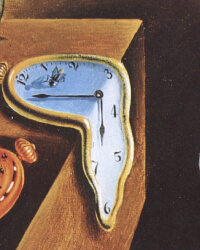
Piero Fornasetti (1913-1988) - Tema e Variazioni


04
days
03
hours
47
minutes
25
seconds

No bids placed
Catawiki Buyer Protection
Your payment’s safe with us until you receive your object.View details
Trustpilot 4.4 | 142876 reviews
Rated Excellent on Trustpilot.
Piero Fornasetti, Tema e Variazioni, a 1992 photogravure portrait (24.7 × 14.8 cm), unsigned and in very good condition.
AI-assisted summary
Description from the seller
Old Positive Film / Printer's Photogravure Typon
Dated 1992
Piero Fornasetti
From Tema e Variazioni
Dimensions 14.8 cm x 24.7 cm
Very good condition
The term typon is no longer used today. It was employed long ago when photogravure was still an art form and not an industry. It is worth recalling that at that time the usual average turnaround to complete a photogravure job varied from a few days to several weeks, with numerous back-and-forths between the client and the photograver to achieve a rendering as close as possible to the artist's original photograph.
Viewed from the back, the typon gives a completely different appearance, with the image inverted.
Technique:
Old-fashioned photogravure and the Printing Film:
The photograver produced, with special photographic equipment, from the photographer's original shot, films (typons). The film was a transparent photosensitive support used to engrave a printing plate for reproducing the work.
The films consisted of a polyester layer as well as a photosensitive layer that contained the halftone dots resulting from the photogravure.
Once produced by the photograver and validated by the artist, the agency or the rights holders, they were then sent to the printer in order to insolate the plates for the final offset printing of the work on a machine.
The typon served at the same time to produce a contractual proof made on a manual press that anticipated the rendering, the conformity of the work, and served as a reference for color calibration on the machine.
Old Positive Film / Printer's Photogravure Typon
Dated 1992
Piero Fornasetti
From Tema e Variazioni
Dimensions 14.8 cm x 24.7 cm
Very good condition
The term typon is no longer used today. It was employed long ago when photogravure was still an art form and not an industry. It is worth recalling that at that time the usual average turnaround to complete a photogravure job varied from a few days to several weeks, with numerous back-and-forths between the client and the photograver to achieve a rendering as close as possible to the artist's original photograph.
Viewed from the back, the typon gives a completely different appearance, with the image inverted.
Technique:
Old-fashioned photogravure and the Printing Film:
The photograver produced, with special photographic equipment, from the photographer's original shot, films (typons). The film was a transparent photosensitive support used to engrave a printing plate for reproducing the work.
The films consisted of a polyester layer as well as a photosensitive layer that contained the halftone dots resulting from the photogravure.
Once produced by the photograver and validated by the artist, the agency or the rights holders, they were then sent to the printer in order to insolate the plates for the final offset printing of the work on a machine.
The typon served at the same time to produce a contractual proof made on a manual press that anticipated the rendering, the conformity of the work, and served as a reference for color calibration on the machine.
Details
Date of print
1992
Artist
Piero Fornasetti (1913-1988)
Sold by
Owner or reseller
Title of artwork
Tema e Variazioni
Condition
Good condition
Technique
Photogravure
Height
24.7 cm
Width
14.8 cm
Signature
Not signed
Genre
Portrait
Sold by