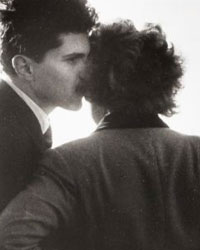
Julio Alvarez Yagüe - Sin título


04
days
00
hours
42
minutes
30
seconds
Current bid
€ 4
Reserve price not met

Expert
Selected by Elena Vaninetti
Has over ten years of experience in art, specialising in post-war photography and contemporary art.
Estimate € 1,500 - € 1,800
 | €4 | |
|---|---|---|
| €2 |
Catawiki Buyer Protection
Your payment’s safe with us until you receive your object.View details
Trustpilot 4.4 | 143038 reviews
Rated Excellent on Trustpilot.
Description from the seller
Three wonderful photographs by the great photographer Julián Álvarez Yagüe, hand-signed and numbered P.A. 3/3 for exquisite collectors.
Álvarez Yagüe’s photographs are highly coveted pieces among collectors and investors seeking high-quality postwar and contemporary Spanish photography.
Analogue black-and-white photography / Fine Art digital print on archival heavyweight paper
Julio Álvarez Yagüe is a fundamental figure in contemporary Spanish photography. His work, internationally acclaimed and represented in museum collections such as the Museo Nacional Centro de Arte Reina Sofía (MNCARS), the Instituto Valenciano de Arte Moderno (IVAM), and the Fundación Telefónica, is distinguished by exquisite technical rigor and a deep poetic sensitivity to the everyday.
Álvarez Yagüe’s work moves between geometric abstraction and architectural photography, seeking the essence of forms in the environment. His gaze disassembles reality, extracting textures and volumes that become abstract elements. He is a master of chiaroscuro, using light not only to illuminate but as a brush that draws lines, triangles, and circles that alter our perception of space.
First photograph:
Here, Yagüe presents us with an almost sculptural vision of urban furniture, transforming a simple sewer record into the epicenter of a storm of light and shadow.
The image is built from an extreme high-angle shot and a pronounced diagonal that divides the scene. The curve of the pipe or conduit creates an organic contrast with the rigidity of the surroundings.
The circular manhole cover, placed at the convergence point, acts as a visual focal point, magnetically drawing the eye. The concentric rings of the cover generate a sense of depth, almost like a vortex.
Despite the modernity of the subject, the photograph has a classical formal strength, where curves, straight lines, and deep grays combine in perfect harmony.
Second photograph:
This photograph is a perfect example of how Yagüe dissects a mundane urban setting to create a dynamic composition.
We see a strong contrast between the rough, granular surface of the main wall and the graphic, clean texture of the brick wall. Yagüe uses the frame to emphasize this clash of materials.
The most striking element is that white diagonal line in the foreground on the dark floor, which creates a powerful perspective and directs the gaze toward the center. The brick wall, abruptly cut at the upper left, generates visual tension that is asymmetrical.
In the upper right, a black, jagged shadow acts as another graphic element, as solid as the wall itself. It is not just a shadow; it is a form that balances the composition.
Third photograph:
The staircase appears as an element emerging from almost total darkness. A sunbeam illuminates the curved railing and the top three steps, creating a violent contrast with the deep shadows that surround them.
Raking light highlights the roughness of the wall, which seems like carved stone or stippled cement, and the texture of the step surface.
The curved railing guides the eye toward the darkness at the upper left, suggesting an ascent toward a hidden place. The composition creates an atmosphere of suspense and anticipation, where the staircase is more a metaphor for a visual journey than a functional object.
Three wonderful photographs by the great photographer Julián Álvarez Yagüe, hand-signed and numbered P.A. 3/3 for exquisite collectors.
Álvarez Yagüe’s photographs are highly coveted pieces among collectors and investors seeking high-quality postwar and contemporary Spanish photography.
Analogue black-and-white photography / Fine Art digital print on archival heavyweight paper
Julio Álvarez Yagüe is a fundamental figure in contemporary Spanish photography. His work, internationally acclaimed and represented in museum collections such as the Museo Nacional Centro de Arte Reina Sofía (MNCARS), the Instituto Valenciano de Arte Moderno (IVAM), and the Fundación Telefónica, is distinguished by exquisite technical rigor and a deep poetic sensitivity to the everyday.
Álvarez Yagüe’s work moves between geometric abstraction and architectural photography, seeking the essence of forms in the environment. His gaze disassembles reality, extracting textures and volumes that become abstract elements. He is a master of chiaroscuro, using light not only to illuminate but as a brush that draws lines, triangles, and circles that alter our perception of space.
First photograph:
Here, Yagüe presents us with an almost sculptural vision of urban furniture, transforming a simple sewer record into the epicenter of a storm of light and shadow.
The image is built from an extreme high-angle shot and a pronounced diagonal that divides the scene. The curve of the pipe or conduit creates an organic contrast with the rigidity of the surroundings.
The circular manhole cover, placed at the convergence point, acts as a visual focal point, magnetically drawing the eye. The concentric rings of the cover generate a sense of depth, almost like a vortex.
Despite the modernity of the subject, the photograph has a classical formal strength, where curves, straight lines, and deep grays combine in perfect harmony.
Second photograph:
This photograph is a perfect example of how Yagüe dissects a mundane urban setting to create a dynamic composition.
We see a strong contrast between the rough, granular surface of the main wall and the graphic, clean texture of the brick wall. Yagüe uses the frame to emphasize this clash of materials.
The most striking element is that white diagonal line in the foreground on the dark floor, which creates a powerful perspective and directs the gaze toward the center. The brick wall, abruptly cut at the upper left, generates visual tension that is asymmetrical.
In the upper right, a black, jagged shadow acts as another graphic element, as solid as the wall itself. It is not just a shadow; it is a form that balances the composition.
Third photograph:
The staircase appears as an element emerging from almost total darkness. A sunbeam illuminates the curved railing and the top three steps, creating a violent contrast with the deep shadows that surround them.
Raking light highlights the roughness of the wall, which seems like carved stone or stippled cement, and the texture of the step surface.
The curved railing guides the eye toward the darkness at the upper left, suggesting an ascent toward a hidden place. The composition creates an atmosphere of suspense and anticipation, where the staircase is more a metaphor for a visual journey than a functional object.
Details
Artist
Julio Alvarez Yagüe
Sold by
Direct from the artist
Title of artwork
Sin título
Condition
Extremely fine
Technique
Digital print, Other
Height
48.5 cm
Edition
P.A. 3/3
Width
33 cm
Signature
Hand signed
Genre
Architecture
Sold by