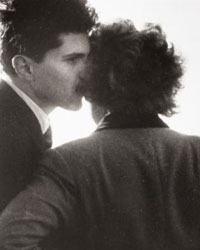
Anton Stankowski (1907-1998) - Death to Fascism (A Child's Drawing in Gelsenkirchen), 1929


05
days
23
hours
21
minutes
35
seconds
Current bid
€ 2
Reserve price not met

Expert
Selected by Elena Vaninetti
Has over ten years of experience in art, specialising in post-war photography and contemporary art.
Estimate € 400 - € 500
 | €2 | |
|---|---|---|
| €1 |
Catawiki Buyer Protection
Your payment’s safe with us until you receive your object.View details
Trustpilot 4.4 | 143856 reviews
Rated Excellent on Trustpilot.
Anton Stankowski, Death to Fascism (A Child's Drawing in Gelsenkirchen), 1929, a gelatin-silver print, 38 × 28 cm, edition 18/25, signed by the photographer and in very fine condition.
AI-assisted summary
Description from the seller
Anton Stankowski (1907-1998), Death to Fascism (A Child's Drawing in Gelsenkirchen), 1929
Later gelatin-silver print with the original negative. Signed and numbered by the photographer (recto).
In fine condition, signs of previous mounting, fault to the edge lower left corner. Please see scans for complete impression.
The photograph will be carefully packaged and sent with tracking.
Anton Stankowski (1906–1998) was a German photographer, graphic designer, and artist, widely regarded as a pioneer of modernist photography, the New Vision movement (Neues Sehen), and modern visual communication. Born in Gelsenkirchen, he studied photography, typography, and graphic design at the Folkwang School in Essen under Max Burchartz from 1927, where he was introduced to the experimental principles of Constructivism and the European avant-garde. During the late 1920s and early 1930s, Stankowski developed a distinctive photographic language characterized by unconventional perspectives, geometric abstraction, dramatic contrasts, and an innovative approach to everyday subjects. His photographs explored industrial structures, urban environments, movement, human figures, and ordinary objects, often transforming seemingly insignificant details into striking modernist compositions. In 1929, he moved to Zurich to work at the renowned advertising studio of Max Dalang, where he pioneered the integration of photography and typography and became closely associated with leading figures of Swiss modernism, including Max Bill, Richard Paul Lohse, and Herbert Matter. His photographic practice encompassed experimental photography, photomontage, street photography, and social documentary, reflecting both the aesthetic innovations and the changing social realities of interwar Europe. After the Second World War, he established his own design studio in Stuttgart in 1951 and became one of Germany's most influential graphic designers, notably creating the iconic Deutsche Bank logo. His work was presented at documenta III in Kassel in 1964, and major retrospectives have been held at the Staatsgalerie Stuttgart and Museum Haus Konstruktiv in Zurich. His photography was also the subject of a dedicated exhibition at the Zeppelin Museum in Friedrichshafen in 2012–2013. Today, Stankowski is recognized as an important figure in twentieth-century avant-garde photography, whose work bridges documentary observation, photographic experimentation, Constructivism, and modern graphic design.
Seller's Story
International bidders are very welcome.
Please kindly note that shipments to destinations outside the EU customs territory and/or EU VAT area may be subject to import duties, local taxes, customs clearance fees, or other import-related charges.
Such charges are not included in the purchase price or shipping costs and, where applicable, are the responsibility of the buyer.
Buyers are kindly advised to take any potential import costs into consideration before bidding.
Details
Artist
Anton Stankowski (1907-1998)
Sold by
Owner or reseller
Title of artwork
Death to Fascism (A Child's Drawing in Gelsenkirchen), 1929
Condition
Very fine
Technique
Gelatin-silver print
Height
38 cm
Edition
18/25
Width
28 cm
Signature
Hand signed
Genre
Fine art photography