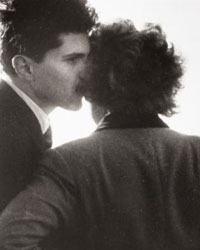
Robert Capa (1913–1954) - Tour de France, 1939


03
days
04
hours
26
minutes
59
seconds
Current bid
€ 51
No reserve price

Expert
Selected by Elena Vaninetti
Has over ten years of experience in art, specialising in post-war photography and contemporary art.
Estimate € 600 - € 750
 | €51 | |
|---|---|---|
 | €48 | |
| €45 | |
Catawiki Buyer Protection
Your payment’s safe with us until you receive your object.View details
Trustpilot 4.4 | 145304 reviews
Rated Excellent on Trustpilot.
Robert Capa’s *Tour de France, 1939* is a gelatin-silver print from 2018, edition of 5.
AI-assisted summary
Description from the seller
Robert Capa's photo essay on the 1939 Tour de France—which includes his famous imagery of the spectators along the route—is considered one of the defining visual portraits of pre-war France.
Historical Context: July 1939
Taken just weeks before the outbreak of World War II, Capa covered the July 1939 Tour de France for French magazines like Match. At only 25 years old, Capa was already famous for his battlefield photography in the Spanish Civil War. Covering the Tour de France offered a brief, joyful respite from combat reporting, though the shadow of impending war hung over Europe.
Key Themes & Features of the Photographs
• Human-Centered Focus over Action: While sports photographers typically focused on the finish lines or high-speed sprints, Capa turned his lens to the edges of the road. He was drawn to the French working class, schoolboys lined up on stone walls, and villagers waiting outside bike shops in rural Brittany to hear updates.
• Intimacy and Humanity: Capturing spectators leaning forward in anticipation, shouting, or simply relaxing on the grass, the series highlights Capa’s signature style: "If your pictures aren't good enough, you aren't close enough." His images frame the race not just as a sporting event, but as a shared civic ritual that united small towns across the country.
• A Time Capsule of Pre-War France: The spectators’ clothing—flat caps, berets, wool suits, and traditional aprons—documents an era of French life right before it was altered by World War II. The 1939 Tour was the last edition of the race held until 1947 due to the German occupation of France.
Capa's Tour de France work remains celebrated because it captured the joy, everyday beauty, and quiet moments of public life before the continent plunged into conflict.
Robert Capa born Endre Ernő Friedmann (Budapest, October 22, 1913 – Thái Bình Province, Vietnam, May 25, 1954)
Friedman had fled political repression in Hungary when he was a teenager, moving to Berlin, where he enrolled in the university. He worked part-time as a darkroom assistant for income and then became a staff photographer for the German photographic agency, Dephot. He witnessed the rise of Hitler, which led him to move to Paris, where he met and began to work with his professional partner Gerda Taro, and they began to publish their work separately.
He subsequently covered five wars: the Spanish Civil War, the Second Sino-Japanese War, World War II across Europe, the 1948 Arab–Israeli War, and the First Indochina War, with his photos published in major magazines and newspapers.
In 1947, for his work recording World War II in pictures, U.S. general Dwight D. Eisenhower awarded Capa the Medal of Freedom. That same year, Capa co-founded Magnum Photos in Paris.
His biography is well described in Wikipedia
https://en.wikipedia.org/wiki/Robert_Capa
Details
Date of print
2018
Artist
Robert Capa (1913–1954)
Sold by
Owner or reseller
Title of artwork
Tour de France, 1939
Condition
Extremely fine
Technique
Gelatin-silver print
Height
24 cm
Edition
5
Width
30 cm
Signature
Stamped
Genre
Photojournalism
Sold by