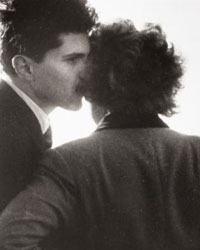
Edward Weston (1886–1958) - Tina Modotti on the azotea, Mexico City, 1924


06
days
10
hours
35
minutes
15
seconds

 | €16 | |
|---|---|---|
 | €11 | |
| €8 | |
Catawiki Buyer Protection
Your payment’s safe with us until you receive your object.View details
Trustpilot 4.4 | 145414 reviews
Rated Excellent on Trustpilot.
Edward Weston’s gelatin-silver print Tina Modotti on the azotea, Mexico City, 1924 was printed in 2021 and is edition 11.
AI-assisted summary
Description from the seller
Edward Weston (1886–1958) - Tina Modotti on the azotea, Mexico City, 1924
The series of nude photographs of Tina Modotti taken by Edward Weston in 1924 on the azotea (rooftop) of their home at Avenida Veracruz 42 in Mexico City represents a landmark moment in the history of modernist photography.
In July 1923, Edward Weston left his family in California and moved to Mexico with his lover, model, and fellow artist, Tina Modotti. Their home in Mexico City quickly became a creative hub.
According to Weston’s Daybooks, the legendary rooftop nudes were born entirely out of spontaneity. He had gone up to the azotea with his heavy 4x5 camera intending to photograph clouds. However, as he wrote in his journal:
"My eyes and thoughts were heavenward indeed—until glancing down, I saw Tina lying naked on the azotea, taking a sunbath. My cloud 'sitting' was ended, my camera turned down toward a more earthly theme..."
• A Shift to Realism: Moving away from his early, soft-focused pictorialist style, Weston shot with a high overhead, diagonal angle and sharp focus.
• Juxtaposition of Textures: The images emphasize the smooth, voluptuous curves and sleek sheen of Modotti’s sunlit skin contrasting sharply against the rough, gritty texture of the rooftop tiles and the jerga (a coarse floor cloth) beneath her.
• Geometrical Abstraction: By having Modotti tuck her hands under her back, Weston removed distracting extremities, turning her torso into a sequence of sweeping, sculptural lines.
• The "Sleeping Woman" Parallel: Art historians and critics have noted a striking visual metaphor in the composition: the unique silhouette and shadow of Modotti’s resting body closely mimic the outline of Iztaccíhuatl (La Mujer Dormida or "The Sleeping Woman"), the famous volcano visible from the rooftops of Mexico City.
• Weston printed several subtly different versions from this session using gelatin silver, platinum, and palladium formats. In a March 12, 1924 journal entry, he proudly noted: "From the negatives made of Tina lying nude on the azotea... one very excellent result which I have printed: it is among the best nudes I have done."
• The images were first publicly exhibited at a gallery on Calle Madero in downtown Mexico City later that year. They caught the attention of the Mexican avant-garde, including master muralist Diego Rivera, who bought a print of Tina on the Azotea and later used Modotti’s pose as the direct model for the female nudes in his famous Chapingo National School of Agriculture murals.
Edward Weston was a self-taught photographer who migrated to California from the midwest and began his commercial career shooting portraits in Glendale. His early style was characterized by a soft-focus approach that emulated painting and was associated with a school of photography known as Pictorialism. Later, Weston was a member of Group f/64—a community of artist-photographers who developed a photographic vocabulary and visual style described as California Modernism.
In 1921 Weston met Tina Modotti, a young Hollywood actress and political activist, and they formed an intense romantic and professional relationship. The couple traveled to Mexico City, where they lived from 1923 to 1927, and opened a portrait studio. Soon they were introduced to leading figures of radical political and the artistic avant-garde who profoundly influenced Weston, including Diego Rivera and Frida Kahlo.
Details
Date of print
2021
Artist
Edward Weston (1886–1958)
Sold by
Owner or reseller
Title of artwork
Tina Modotti on the azotea, Mexico City, 1924
Condition
Extremely fine
Technique
Gelatin-silver print
Height
30 cm
Edition
11
Width
24 cm
Signature
Stamped
Genre
Nude
Sold by