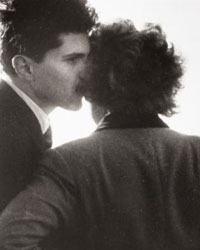
Weegee (1899–1968) - Summer, The Lower East Side, New York City“ (ca. 1937)


01
day
08
hours
13
minutes
17
seconds
Current bid
€ 39
No reserve price

Expert
Selected by Elena Vaninetti
Has over ten years of experience in art, specialising in post-war photography and contemporary art.
Estimate € 300 - € 380
 | €39 | |
|---|---|---|
 | €36 | |
 | €33 | |
Catawiki Buyer Protection
Your payment’s safe with us until you receive your object.View details
Trustpilot 4.4 | 145967 reviews
Rated Excellent on Trustpilot.
Weegee’s gelatin-silver print *Summer, The Lower East Side, New York City* (ca. 1937) was printed in 2010 and is numbered 11.
AI-assisted summary
Description from the seller
New York Summer
Children cool down in the spray from a fire hydrant during a hot summer on New York's Lower East Side, ca. 1937.
Weegees berühmtes Foto „Summer, The Lower East Side, New York City“ (ca. 1937) ist eines der ikonischsten Zeugnisse des New Yorker Straßenlebens vor dem Zeitalter der Klimaanlagen. Während der Fotograf sonst für seine kompromisslosen, oft düsteren Schnappschüsse von Tatorten bekannt war, fängt dieses Bild einen Moment purener, unbeschwerter Lebensfreude inmitten urbaner Enge ein.
Eine Gruppe von Kindern versammelt sich um einen geöffneten Hydranten. Das Wasser spritzt wie ein improvisierter Springbrunnen über die asphaltierte Straße. Ein Junge sitzt entspannt auf dem Bordstein und kühlt seine Füße im abfließenden Wasser, während andere Kinder lachend mitten im kühlen Sprühnebel stehen.
In den extrem heißen Sommern der 1930er Jahre verwandelten sich die dicht besiedelten Mietshäuser (Tenements) der Lower East Side in unerträgliche Hitzekessel. Da es keine Klimaanlagen gab, verlagerte sich das gesamte Leben auf die Straße, auf die eisernen Feuerleitern oder sogar nachts zum Schlafen in den Central Park. Das illegale oder geduldete Öffnen von Hydranten war die einzige Möglichkeit für Kinder, der drückenden Hitze zu entkommen.
Im Hintergrund zeichnen sich die typischen Backsteinfassaden der New Yorker Wohnblöcke ab, an deren Feuerleitern frisch gewaschene Wäsche zum Trocknen hängt. Die Kleidung der Kinder spiegelt die Mode der Arbeiterklasse der Jahrhundertmitte wider. Der Kontrast zwischen dem harten, von Armut geprägten Umfeld und dem ungetrübten Glück der Kinder verleiht dem Bild seine zeitlose Kraft.
Exhibition Print based on the 1982 prints by Sid Kaplan, roduced for Amber Film & Photography Collective, Newcastle upon Tyne (UK).
Arthur (Usher) Fellig (June 12, 1899 – December 26, 1968), known by his pseudonym Weegee, was a photographer and photojournalist, known for his stark black and white street photography in New York City.
Weegee worked in Manhattan's Lower East Side as a press photographer during the 1930s and 1940s and developed his signature style by following the city's emergency services and documenting their activity.[2] Much of his work depicted unflinchingly realistic scenes of urban life, crime, injury and death.
He worked at night and competed with the police to be first at the scene of a crime, selling his photographs to tabloids and photographic agencies.[5] His photographs, centered around Manhattan police headquarters, were soon published by the Daily News and other tabloids, as well as more upscale publication such as Life magazine.
Most of his notable photographs were taken with very basic press photographer equipment and methods of the era, a 4×5 Speed Graphic camera preset at f/16 at 1/200 of a second, with flashbulbs and a set focus distance of ten feet.[11] He was a self-taught photographer with no formal training.
Five of his photographs were acquired by the Museum of Modern Art (MoMA) in 1943. These works were included in its exhibition Action Photography.[21] He was later included in "50 Photographs by 50 Photographers", another MoMA show organized by photographer Edward Steichen,.
Naked City (1945) was his first book of photographs. Film producer Mark Hellinger bought the rights to the title from Weegee.[21] In 1948, Weegee's aesthetic formed the foundation for Hellinger's film The Naked City. It was based on a gritty 1948 story written by Malvin Wald about the investigation into a model's murder in New York.
In the 1950s and 1960s, Weegee experimented with panoramic photographs, photo distortions and photography through prisms. Using a plastic lens, he made a famous photograph of Marilyn Monroe in which her face is grotesquely distorted yet still recognizable.
Weegee can be seen as the American counterpart to Brassaï, who photographed Paris street scenes at night. Weegee's themes of nudists, circus performers, freaks and street people were later taken up and developed by Diane Arbus in the early 1960s.
Details
Date of print
2010
Artist
Weegee (1899–1968)
Sold by
Owner or reseller
Title of artwork
Summer, The Lower East Side, New York City“ (ca. 1937)
Condition
Extremely fine
Technique
Gelatin-silver print
Height
24 cm
Edition
11
Width
30 cm
Signature
Stamped
Genre
Cityscape
Sold by