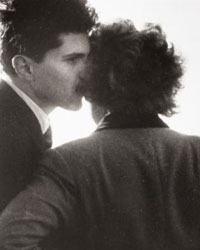
Dorothea Lange (1895–1965) - Negro women near Earle, Arkansas. 1936


04
days
12
hours
10
minutes
08
seconds
Current bid
€ 2
No reserve price

Expert
Selected by Elena Vaninetti
Has over ten years of experience in art, specialising in post-war photography and contemporary art.
Estimate € 300 - € 380
 | €2 | |
|---|---|---|
 | €1 |
Catawiki Buyer Protection
Your payment’s safe with us until you receive your object.View details
Trustpilot 4.4 | 145662 reviews
Rated Excellent on Trustpilot.
Dorothea Lange (1895–1965), *Negro women near Earle, Arkansas. 1936*, gelatin-silver print from 2022, edition 11, stamped, measuring 30 × 24 cm.
AI-assisted summary
Description from the seller
"Negro women near Earle, Arkansas" is a lesser-known yet poignant documentary photograph taken by legendary photojournalist Dorothea Lange in July 1936. Captured during the height of the Great Depression, the image serves as an intimate window into the private lives of African American sharecropping families navigating the structural inequalities of the Jim Crow agrarian South.
• The Scene: The photograph captures an intimate, gentle family moment on a wooden porch. An African American mother sits on a chair, tenderly cradling her baby in her lap, while a female relative or daughter stands behind her, carefully braiding her hair. Another young child sits quietly nearby on a separate chair, watching.
• The Medium: Lange shot this image using a square-format 2 1/4 x 2 1/4 inch nitrate negative. The tight framing emphasizes the emotional connection, domestic routine, and warmth between the subjects, contrasting with the harsh economic realities surrounding them.
Historical Context & Purpose
• The FSA Commission: The photograph was taken as part of Lange's work for the federal Farm Security Administration (FSA). The agency hired photographers to document the devastating impacts of the Depression, rural poverty, and migrant working conditions to generate public support for New Deal relief programs.
• Sharecropping Realities: While social media captions occasionally mislabel the family as "migrant workers," historical records and community context indicate they were sharecroppers or tenant farmers living in Crittenden County, Arkansas. Under this highly exploitative economic system, entire families—from children to elders—were forced to labor Dorothea Lange (May 26, 1895 – October 11, 1965) was an influential American documentary photographer and photojournalist. Best known for her powerful chronicles of human suffering during the Great Depression, her work fundamentally shaped the field of social documentary photography and proved that a camera could be a powerful tool for political and social reform. [1, 2]
•
Early Life and Challenges
• Childhood Struggles: Born Dorothea Nutzhorn in Hoboken, New Jersey, she contracted polio at age seven, which left her with a permanent limp—a physical vulnerability she later credited with helping her empathize with the people she photographed.
• A Bold Transition: After her father abandoned the family, she adopted her mother’s maiden name, Lange. Despite never owning a camera, she decided as a teenager to become a photographer. She studied at Columbia University under Clarence H. White and moved west, opening a highly successful commercial portrait studio for San Francisco's elite in 1919.
• The Great Depression and the FSA
• Stepping Into the Streets: The 1929 stock market crash completely shifted her focus. Discarding her comfortable studio work, she took her camera to the streets to document breadlines and labor strikes.
• Exposing Rural Poverty: Her striking street photographs caught the attention of federal authorities and UC Berkeley economist Paul Schuster Taylor (whom she married in 1935). Working for the Farm Security Administration (FSA), the couple traveled extensively across the U.S. Lange captured the definitive visual record of displaced farmers, dust bowl migrants, and exploited sharecroppers.
• The Ultimate Icon: In 1936, she captured Migrant Mother, a portrait of Florence Owens Thompson and her children in a California pea-pickers camp. It became one of the most famous and widely reproduced images in photographic history.
• WWII and Wartime Censorship
• Documenting Injustice: In 1941, Lange became the first woman awarded a Guggenheim Fellowship. However, she put it on hold during World War II when the U.S. War Relocation Authority hired her to photograph the forced relocation of Japanese Americans.
• Suppressed Truths: Rather than capturing standard government propaganda, Lange documented the bleak, inhumane reality of the internment camps. Disturbed by her critical eye, the U.S. Army impounded her photographs and suppressed them from public view until after the war.
• Later Years and Legacy
• International Vision: In the 1950s and 60s, she struggled with chronic illness but continued working, co-founding the prestigious photography magazine Aperture and traveling the globe to shoot photo essays for Life magazine.
• Final Bow: Lange died of esophageal cancer in 1965. Just months after her death, the Museum of Modern Art (MoMA) in New York honored her with a massive career retrospective, making her the first woman to receive a solo photography retrospective at the institution.
Details
Date of print
2022
Artist
Dorothea Lange (1895–1965)
Sold by
Owner or reseller
Title of artwork
Negro women near Earle, Arkansas. 1936
Condition
Extremely fine
Technique
Gelatin-silver print
Height
30 cm
Edition
11
Width
24 cm
Signature
Stamped
Genre
Portrait
Sold by