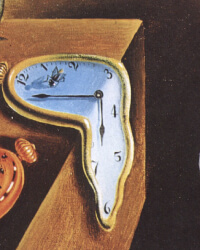
Errö (1932) - Untitled (Espace)


10
days
01
hour
53
minutes
48
seconds

No bids placed
Catawiki Buyer Protection
Your payment’s safe with us until you receive your object.View details
Trustpilot 4.4 | 145879 reviews
Rated Excellent on Trustpilot.
Erró’s *Untitled (Espace)* (2020) is a signed and numbered digital pigment print in a limited edition of 75, measuring 56 × 54 cm.
AI-assisted summary
Description from the seller
Erró (born 1932 in Ólafsvík, Iceland), actually Guðmundur Guðmundsson, is one of the most internationally influential contemporary Icelandic artists. For many decades he has lived and worked between Paris and Spain and has developed into a key figure of European Pop Art and politically charged visual culture.
Already in the early 1960s Erró made headlines as the first Icelandic artist to organize Happenings and to participate in intermedial art actions. In parallel, he experimented with film and early forms of media art. He became worldwide known primarily for his vividly colored paintings and complex collages, in which he interwove popular visual worlds, political iconography, and visual mass culture. His works are characterized by exuberant imagery, satirical twists, and a critical play with consumption, power, and globalization.
Erró’s works are represented in major international museums, including the Museum of Modern Art in New York, the Musée d’Art Moderne de la Ville de Paris, and the Louisiana Museum of Modern Art in Denmark. However, the world’s largest collection of his artistic output is in the Reykjavik Art Museum (Listasafn Reykjavíkur), which honors Erró’s work in several extensive presentations.
With his unmistakable style, his cultural impact, and his decades-long presence in the international art scene, Erró is today regarded as one of the most influential voices in European contemporary art.
Details
Sold by
Owner or reseller
Edition
Limited edition
Edition number
75
Artist
Errö (1932)
Title of artwork
Untitled (Espace)
Technique
Digital print
Signature
Hand signed
Country of origin
France
Year
2020
Condition
Excellent condition
Height
56 cm
Width
54 cm
Style
Pop Art
Sold with frame
No
Period
2010-2020
Sold by