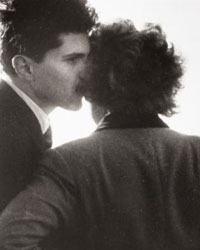
AMADOR VALES (1897–1965). - (Photo XL) Imagén inédita del Lider Che Guevara con cámara de fotografiar, 1959.


00
days
19
hours
29
minutes
26
seconds
Current bid
€ 90
Reserve price not met

Expert
Selected by Elena Vaninetti
Has over ten years of experience in art, specialising in post-war photography and contemporary art.
Estimate € 400 - € 500
 | €90 | |
|---|---|---|
| €77 | |
 | €66 | |
Catawiki Buyer Protection
Your payment’s safe with us until you receive your object.View details
Trustpilot 4.4 | 146424 reviews
Rated Excellent on Trustpilot.
Amador Vales’s documentary photograph, titled “(Photo XL) Imagén inédita del Lider Che Guevara con cámara de fotografiar, 1959”, depicts Che Guevara with a camera.
AI-assisted summary
Description from the seller
An extraordinary and extremely rare image of Ernesto “Che” Guevara, showing him with his inseparable camera hanging around his neck beside its leather case, wearing his iconic beret and the thoughtful yet defiant expression that made him a universal symbol.
Few images reveal the intimate and artistic side of Che Guevara with such humanity—a man who, before becoming a guerrilla fighter, doctor, and revolutionary leader, was also passionate about photography.
During his stay in Mexico City, before meeting Fidel Castro, the young Ernesto worked as a street photographer in plazas and parks, making a living by taking portraits of passersby and families with his portable camera. That early experience of looking through a viewfinder left a profound mark on him, and from then on, photography became a way for him to observe the world with depth, empathy, and an aesthetic sensibility.
This image captures that very duality: the revolutionary and the observer, the man of action who never relinquished the poetic power of the gaze. The camera hanging over his chest symbolizes a little-known sensitivity in his character: that of a creator who also wanted to document reality through his own eyes.
The photographer behind this image, master Amador Vales, managed to capture Che’s serenity, magnetism, and introspection in a single instant. His technical mastery and journalistic instinct make this piece one of the most distinctive visual representations of the revolutionary myth, where history and art converge.
For its rarity, quality, and historical context, this previously unpublished photograph is a genuine gem for collectors of Cuban photography, especially because of its direct connection to the legendary archive of one of the island’s great pioneers of photojournalism.
Photographer biography:
FÉLIX TOMÁS AMADOR VALES GONZÁLEZ (1897–1965)
Pioneer of Cuban photojournalism.
Childhood and training
Félix Tomás Amador Vales González was born in the Canary Islands in 1897. Following the Spanish-American War, his parents emigrated to Cuba and settled in Havana. He showed an artistic inclination from a young age, and at just 16, in 1913, he decided to leave school and join Bohemia magazine, where he began as an assistant to the art director, Antonio Rodríguez Morey. Recognizing his talent, Morey encouraged him to study photography and engraving in the workshops of the newspaper La Discusión, under the tutelage of the renowned master Federico Gibert.
Through dedication, Vales progressed from apprentice to staff photographer. In 1917, at only 20, he became Bohemia magazine’s first photographer, marking the beginning of a career spanning more than half a century and closely tied to Cuba’s visual history.
Bohemia and the birth of Cuban photojournalism
During his early years at Bohemia, Vales witnessed the magazine’s transformation into a modern, popular publication. In 1927, when Miguel Ángel Quevedo Lastra took over as director, Bohemia modernized its format and gave greater prominence to images. As its sole staff photographer, Vales became essential to this process, bringing a fresh, daring perspective that blended technical skill with artistic sensitivity.
At the same time, he opened his own photography studio on Belascoaín Street, near the corner of San Rafael, known as “Foto Vales,” where he took portraits and ID photos and produced postcards. He also worked with his former teacher, Federico Gibert, to organize the photography department of the newspaper El País between 1924 and 1927.
Around this time, press photography was beginning to establish itself in Cuba. Until then, illustrated magazines had relied on images supplied by newspaper photographers, who worked independently. Vales was part of the first generation to professionalize the trade within an editorial staff, paving the way for modern photojournalism on the island.
The photographer of troubled times
Vales’s talent and courage became especially evident during the turbulent years of Gerardo Machado’s dictatorship. Bohemia openly supported popular causes, and Vales risked his life covering student protests and police crackdowns. He earned a reputation for fearlessness: his colleagues said that, being deaf, he could not hear the gunfire and would keep photographing under fire, focused solely on getting the best image.
Professor and photographer Rafael Pegudo Gallardo recalled:
“Vales always stood out for his audacity in photographing gunfights and the brutal abuses of Machado’s police… When Machado fell, on August 12, 1933, I ran into him during the gunfight in front of the pharmacy at Prado and Virtudes. We both photographed the moment when the people hoisted the body of the head of ‘la Porra’ onto the bronze lion on Prado. Bohemia published Vales’s photo, which was better, and it went around the world.”
During his career, Vales also documented natural disasters such as the 1926 cyclone, capturing iconic images of Parque Maceo in front of Havana’s seawall. His work was always characterized by immediacy, technical precision, and profound humanity.
In the 1940s, Bohemia publicly praised his courage. A note published on January 13, 1946, read:
“During the street brawls in Havana, Amador Vales was the photographer who brought the best images to his newspaper. No one could match him when it came to plunging into a riot and advancing in the face of gunfire from sawed-off weapons.”
His deafness, which might have been a disadvantage, became his greatest shield: Vales could not hear danger; he only saw history.
Final years and legacy
Throughout his career, Vales witnessed military coups, periods of gangsterism, and revolutions. In January 1959, now a veteran, he picked up his camera again to photograph Fidel Castro’s triumphant arrival in Havana and the first steps of the new revolutionary government.
In the 1960s, together with his son José Raúl Vales, he founded Studio Vales at 310 Belascoaín Street, where they also did screen-printing work in addition to photography. The studio was nationalized during the Revolutionary Offensive.
On August 25, 1965, Bohemia published a moving obituary:
“At the age of 68, comrade Amador Vales González passed away. For more than fifty years, since 1913, he had been a photojournalist for Bohemia and other Havana publications. A true soldier of the news, more than half a century of Cuban history passed before Vales’s camera… In his steadfast commitment to discipline and camaraderie, Vales was a true frontline worker, as well as an example of generous humanity. His passing is an irreparable loss for the national press and a time of mourning for Bohemia.”
For five decades, the byline “Fotos de Vales” appeared on Cuba’s most important picture pages. His images became a direct record of the country’s historical course, from cyclones to revolutions, as well as the everyday life of a nation in transformation.
Significance and importance
Amador Vales González is remembered today as Bohemia magazine’s first professional photographer and one of the founding figures of Cuban photojournalism. His work, marked by courage, sensitivity, and social commitment, represents an essential chapter in the history of Latin American photography.
His original photographs, many signed or originating from the family archive, are considered valuable historical and documentary works, sought after by collectors and institutions who recognize in his work the pioneering eye of a man who documented Cuban history from within.
Note: The image of photographer Amador that appears last in the description is not included with the photograph for sale.
Details
Artist
AMADOR VALES (1897–1965).
Sold by
Agent
Title of artwork
(Photo XL) Imagén inédita del Lider Che Guevara con cámara de fotografiar, 1959.
Condition
Extremely fine
Technique
Other
Height
42 cm
Width
30 cm
Signature
Stamped
Genre
Documentary photography
Sold by