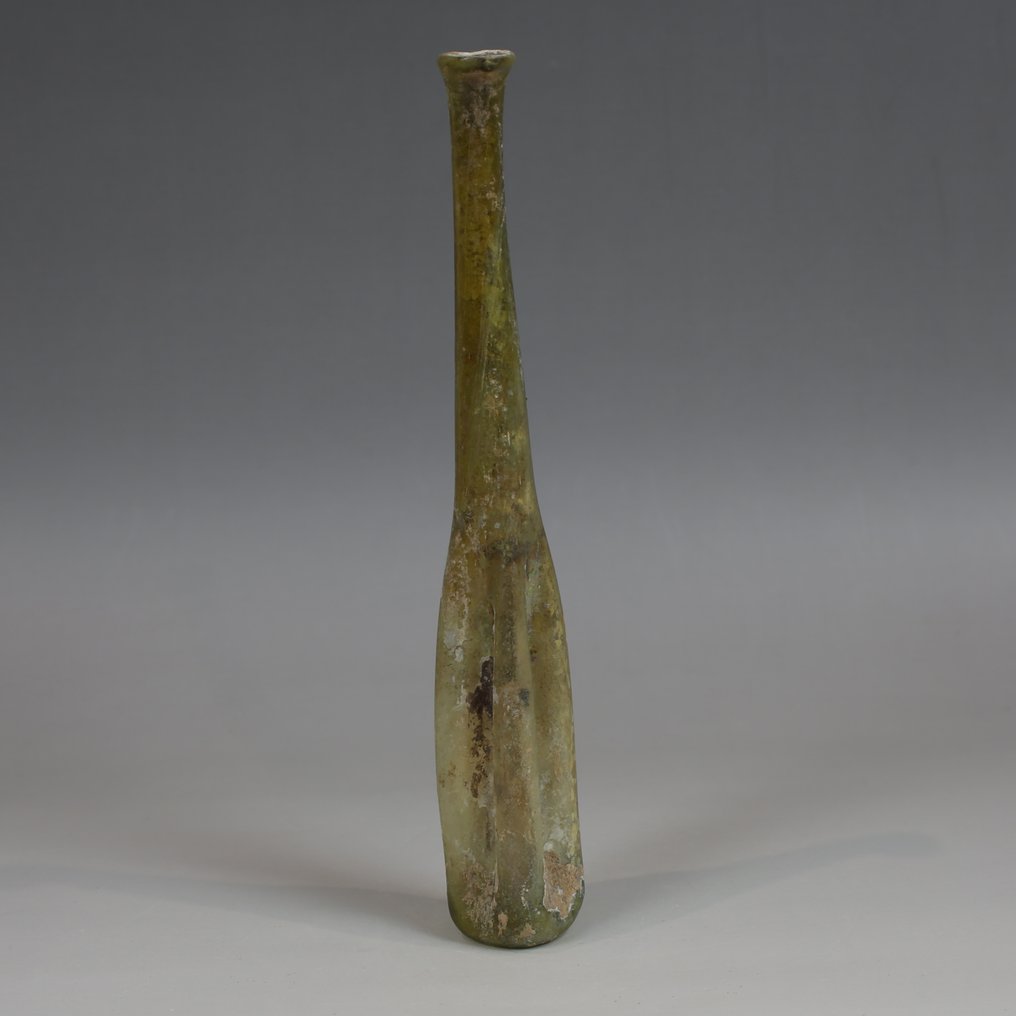
Oud-Romeins Glas Flask.


00
dagen
19
uren
43
minuten
54
seconden
Huidig bod
€ 60
Minimumprijs niet bereikt

Expert
Geselecteerd door Ruth Garrido Vila
Was directeur van het Ifergan Collection Museum, gespecialiseerd in Fenicische archeologie.
Geschatte waarde € 330 - € 400
11 andere personen volgen dit object
 Bieder 6431 Bieder 6431 | € 60 | |
|---|---|---|
 Bieder 1839 Bieder 1839 | € 1 |
Catawiki Kopersbescherming
Je betaling is veilig bij ons totdat je het object hebt ontvangen.Bekijk details
Trustpilot 4.4 | 121899 reviews
Beoordeeld als "Uitstekend" op Trustpilot.
Oud-Romaans glazen flesje, 165 × 21 mm, daterend uit de 1e–3e eeuw na Chr., in goede staat, met certificaat van echtheid en exportvergunning, afkomstig uit een Duitse privécollectie.
AI-gegenereerde samenvatting
Beschrijving van de verkoper
ITEM: Flask
MATERIAL: Glass
CULTURE: Roman
PERIOD: 1st - 3rd Century A.D
DIMENSIONS: 165 mm x 21 mm
CONDITION: Good condition
PROVENANCE: Ex German private collection, acquired before 2000s
Roman flasks were versatile and functional vessels used primarily for storing and transporting liquids such as oils, perfumes, and medicinal concoctions. These flasks, which were typically made from glass or ceramic, varied in size and shape, reflecting their diverse uses and the craftsmanship of the period. Glass flasks were particularly valued for their ability to contain and preserve aromatic oils and perfumes, which were essential in daily Roman life for personal grooming and religious rituals. Ceramic flasks, on the other hand, were often used for more practical purposes, such as storing cooking oils or vinegar.
The design of Roman flasks often included features that facilitated their use and storage. Many flasks had narrow necks to minimize spillage and maintain the quality of their contents. Some were equipped with handles or spouts to make pouring easier, while others had stoppers or lids to seal the contents securely. The artistic quality of these vessels varied from simple, utilitarian designs to more elaborate forms decorated with patterns or inscriptions. Inscriptions on flasks sometimes indicated the type of liquid contained or the name of the owner, adding a personalized touch to these everyday objects.
Roman flasks also provide valuable insights into trade and cultural exchanges within the Roman Empire. Glass production techniques, including the use of molds and blowing methods, were advanced during the Roman period, and Roman glassware was widely traded across the empire. The distribution of Roman flasks throughout various provinces reflects the extensive trade networks and the integration of different cultures within the empire. Additionally, the variety in flask designs and materials reveals the adaptability of Roman artisans to different regional tastes and technological innovations.
Comes with Certificate of Authenticity and Export license
If you bid outside the European Union and win the item, we will have to apply for an export licence for your country and shipping will take 3 to 5 weeks.
De verkoper stelt zich voor
Uw Antiquair biedt oude kunst en oude munten. Ons belangrijkste doel is om de hoogste kwaliteit aan te bieden tegen de beste prijs, met respect voor en strikte naleving van de wetten inzake erfgoedbescherming en UNESCO-erfgoednormen. Daarom zijn alle stukken die worden gepubliceerd afkomstig uit privécollecties waarvan de herkomst kan worden gecontroleerd of uit internationale veilingen. Al onze antiquiteiten en munten gaan vergezeld van hun certificaat van echtheid. We hebben een 90 dagen retourbeleid zonder gezeur. Bij Your Antiquarian zetten we ons in om kansarme groepen te helpen en om deze reden wordt een deel van elke aankoop gedoneerd aan goede doelen om mensen in nood te helpen.
Vertaald door Google TranslateITEM: Flask
MATERIAL: Glass
CULTURE: Roman
PERIOD: 1st - 3rd Century A.D
DIMENSIONS: 165 mm x 21 mm
CONDITION: Good condition
PROVENANCE: Ex German private collection, acquired before 2000s
Roman flasks were versatile and functional vessels used primarily for storing and transporting liquids such as oils, perfumes, and medicinal concoctions. These flasks, which were typically made from glass or ceramic, varied in size and shape, reflecting their diverse uses and the craftsmanship of the period. Glass flasks were particularly valued for their ability to contain and preserve aromatic oils and perfumes, which were essential in daily Roman life for personal grooming and religious rituals. Ceramic flasks, on the other hand, were often used for more practical purposes, such as storing cooking oils or vinegar.
The design of Roman flasks often included features that facilitated their use and storage. Many flasks had narrow necks to minimize spillage and maintain the quality of their contents. Some were equipped with handles or spouts to make pouring easier, while others had stoppers or lids to seal the contents securely. The artistic quality of these vessels varied from simple, utilitarian designs to more elaborate forms decorated with patterns or inscriptions. Inscriptions on flasks sometimes indicated the type of liquid contained or the name of the owner, adding a personalized touch to these everyday objects.
Roman flasks also provide valuable insights into trade and cultural exchanges within the Roman Empire. Glass production techniques, including the use of molds and blowing methods, were advanced during the Roman period, and Roman glassware was widely traded across the empire. The distribution of Roman flasks throughout various provinces reflects the extensive trade networks and the integration of different cultures within the empire. Additionally, the variety in flask designs and materials reveals the adaptability of Roman artisans to different regional tastes and technological innovations.
Comes with Certificate of Authenticity and Export license
If you bid outside the European Union and win the item, we will have to apply for an export licence for your country and shipping will take 3 to 5 weeks.
De verkoper stelt zich voor
Uw Antiquair biedt oude kunst en oude munten. Ons belangrijkste doel is om de hoogste kwaliteit aan te bieden tegen de beste prijs, met respect voor en strikte naleving van de wetten inzake erfgoedbescherming en UNESCO-erfgoednormen. Daarom zijn alle stukken die worden gepubliceerd afkomstig uit privécollecties waarvan de herkomst kan worden gecontroleerd of uit internationale veilingen. Al onze antiquiteiten en munten gaan vergezeld van hun certificaat van echtheid. We hebben een 90 dagen retourbeleid zonder gezeur. Bij Your Antiquarian zetten we ons in om kansarme groepen te helpen en om deze reden wordt een deel van elke aankoop gedoneerd aan goede doelen om mensen in nood te helpen.
Vertaald door Google TranslateDetails
Cultuur
Oud-Romeins
Eeuw / Periode
1st - 3rd Century A.D
Name of object
Flask.
Verkregen van
Privécollectie
Jaar van verkrijging
2025
Materiaal
Glas
Land van verkrijging
Duitsland
Staat
Goed
Vorige eigenaar verkregen van
Antiekmarkt
Vorige eigenaar - jaar van verkrijging
2000
Vorige eigenaar - land van verkrijging
Duitsland
Ik verklaar dat ik dit object op legale wijze heb verkregen en dat ik bevoegd ben om het te verkopen
Ja
Verkocht door
Disclaimer
De verkoper is door Catawiki geïnformeerd over de documentatievereisten en garandeert het volgende: - het object is op legale wijze verkregen, - de verkoper is gerechtigd om het object te verkopen en/of te exporteren, indien van toepassing, - de verkoper zal de nodige informatie over de herkomst aanleveren en, indien van toepassing en in overeenstemming met de lokale wetgeving, de vereiste documentatie en vergunningen regelen, - de verkoper zal de koper op de hoogte stellen van eventuele vertragingen bij het verkrijgen van de benodigde vergunningen. Door een bod uit te brengen, erken je dat voor de import mogelijk documentatie vereist is, afhankelijk van het land waar je woont, en dat het verkrijgen van vergunningen kan leiden tot vertraging in de levering van je object.
De verkoper is door Catawiki geïnformeerd over de documentatievereisten en garandeert het volgende: - het object is op legale wijze verkregen, - de verkoper is gerechtigd om het object te verkopen en/of te exporteren, indien van toepassing, - de verkoper zal de nodige informatie over de herkomst aanleveren en, indien van toepassing en in overeenstemming met de lokale wetgeving, de vereiste documentatie en vergunningen regelen, - de verkoper zal de koper op de hoogte stellen van eventuele vertragingen bij het verkrijgen van de benodigde vergunningen. Door een bod uit te brengen, erken je dat voor de import mogelijk documentatie vereist is, afhankelijk van het land waar je woont, en dat het verkrijgen van vergunningen kan leiden tot vertraging in de levering van je object.
