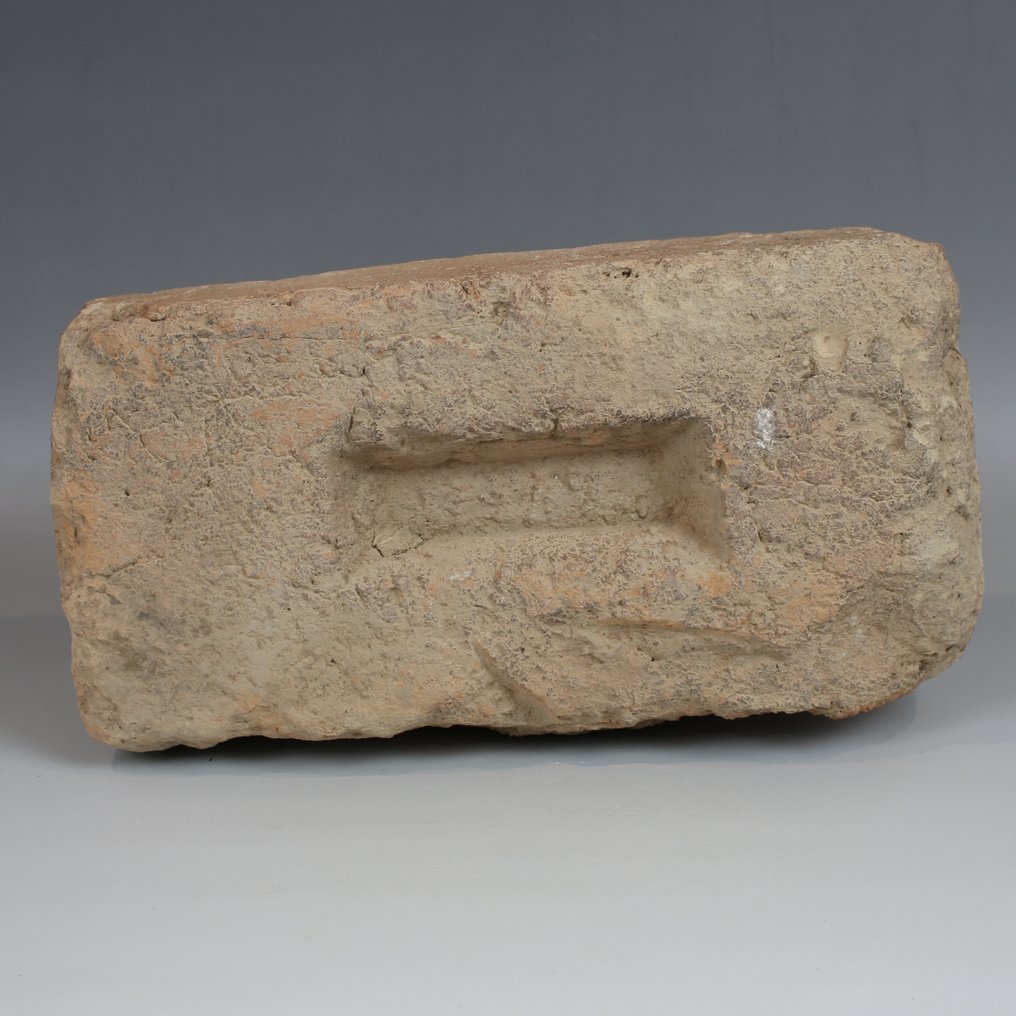
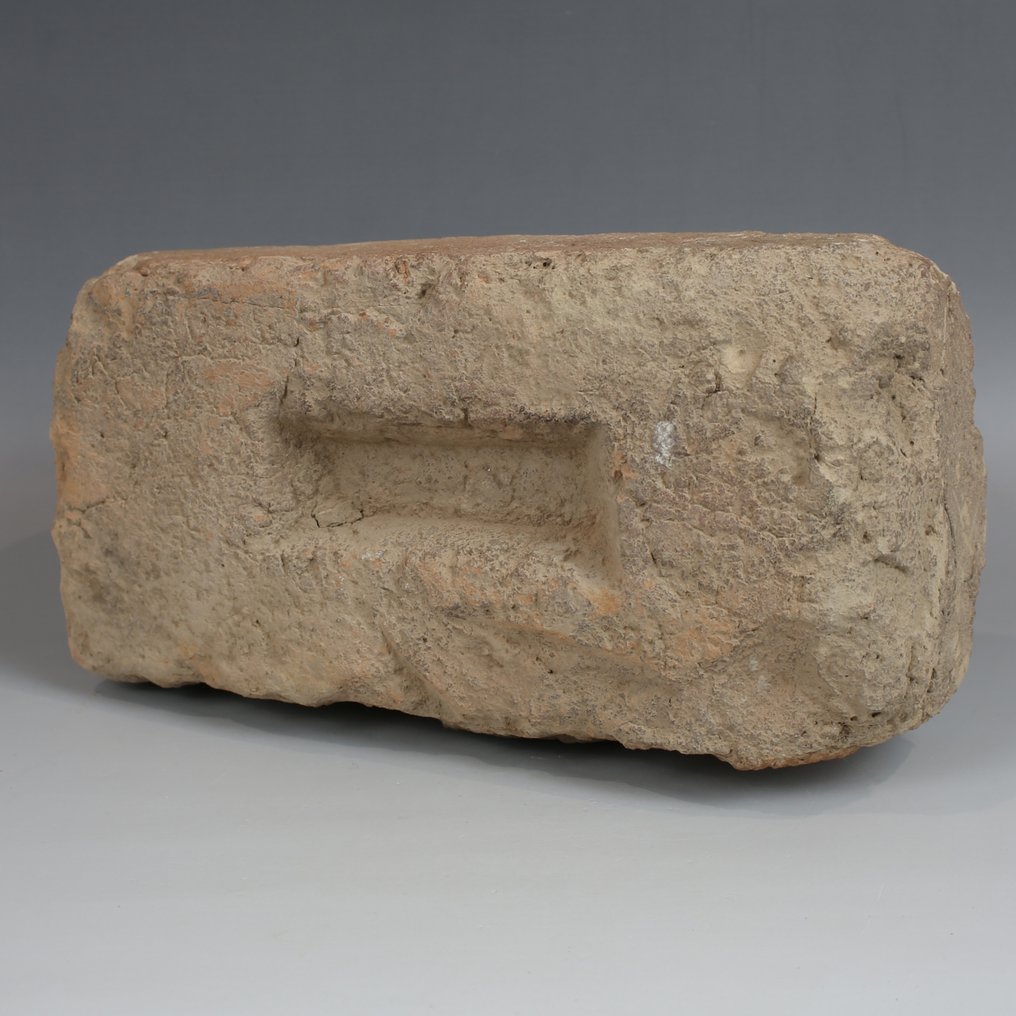
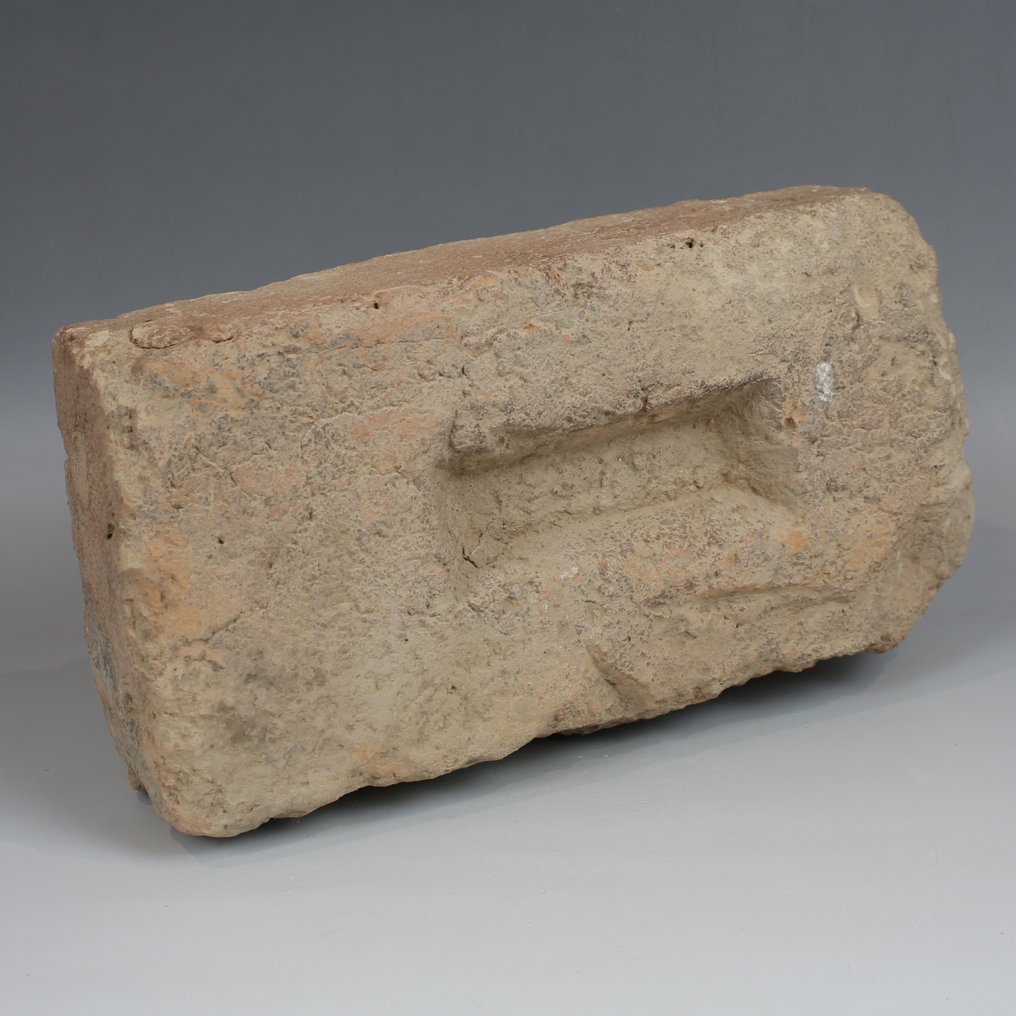
Mesopotamisch Aardewerk fundamentsteen (Zonder Minimumprijs)


02
dagen
00
uren
04
minuten
19
seconden
Huidig bod
€ 5
Geen minimumprijs

Expert
Geselecteerd door Ruth Garrido Vila
Was directeur van het Ifergan Collection Museum, gespecialiseerd in Fenicische archeologie.
Geschatte waarde € 330 - € 400
26 andere personen volgen dit object
 Bieder 1482 Bieder 1482 | € 5 | |
|---|---|---|
 Bieder 5288 Bieder 5288 | € 4 | |
| Bieder 1482 | € 3 | |
Catawiki Kopersbescherming
Je betaling is veilig bij ons totdat je het object hebt ontvangen.Bekijk details
Trustpilot 4.4 | 121899 reviews
Beoordeeld als "Uitstekend" op Trustpilot.
Fundamentsteen uit Mesopotamische cultuur, daterend uit de 3e–2e millennium v.Chr., keramiek; afmetingen 120 mm × 225 mm × 72 mm; goede staat; in 2025 verkregen uit een Duitse particuliere collectie en geleverd met een Certificaat van Echtheid en EU-exportvergunning.
AI-gegenereerde samenvatting
Beschrijving van de verkoper
ITEM: Foundation brick
MATERIAL: Pottery
CULTURE: Mesopotamian
PERIOD: 3rd - 2nd millenium B.C
DIMENSIONS: 120 mm x 225 mm x 72 mm
CONDITION: Good condition. Includes scanned document from Artonline (see last picture)
PROVENANCE: Ex German private collection, F.B., acquired in Artonline, France, 2022. Ex German private collection, Lux, 2019.
Comes with Certificate of Authenticity and European Union export license
If you bid outside European Union and win the item, we must request a new export license to your country and the shipment will delay between 3 - 5 weeks.
The Mesopotamian foundation brick, often found in temples and palaces, served as a crucial votive and documentary object in ancient Near Eastern construction practices. Rather than just being a structural component, these special bricks or foundation deposits were ritually placed beneath the structure's foundations—particularly at corners, doorways, or perimeters. This practice was deeply intertwined with the ideology of kingship and the divine world. By embedding inscribed bricks or figures (sometimes in clay boxes) into the earth, the king sought to secure the favor and protection of the gods for the new building and to symbolically anchor the structure to the sacred ground
What distinguishes a Mesopotamian foundation brick is the presence of an inscription, typically written in Sumerian or Akkadian cuneiform. These texts invariably record the name and titles of the ruling monarch, the name of the deity the temple was dedicated to, and details about the building project, such as the construction or restoration of the temple. For example, bricks from the Ur III period often bear the name of King Ur-Nammu, celebrating his building works and his title "King of Sumer and Akkad." These inscriptions functioned as a perpetual record of the king's piety and power, ensuring his name would be remembered by the gods and by future rulers who might uncover the deposit during subsequent building phases.
Foundation bricks were a small, but ritually significant, part of the wider Mesopotamian architectural tradition which relied heavily on brick construction, as stone was scarce in the region. Most buildings used sun-dried mud bricks, which led to a cycle of decay, leveling, and rebuilding on the same site over centuries, resulting in raised mounds known as tells. Foundation deposits—which included both inscribed bricks and figures (like foundation pegs depicting the king carrying a basket of earth)—were integral to this cycle. They connected the ruler, the structure, and the divine mandate, proclaiming that the king was obedient to the gods' architectural wishes, thus guaranteeing the community's prosperity and the building's spiritual integrity.
De verkoper stelt zich voor
Uw Antiquair biedt oude kunst en oude munten. Ons belangrijkste doel is om de hoogste kwaliteit aan te bieden tegen de beste prijs, met respect voor en strikte naleving van de wetten inzake erfgoedbescherming en UNESCO-erfgoednormen. Daarom zijn alle stukken die worden gepubliceerd afkomstig uit privécollecties waarvan de herkomst kan worden gecontroleerd of uit internationale veilingen. Al onze antiquiteiten en munten gaan vergezeld van hun certificaat van echtheid. We hebben een 90 dagen retourbeleid zonder gezeur. Bij Your Antiquarian zetten we ons in om kansarme groepen te helpen en om deze reden wordt een deel van elke aankoop gedoneerd aan goede doelen om mensen in nood te helpen.
Vertaald door Google TranslateITEM: Foundation brick
MATERIAL: Pottery
CULTURE: Mesopotamian
PERIOD: 3rd - 2nd millenium B.C
DIMENSIONS: 120 mm x 225 mm x 72 mm
CONDITION: Good condition. Includes scanned document from Artonline (see last picture)
PROVENANCE: Ex German private collection, F.B., acquired in Artonline, France, 2022. Ex German private collection, Lux, 2019.
Comes with Certificate of Authenticity and European Union export license
If you bid outside European Union and win the item, we must request a new export license to your country and the shipment will delay between 3 - 5 weeks.
The Mesopotamian foundation brick, often found in temples and palaces, served as a crucial votive and documentary object in ancient Near Eastern construction practices. Rather than just being a structural component, these special bricks or foundation deposits were ritually placed beneath the structure's foundations—particularly at corners, doorways, or perimeters. This practice was deeply intertwined with the ideology of kingship and the divine world. By embedding inscribed bricks or figures (sometimes in clay boxes) into the earth, the king sought to secure the favor and protection of the gods for the new building and to symbolically anchor the structure to the sacred ground
What distinguishes a Mesopotamian foundation brick is the presence of an inscription, typically written in Sumerian or Akkadian cuneiform. These texts invariably record the name and titles of the ruling monarch, the name of the deity the temple was dedicated to, and details about the building project, such as the construction or restoration of the temple. For example, bricks from the Ur III period often bear the name of King Ur-Nammu, celebrating his building works and his title "King of Sumer and Akkad." These inscriptions functioned as a perpetual record of the king's piety and power, ensuring his name would be remembered by the gods and by future rulers who might uncover the deposit during subsequent building phases.
Foundation bricks were a small, but ritually significant, part of the wider Mesopotamian architectural tradition which relied heavily on brick construction, as stone was scarce in the region. Most buildings used sun-dried mud bricks, which led to a cycle of decay, leveling, and rebuilding on the same site over centuries, resulting in raised mounds known as tells. Foundation deposits—which included both inscribed bricks and figures (like foundation pegs depicting the king carrying a basket of earth)—were integral to this cycle. They connected the ruler, the structure, and the divine mandate, proclaiming that the king was obedient to the gods' architectural wishes, thus guaranteeing the community's prosperity and the building's spiritual integrity.
De verkoper stelt zich voor
Uw Antiquair biedt oude kunst en oude munten. Ons belangrijkste doel is om de hoogste kwaliteit aan te bieden tegen de beste prijs, met respect voor en strikte naleving van de wetten inzake erfgoedbescherming en UNESCO-erfgoednormen. Daarom zijn alle stukken die worden gepubliceerd afkomstig uit privécollecties waarvan de herkomst kan worden gecontroleerd of uit internationale veilingen. Al onze antiquiteiten en munten gaan vergezeld van hun certificaat van echtheid. We hebben een 90 dagen retourbeleid zonder gezeur. Bij Your Antiquarian zetten we ons in om kansarme groepen te helpen en om deze reden wordt een deel van elke aankoop gedoneerd aan goede doelen om mensen in nood te helpen.
Vertaald door Google TranslateDetails
Cultuur
Mesopotamisch
Eeuw / Periode
3rd - 2nd millenium B.C
Name of object
Foundation brick
Verkregen van
Privécollectie
Jaar van verkrijging
2025
Materiaal
Aardewerk
Land van verkrijging
Duitsland
Staat
Goed
Vorige eigenaar verkregen van
Galeriehouder / Antiekhandelaar
Vorige eigenaar - jaar van verkrijging
2022
Vorige eigenaar - land van verkrijging
Frankrijk
Ik verklaar dat ik dit object op legale wijze heb verkregen en dat ik bevoegd ben om het te verkopen
Ja
Verkocht door
Disclaimer
De verkoper is door Catawiki geïnformeerd over de documentatievereisten en garandeert het volgende: - het object is op legale wijze verkregen, - de verkoper is gerechtigd om het object te verkopen en/of te exporteren, indien van toepassing, - de verkoper zal de nodige informatie over de herkomst aanleveren en, indien van toepassing en in overeenstemming met de lokale wetgeving, de vereiste documentatie en vergunningen regelen, - de verkoper zal de koper op de hoogte stellen van eventuele vertragingen bij het verkrijgen van de benodigde vergunningen. Door een bod uit te brengen, erken je dat voor de import mogelijk documentatie vereist is, afhankelijk van het land waar je woont, en dat het verkrijgen van vergunningen kan leiden tot vertraging in de levering van je object.
De verkoper is door Catawiki geïnformeerd over de documentatievereisten en garandeert het volgende: - het object is op legale wijze verkregen, - de verkoper is gerechtigd om het object te verkopen en/of te exporteren, indien van toepassing, - de verkoper zal de nodige informatie over de herkomst aanleveren en, indien van toepassing en in overeenstemming met de lokale wetgeving, de vereiste documentatie en vergunningen regelen, - de verkoper zal de koper op de hoogte stellen van eventuele vertragingen bij het verkrijgen van de benodigde vergunningen. Door een bod uit te brengen, erken je dat voor de import mogelijk documentatie vereist is, afhankelijk van het land waar je woont, en dat het verkrijgen van vergunningen kan leiden tot vertraging in de levering van je object.
