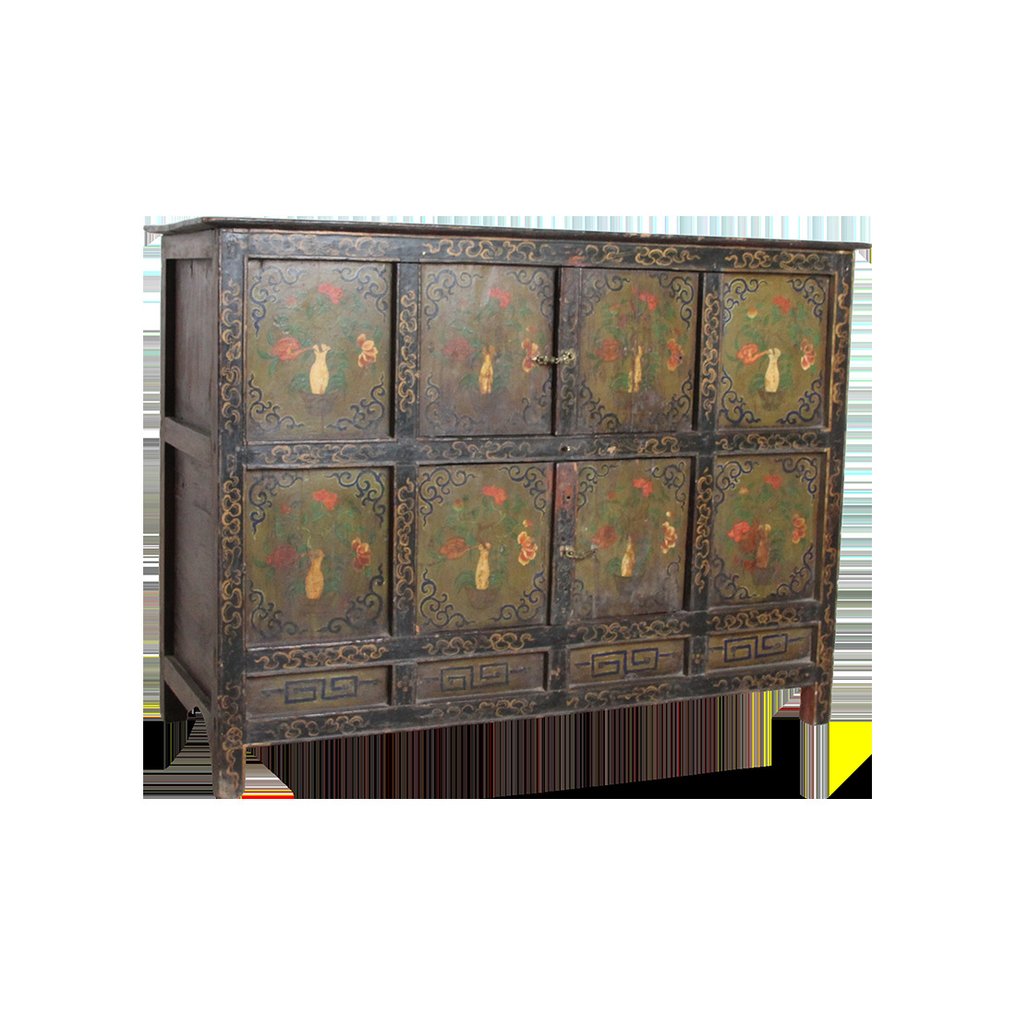
Tibetan Altar Cabinet - Naaldhout - Nepal - 19th century


Opent vrijdag
Startbod
€ 1
Markeer als favoriet om een melding te krijgen wanneer de veiling begint.

Expert
Geselecteerd door Surya Rutten
Heeft meer dan 25 jaar ervaring in Aziatische kunst en bezat een kunstgalerie.
Geschatte waarde € 1.900 - € 2.100
Catawiki Kopersbescherming
Je betaling is veilig bij ons totdat je het object hebt ontvangen.Bekijk details
Trustpilot 4.4 | 123113 reviews
Beoordeeld als "Uitstekend" op Trustpilot.
Beschrijving van de verkoper
Tibetan Altar Cabinet
-19th Century
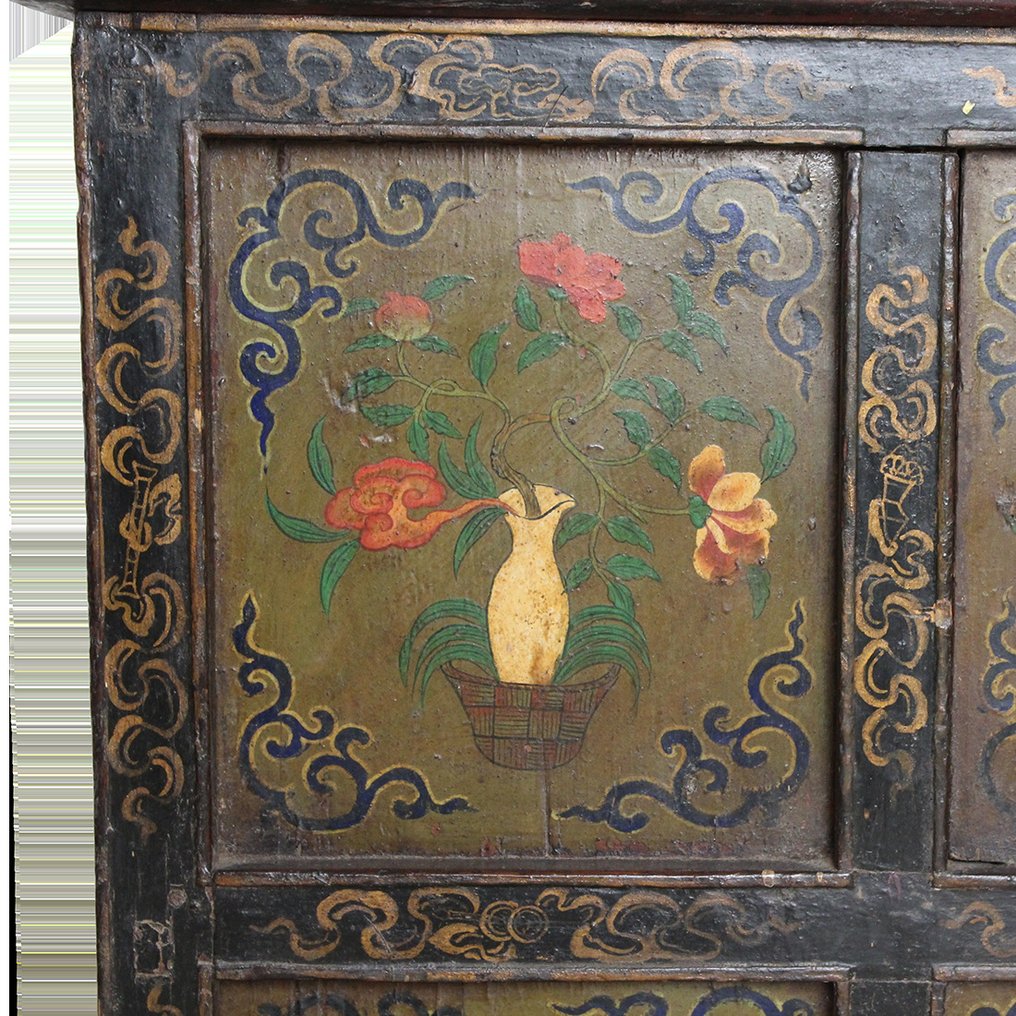
-Green painted with lotus flowers
-8-panels on front side
-Dimensions: W135 x D54 x H99 cm
This antique Tibetan cabinet with a greenish coloured background, has paintings of lotus flowers on all panels. The lotus flower represents the primordial purity of body, speech, and mind, floating above the muddy waters of attachment and desire.
The 4 doors on the front open fully, allowing easy access into the space inside.
Doors are finished with a carved brass lock.
The cabinet is hand hewn with an axe which supports its originality.
We were able to buy a collection of old Tibetan cabinets 4-5 years ago.
They came from Tibet to Nepal and were moved from Nepal to India in 2012.
Certificates are in place.
Tibetan cabinets
In ancient Tibet, widespread use of wooden furniture was not known, as it was restricted to monasteries and upper/middle class Tibetans. The population of Tibet also being small not much was ever made. Their number was further depleted when the Chinese invaded Tibet and destroyed a large amount of these works of art.
By nature original Tibetan pieces are increasingly rare to find.
CABINETS
Rectangular cabinets are the most common variety however they can be of many different dimensions. Tibetans used these for storing anything from foodstuffs to brick tea, incense, religious artifacts or perhaps clothing and other valuables. They are usually divided into two compartments by a shelf. Often it is difficult to tell where the cabinet opens out as only some of the panels open out while others remain fixed.
They’re mostly found in oily appearance because of their many functions. The grease serves as a protective layer to the cabinet.
The carvings and paintings on cabinets are rich with Buddhist symbolism, such as the lotus flower (representing enlightenment), bamboo (strength and persistence), and protective symbols.
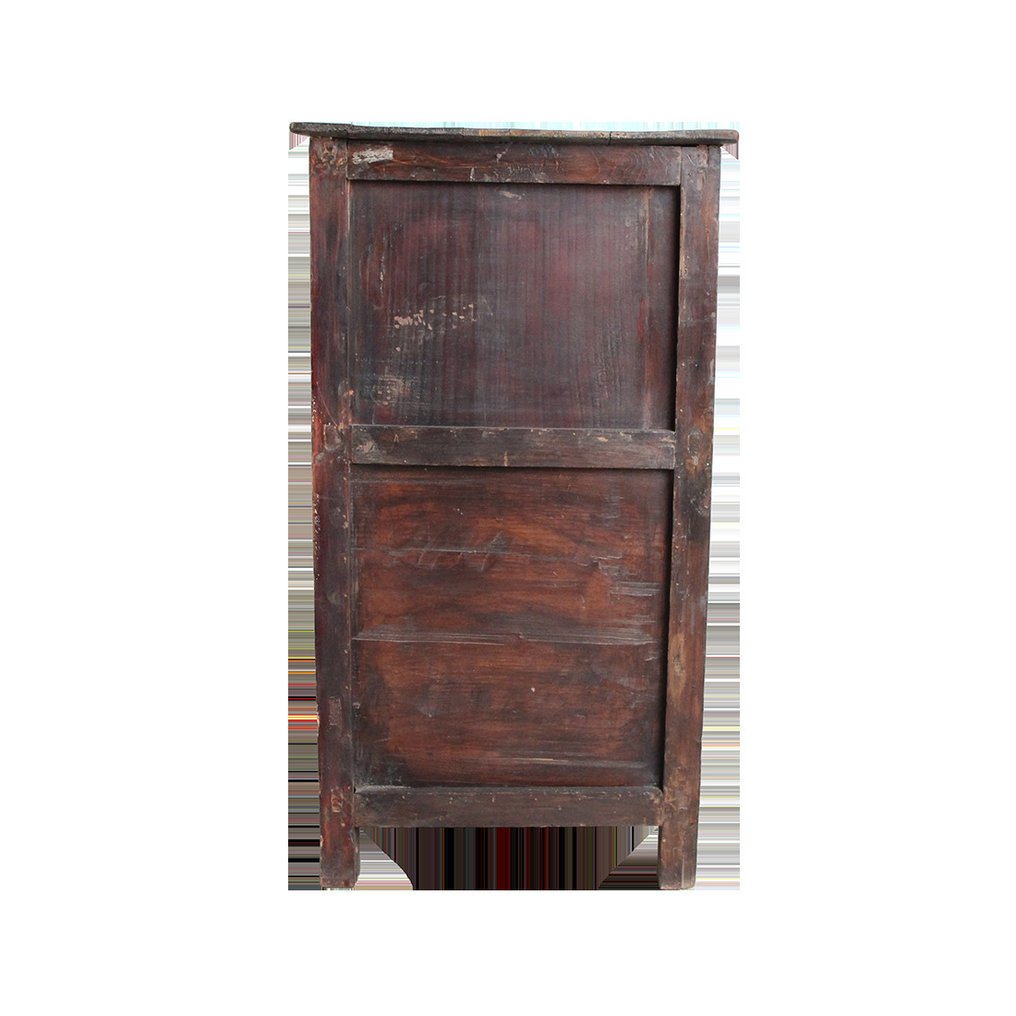
Tibetan furniture is primarily made from pine and other Himalayan soft woods (Elm, Pine, Poplar, or Cedarwood). They are known for the various designs and motifs painted on the surface and the carved decoration that make them unique. They are typically decorated with images of deities, animals, flowers and vines or mythical beasts (like Dragons) and religious symbols. Quite a few pieces will have sides that are not painted. If two tables or cabinets were kept side by side then the hidden sides were left unpainted.
Owing to the high altitude climate, which is dry and free of insect pests, they are usually well preserved
For painting furniture, the Tibetans made extensive use of mineral pigments bound in animal glue. The pigments were ground by stone, which resulted in softer tones. The paint is finally coated with shellac-based varnish.
As for the structure of the furniture, sophisticated methods of joining were rarely used and the usual system applied was tongue and groove or mortise & tenon. Sometimes wooden pegs have been used to secure pieces together. The fittings, hinges and nails are usually made of iron (occasionally brass hardware was also used).
Tibetan Furniture is ancient and is simple but gorgeous. It is also famous for its decorative patterns, which is believed to bring fortune and treasure in people’s life. It is also known for its vitality, embodied in its design, decoration, and vast colors.
De verkoper stelt zich voor
Since 28 years we are buying & selling old and antique items from India and Indonesia.
Several times a year we go there ourselves and buy and fill up many containers.
In both countries we have trustable contacts who collect every day special objects for us.
Our extended warehouse in Amsterdam is full of regular antiques like cabinets and tables but also nice and special objects.
Tibetan Altar Cabinet
-19th Century
-Green painted with lotus flowers
-8-panels on front side
-Dimensions: W135 x D54 x H99 cm
This antique Tibetan cabinet with a greenish coloured background, has paintings of lotus flowers on all panels. The lotus flower represents the primordial purity of body, speech, and mind, floating above the muddy waters of attachment and desire.
The 4 doors on the front open fully, allowing easy access into the space inside.
Doors are finished with a carved brass lock.
The cabinet is hand hewn with an axe which supports its originality.
We were able to buy a collection of old Tibetan cabinets 4-5 years ago.
They came from Tibet to Nepal and were moved from Nepal to India in 2012.
Certificates are in place.
Tibetan cabinets
In ancient Tibet, widespread use of wooden furniture was not known, as it was restricted to monasteries and upper/middle class Tibetans. The population of Tibet also being small not much was ever made. Their number was further depleted when the Chinese invaded Tibet and destroyed a large amount of these works of art.
By nature original Tibetan pieces are increasingly rare to find.
CABINETS
Rectangular cabinets are the most common variety however they can be of many different dimensions. Tibetans used these for storing anything from foodstuffs to brick tea, incense, religious artifacts or perhaps clothing and other valuables. They are usually divided into two compartments by a shelf. Often it is difficult to tell where the cabinet opens out as only some of the panels open out while others remain fixed.
They’re mostly found in oily appearance because of their many functions. The grease serves as a protective layer to the cabinet.
The carvings and paintings on cabinets are rich with Buddhist symbolism, such as the lotus flower (representing enlightenment), bamboo (strength and persistence), and protective symbols.
Tibetan furniture is primarily made from pine and other Himalayan soft woods (Elm, Pine, Poplar, or Cedarwood). They are known for the various designs and motifs painted on the surface and the carved decoration that make them unique. They are typically decorated with images of deities, animals, flowers and vines or mythical beasts (like Dragons) and religious symbols. Quite a few pieces will have sides that are not painted. If two tables or cabinets were kept side by side then the hidden sides were left unpainted.
Owing to the high altitude climate, which is dry and free of insect pests, they are usually well preserved
For painting furniture, the Tibetans made extensive use of mineral pigments bound in animal glue. The pigments were ground by stone, which resulted in softer tones. The paint is finally coated with shellac-based varnish.
As for the structure of the furniture, sophisticated methods of joining were rarely used and the usual system applied was tongue and groove or mortise & tenon. Sometimes wooden pegs have been used to secure pieces together. The fittings, hinges and nails are usually made of iron (occasionally brass hardware was also used).
Tibetan Furniture is ancient and is simple but gorgeous. It is also famous for its decorative patterns, which is believed to bring fortune and treasure in people’s life. It is also known for its vitality, embodied in its design, decoration, and vast colors.
De verkoper stelt zich voor
Since 28 years we are buying & selling old and antique items from India and Indonesia.
Several times a year we go there ourselves and buy and fill up many containers.
In both countries we have trustable contacts who collect every day special objects for us.
Our extended warehouse in Amsterdam is full of regular antiques like cabinets and tables but also nice and special objects.
Details
Dynastieke stijl/periode
19th century
Aantal items
1
Land van herkomst
Nepal
Materiaal
Naaldhout
Height
99 cm
Width
135 cm
Titel van het kunstwerk
Tibetan Altar Cabinet
Depth
54 cm
Condition
In goede staat
Verkocht door