Nr 104294728

Inte längre tillgänglig
Lycianska förbundet. Augustus (27 BC-AD 14). Drachm
Budgivning avslutad
12 veckor sedan

Lycianska förbundet. Augustus (27 BC-AD 14). Drachm

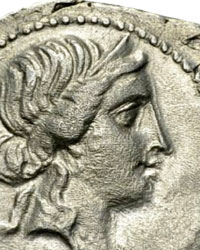
★ IMPRESSIVE PORTRAIT ★ LYCIAN LEAGUE. Augustus.(27 BC-AD 14). Drachm. Rev : Λ-Υ. Bare head right. Obv : M-A. lyre; tripod in right field. RPC I 3308. Condition : The coin is in good condition, with visible surface scratches but no significant wear. It has a light gray patina that gives it a soft, matte appearance, which highlights the design without obscuring any of the details.Extremely fine. Material : Silver. Axis : 12h Weight : 3.51 gr Diameter : 18 mm The lyre is a stringed instrument widely used in ancient times, particularly significant in Greek and Roman cultures, and often played by poets, bards, and during religious ceremonies. In Greek mythology, the lyre was said to be invented by the god Hermes. He crafted the instrument using a tortoise shell and ox sinew, then gifted it to the god Apollo. Apollo played the lyre alongside the Muses, who were the inspirations for poetry and music, affecting both gods and mortals alike. As a result, the lyre became a symbol of music, poetry, and the arts. The lyre was a small, portable instrument. It usually had several strings, and its strings could be plucked by hand or with a plectrum. The lyre often had a U-shaped frame with strings stretched across the two sides. The number of strings varied by time and region, but it generally had between five and seven strings. Its sound was soft and soothing, making it suitable for personal performances and musical gatherings in small groups. The lyre had a wide range of uses. In ancient Greece, educated individuals were expected to learn how to play the lyre as part of their musical education. The instrument was particularly favored by bards who recited Homer’s epics and lyric poetry. In religious ceremonies, the lyre was frequently used to accompany hymns and songs offered to the gods. It was also commonly played during social gatherings, banquets, and feasts. During the Roman era, the lyre continued to be an important instrument. The Romans admired Greek culture, and this admiration extended to Greek music. Roman poets and bards adopted the Greek lyre to perform their literary works. The lyre also became part of Roman entertainment culture, with performers often playing it at gatherings. The significance of the lyre in ancient times was not only musical but also symbolic and mythological. Orpheus, a famous mythological figure known for enchanting both gods and creatures of the underworld with his music, played the lyre to perform these miraculous feats. The lyre also gave its name to the Lyra constellation in the sky, which according to myth, was placed in the heavens after Orpheus’s death when his lyre was said to have been immortalized as a starry symbol. In conclusion, the lyre played a crucial role in the artistic and cultural framework of the ancient world. Its deep roots in mythology, as well as its presence in everyday social life, made the lyre an indispensable symbol of the ancient era. This instrument was not only an expression of music but also a representation of the human soul and cultural heritage.

Nr 104294728

Inte längre tillgänglig
Lycianska förbundet. Augustus (27 BC-AD 14). Drachm

Lycianska förbundet. Augustus (27 BC-AD 14). Drachm

★ IMPRESSIVE PORTRAIT ★

LYCIAN LEAGUE. Augustus.(27 BC-AD 14). Drachm.

Rev : Λ-Υ.
Bare head right.

Obv : M-A.
lyre; tripod in right field.
RPC I 3308.

Condition : The coin is in good condition, with visible surface scratches but no significant wear. It has a light gray patina that gives it a soft, matte appearance, which highlights the design without obscuring any of the details.Extremely fine.

Material : Silver.
Axis : 12h

Weight : 3.51 gr
Diameter : 18 mm

The lyre is a stringed instrument widely used in ancient times, particularly significant in Greek and Roman cultures, and often played by poets, bards, and during religious ceremonies. In Greek mythology, the lyre was said to be invented by the god Hermes. He crafted the instrument using a tortoise shell and ox sinew, then gifted it to the god Apollo. Apollo played the lyre alongside the Muses, who were the inspirations for poetry and music, affecting both gods and mortals alike. As a result, the lyre became a symbol of music, poetry, and the arts.

The lyre was a small, portable instrument. It usually had several strings, and its strings could be plucked by hand or with a plectrum. The lyre often had a U-shaped frame with strings stretched across the two sides. The number of strings varied by time and region, but it generally had between five and seven strings. Its sound was soft and soothing, making it suitable for personal performances and musical gatherings in small groups.

The lyre had a wide range of uses. In ancient Greece, educated individuals were expected to learn how to play the lyre as part of their musical education. The instrument was particularly favored by bards who recited Homer’s epics and lyric poetry. In religious ceremonies, the lyre was frequently used to accompany hymns and songs offered to the gods. It was also commonly played during social gatherings, banquets, and feasts.

During the Roman era, the lyre continued to be an important instrument. The Romans admired Greek culture, and this admiration extended to Greek music. Roman poets and bards adopted the Greek lyre to perform their literary works. The lyre also became part of Roman entertainment culture, with performers often playing it at gatherings.

The significance of the lyre in ancient times was not only musical but also symbolic and mythological. Orpheus, a famous mythological figure known for enchanting both gods and creatures of the underworld with his music, played the lyre to perform these miraculous feats. The lyre also gave its name to the Lyra constellation in the sky, which according to myth, was placed in the heavens after Orpheus’s death when his lyre was said to have been immortalized as a starry symbol.

In conclusion, the lyre played a crucial role in the artistic and cultural framework of the ancient world. Its deep roots in mythology, as well as its presence in everyday social life, made the lyre an indispensable symbol of the ancient era. This instrument was not only an expression of music but also a representation of the human soul and cultural heritage.

Budgivning avslutad
Willem Knapen
Expert
Uppskattat pris  € 900 - € 1 000

Liknande objekt

För dig i

Gamla mynt

Skapa en sökbevakning
Skapa en sökbevakning för att få ett meddelande när nya matchningar är tillgängliga.

Detta objekt förekom i


Hur du köper på Catawiki

Läs mer om vårt Köparskydd

      1. Upptäck något speciellt

      Bläddra bland tusentals speciella objekt som valts ut av experter. Se foton, detaljer och uppskattat värde för varje speciellt objekt. 

      2. Lägg det högsta budet

      Hitta något du älskar och lägg det högsta budet. Du kan följa auktionen till slutet eller låta vårt system sköta budgivningen åt dig. Allt du behöver göra är att ställa in ett bud på det maximala belopp du vill betala. 

      3. Gör en säker betalning

      Betala för ditt speciella objekt så håller vi din betalning säker tills det anländer välbehållet. Vi använder ett pålitligt betalningssystem för att hantera alla transaktioner. 

Har du något liknande att sälja?

Oavsett om du är ny på onlineauktioner eller säljer professionellt kan vi hjälpa dig att tjäna mer på dina speciella föremål.

Sälj ditt objekt