Nr. 100384977

Verkauft
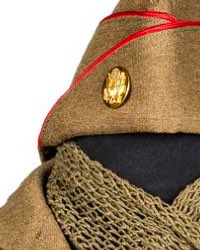
US Army Class A Jacke – Kämpfte in Europa und im Pazifik – 2,5 Jahre im Ausland – Roer / Ardennen - Militäruniform - mit Medaillenbändern - 1942
Höchstgebot
€ 94
Vor 7 h

US Army Class A Jacke – Kämpfte in Europa und im Pazifik – 2,5 Jahre im Ausland – Roer / Ardennen - Militäruniform - mit Medaillenbändern - 1942

Nice 100% original class A jacket in great condition with a 9th army patch, known for their combat in Europe, and a Good Conduct - European Campaign - and pacific campaigb medal bar, with three campaign stars, showing the owner participated in two major European campaigns of the 9th army and one in the pacific theathre of operations. it seems another medal bar was once present but not anymore. the label is still there and dates the jacket to 1942. The jacket is in good condition. The 5 overseas bars indicate 2,5 years overseas service. There are some laundry codes / names /initials inside that potentially could be used to trace the original owner. A very nice uniform of the iconic 9th US Army as worn during WW2! See also our other interesting WW2 items! 9th Army The first responsibility for Ninth Army, upon its arrival on 5 September was to take part in the final reduction of the German forces holding out in the French port of Brest. After the surrender of the town fifteen days later, Ninth Army was sent east to take its place in the line. It came into the line between Third Army and First Army. In November, Ninth Army was shifted to the very northern flank of 12th Army Group. It undertook operations to close the front up to the Roer River. 16 December saw the opening of the last great German offensive of the war, the Battle of the Bulge. Ninth Army was isolated from the headquarters of 12th Army Group, and it was thus placed (on 20 December[1]) under the command of General Bernard Montgomery's 21st Army Group along with First Army, despite opposition from General Omar Bradley. Simpson reoriented his command quickly to help in the reduction of the salient that the Germans had created. Many of Ninth Army's units passed to the command of First Army, which was doing the main work of reducing the German salient from the north. In the meantime, the remainder of Ninth Army continued to hold the line along the Roer. When First Army and Third Army had finished reducing the salient, First Army returned to the command of 12th Army Group, but Ninth Army remained under the command of 21st Army Group for the remainder of the Rhineland Campaign. In late February 1945 the Ninth Army launched Operation Grenade, which was the southern prong of a pincer attack coordinated with Canadian First Army's Operation Veritable, with the purpose of closing the front up to the Rhine. By 10 March, the Rhine had been reached in all sectors of Ninth Army's front. It was not until after 20 March that Ninth Army units first crossed the Rhine itself (Operation Flashpoint). However, after doing so, the Army quickly struck east around the north of the Ruhr. An enormous pocket soon formed containing the German Army Group B under Walter Model. By 4 April, Ninth Army had reached the Weser[2] and was switched back to 12th Army Group.[3] The end was now clearly in sight, and as part of Ninth Army, along with the newly arrived Fifteenth Army, reduced the enormous Ruhr Pocket, other elements reached the Elbe on 12 April. On 2 May 1945, the whole of Ninth Army's front reached the agreed demarcation point with the Russians, and the advance ceased. Around 7 May 1945, the Ninth Army accepted around 100,000 prisoners from the German Twelfth Army under General Walther Wenck, and the German Ninth Army (Germany) under General Theodor Busse. On 15 June 1945 the units of the Ninth Army were turned over to the Seventh United States Army and the Ninth Army headquarters prepared to redeploy to China to support combat operations against the Japanese. On 8 July Ninth Army headquarters had moved to Deauville, France to prepare for re-deployment to the United States. On 27 July the headquarters boarded the Army transport ship John Ericsson bound for New York City, where it arrived on 6 August, the same date of the atomic bombing of Hiroshima. The headquarters then was moved to Camp Shanks, New York for administrative processing prior to deployment to China.[4]

Nr. 100384977

Verkauft
US Army Class A Jacke – Kämpfte in Europa und im Pazifik – 2,5 Jahre im Ausland – Roer / Ardennen - Militäruniform - mit Medaillenbändern - 1942

US Army Class A Jacke – Kämpfte in Europa und im Pazifik – 2,5 Jahre im Ausland – Roer / Ardennen - Militäruniform - mit Medaillenbändern - 1942

Nice 100% original class A jacket in great condition with a 9th army patch, known for their combat in Europe, and a Good Conduct - European Campaign - and pacific campaigb medal bar, with three campaign stars, showing the owner participated in two major European campaigns of the 9th army and one in the pacific theathre of operations. it seems another medal bar was once present but not anymore. the label is still there and dates the jacket to 1942. The jacket is in good condition. The 5 overseas bars indicate 2,5 years overseas service. There are some laundry codes / names /initials inside that potentially could be used to trace the original owner.

A very nice uniform of the iconic 9th US Army as worn during WW2!

See also our other interesting WW2 items!

9th Army
The first responsibility for Ninth Army, upon its arrival on 5 September was to take part in the final reduction of the German forces holding out in the French port of Brest. After the surrender of the town fifteen days later, Ninth Army was sent east to take its place in the line. It came into the line between Third Army and First Army.

In November, Ninth Army was shifted to the very northern flank of 12th Army Group. It undertook operations to close the front up to the Roer River. 16 December saw the opening of the last great German offensive of the war, the Battle of the Bulge. Ninth Army was isolated from the headquarters of 12th Army Group, and it was thus placed (on 20 December[1]) under the command of General Bernard Montgomery's 21st Army Group along with First Army, despite opposition from General Omar Bradley. Simpson reoriented his command quickly to help in the reduction of the salient that the Germans had created. Many of Ninth Army's units passed to the command of First Army, which was doing the main work of reducing the German salient from the north. In the meantime, the remainder of Ninth Army continued to hold the line along the Roer. When First Army and Third Army had finished reducing the salient, First Army returned to the command of 12th Army Group, but Ninth Army remained under the command of 21st Army Group for the remainder of the Rhineland Campaign.

In late February 1945 the Ninth Army launched Operation Grenade, which was the southern prong of a pincer attack coordinated with Canadian First Army's Operation Veritable, with the purpose of closing the front up to the Rhine. By 10 March, the Rhine had been reached in all sectors of Ninth Army's front. It was not until after 20 March that Ninth Army units first crossed the Rhine itself (Operation Flashpoint). However, after doing so, the Army quickly struck east around the north of the Ruhr. An enormous pocket soon formed containing the German Army Group B under Walter Model. By 4 April, Ninth Army had reached the Weser[2] and was switched back to 12th Army Group.[3]

The end was now clearly in sight, and as part of Ninth Army, along with the newly arrived Fifteenth Army, reduced the enormous Ruhr Pocket, other elements reached the Elbe on 12 April. On 2 May 1945, the whole of Ninth Army's front reached the agreed demarcation point with the Russians, and the advance ceased. Around 7 May 1945, the Ninth Army accepted around 100,000 prisoners from the German Twelfth Army under General Walther Wenck, and the German Ninth Army (Germany) under General Theodor Busse.

On 15 June 1945 the units of the Ninth Army were turned over to the Seventh United States Army and the Ninth Army headquarters prepared to redeploy to China to support combat operations against the Japanese. On 8 July Ninth Army headquarters had moved to Deauville, France to prepare for re-deployment to the United States. On 27 July the headquarters boarded the Army transport ship John Ericsson bound for New York City, where it arrived on 6 August, the same date of the atomic bombing of Hiroshima. The headquarters then was moved to Camp Shanks, New York for administrative processing prior to deployment to China.[4]

Höchstgebot
€ 94
Marcel van Hulst
Experte
Schätzung  € 210 - € 250

Ähnliche Objekte

Für Sie aus der Kategorie

Historische Memorabilien

Suchalarm einrichten
Richten Sie einen Suchalarm ein, um benachrichtigt zu werden, sobald neue passende Objekte verfügbar sind.

Dieses Objekt wurde vorgestellt in:


So kaufen Sie auf Catawiki

Mehr zum Käuferschutz erfahren

      1. Etwas Besonderes entdecken

      Entdecken Sie in unseren Auktionen Tausende von besonderen Objekten, die von Experten ausgewählt wurden. Sehen Sie sich die Fotos, die ausführliche Beschreibung und den Schätzwert der besonderen Objekte an, die Sie interessieren. 

      2. Höchstgebot abgeben

      Finden Sie etwas, das Sie begeistert, und geben Sie das Höchstgebot ab. Sie können die Auktion bis zum Schluss mitverfolgen oder unser System für Sie bieten lassen. Dazu müssen Sie einfach nur den Maximalbetrag eingeben, den Sie für das jeweilige Objekt ausgeben möchten. 

      3. Sichere Zahlung durchführen

      Bezahlen Sie Ihr besonderes Objekt und wir verwahren Ihre Zahlung, bis Ihr Objekt unversehrt bei Ihnen angekommen ist. Wir wickeln alle Transaktionen mit einem zuverlässigen und sicheren Zahlungssystem ab. 

Haben Sie etwas Ähnliches zu verkaufen?

Unabhängig davon, ob Online-Auktionen Neuland für Sie sind oder ob Sie gewerblich verkaufen – wir helfen Ihnen, mehr mit Ihren besonderen Objekten zu verdienen.

Objekt verkaufen