Nr. 100658346

Verkauft
Fossiler Zahn - Basilosaurus - 11.3 cm - 3 cm
Höchstgebot
€ 62
Vor 18 h

Fossiler Zahn - Basilosaurus - 11.3 cm - 3 cm

→11.3 cm long Basilosaurus canine teeth measured end to end. (arc wise measurement will be longer) →3 cm wide at the widest point →4.3 cm teeth crown length at the longest point from base of teeth crown to the tip of the teeth It is a very interesting and cool fossil revealing the unique curve of the front canine of Basilosaurus. The front incisors were more curved and less thicker than canines. The canines have less curvature & are more thicker compared to incisors. The reason being the fact that canines should more firmly hold onto to prey while delivering fatal puncture wounds. The presented fossil root is light cream colored with yellow tone to it while the crown of the teeth is in characteristic chocolate color which is common color in Basilosaurus fossils from Morocco. There are also small white lines on the crown as well which points of presence of calcium or silica during fossilization process that has been going on for the last 35 million years. One one side of the crown, a small part of enamel is not present which reveals the underside. The root of the teeth is less thicker towards the base and then suddenly gets ticker towards the crown. The crown itself is 4.3 cm long. The canines are laid out in such a way that they provide enormous biting force as well as firm grip as mentioned earlier. The end opposite to the tip of the canine reveals the cross section of the fossil and shows 3 distinct layers. The tip has good pointy touch and feel to it. The teeth gives a nice feel to hold it in hand. To our best understanding the teeth is in natural state. At the bottom of the teeth one might get impression that some re-enforcement is done by adding small amount of extra material but since there is no abrupt and variations and features look consistent with rest of the teeth, making us to believe its in natural state. Even in the case it is restored, then that is minor and highly professional grade restoration. In either case, the teeth is in very robust and excellent shape. It is conserved as well to make it long lasting. The Basilosaurus had front incisors then came canines and then pre-molar and finally the molars towards the end of the jaw. All those teeth showed variation as we travel along the length of the jaw as Basilosaurus exhibited prominent heterodonty. (Heterodonty means multiple types of teeth with different shapes and functions, such as incisors, canines, premolars, and molars). While Durodon preyed on smaller fish and other near shore marine creatures, the larger Basilosaurus was a formidable hunter reaching length upto 20 meters (66 feet) and capable of taking down large prey with tremendous bite force. One of the favourite prey of Basilosaurus was Durodon as well. Please refer to detailed photos for reference. Different photos have been provided to give an idea about the shape,size, color and other features of the fossil.

Nr. 100658346

Verkauft
Fossiler Zahn - Basilosaurus - 11.3 cm - 3 cm

Fossiler Zahn - Basilosaurus - 11.3 cm - 3 cm

→11.3 cm long Basilosaurus canine teeth measured end to end. (arc wise measurement will be longer)
→3 cm wide at the widest point
→4.3 cm teeth crown length at the longest point from base of teeth crown to the tip of the teeth

It is a very interesting and cool fossil revealing the unique curve of the front canine of Basilosaurus. The front incisors were more curved and less thicker than canines. The canines have less curvature & are more thicker compared to incisors. The reason being the fact that canines should more firmly hold onto to prey while delivering fatal puncture wounds.

The presented fossil root is light cream colored with yellow tone to it while the crown of the teeth is in characteristic chocolate color which is common color in Basilosaurus fossils from Morocco. There are also small white lines on the crown as well which points of presence of calcium or silica during fossilization process that has been going on for the last 35 million years. One one side of the crown, a small part of enamel is not present which reveals the underside. The root of the teeth is less thicker towards the base and then suddenly gets ticker towards the crown. The crown itself is 4.3 cm long. The canines are laid out in such a way that they provide enormous biting force as well as firm grip as mentioned earlier. The end opposite to the tip of the canine reveals the cross section of the fossil and shows 3 distinct layers. The tip has good pointy touch and feel to it. The teeth gives a nice feel to hold it in hand.

To our best understanding the teeth is in natural state. At the bottom of the teeth one might get impression that some re-enforcement is done by adding small amount of extra material but since there is no abrupt and variations and features look consistent with rest of the teeth, making us to believe its in natural state. Even in the case it is restored, then that is minor and highly professional grade restoration. In either case, the teeth is in very robust and excellent shape. It is conserved as well to make it long lasting.

The Basilosaurus had front incisors then came canines and then pre-molar and finally the molars towards the end of the jaw. All those teeth showed variation as we travel along the length of the jaw as Basilosaurus exhibited prominent heterodonty. (Heterodonty means multiple types of teeth with different shapes and functions, such as incisors, canines, premolars, and molars).

While Durodon preyed on smaller fish and other near shore marine creatures, the larger Basilosaurus was a formidable hunter reaching length upto 20 meters (66 feet) and capable of taking down large prey with tremendous bite force. One of the favourite prey of Basilosaurus was Durodon as well.

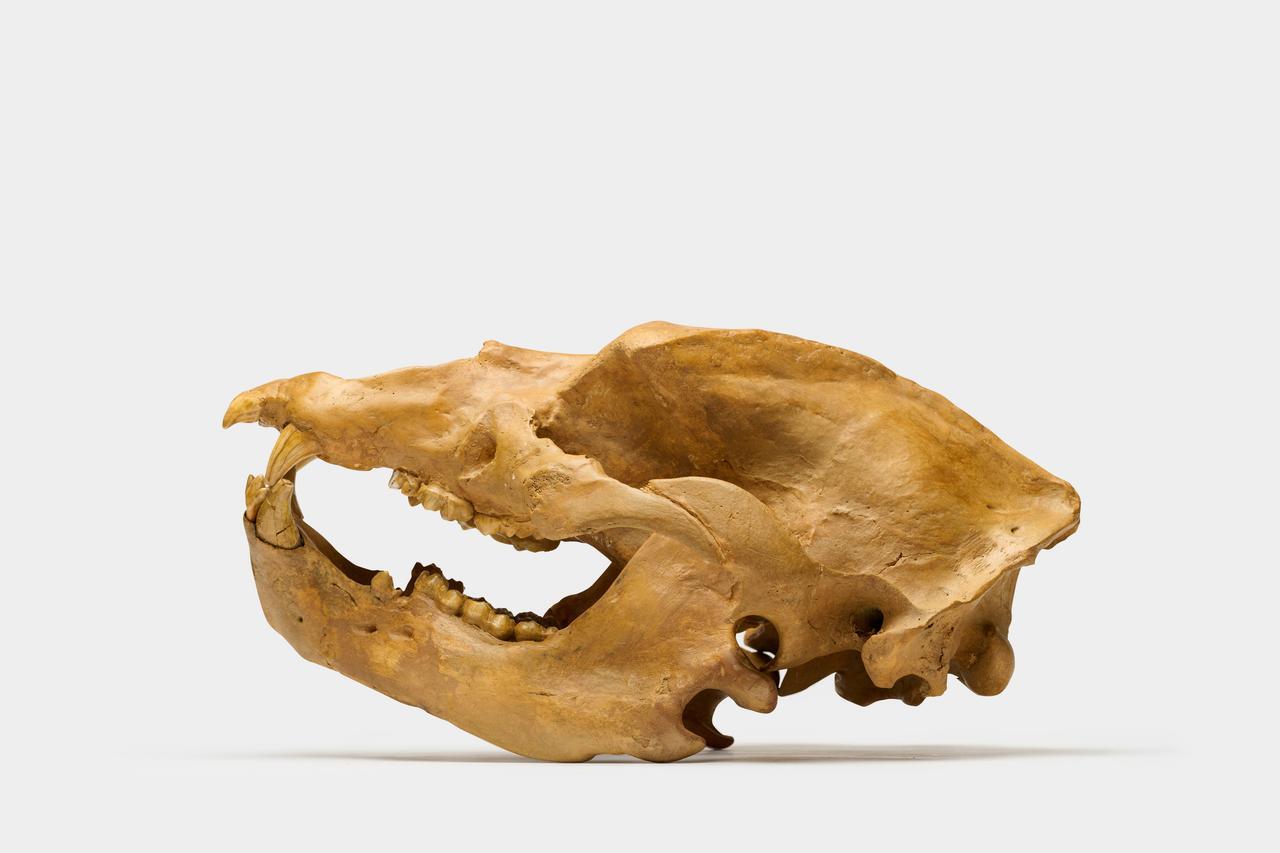
Please refer to detailed photos for reference. Different photos have been provided to give an idea about the shape,size, color and other features of the fossil.

Höchstgebot
€ 62
Manuel Quiring
Experte
Schätzung  € 200 - € 250

Ähnliche Objekte

Für Sie aus der Kategorie

Fossilien

Suchalarm einrichten
Richten Sie einen Suchalarm ein, um benachrichtigt zu werden, sobald neue passende Objekte verfügbar sind.

Dieses Objekt wurde vorgestellt in:


So kaufen Sie auf Catawiki

Mehr zum Käuferschutz erfahren

      1. Etwas Besonderes entdecken

      Entdecken Sie in unseren Auktionen Tausende von besonderen Objekten, die von Experten ausgewählt wurden. Sehen Sie sich die Fotos, die ausführliche Beschreibung und den Schätzwert der besonderen Objekte an, die Sie interessieren. 

      2. Höchstgebot abgeben

      Finden Sie etwas, das Sie begeistert, und geben Sie das Höchstgebot ab. Sie können die Auktion bis zum Schluss mitverfolgen oder unser System für Sie bieten lassen. Dazu müssen Sie einfach nur den Maximalbetrag eingeben, den Sie für das jeweilige Objekt ausgeben möchten. 

      3. Sichere Zahlung durchführen

      Bezahlen Sie Ihr besonderes Objekt und wir verwahren Ihre Zahlung, bis Ihr Objekt unversehrt bei Ihnen angekommen ist. Wir wickeln alle Transaktionen mit einem zuverlässigen und sicheren Zahlungssystem ab. 

Haben Sie etwas Ähnliches zu verkaufen?

Unabhängig davon, ob Online-Auktionen Neuland für Sie sind oder ob Sie gewerblich verkaufen – wir helfen Ihnen, mehr mit Ihren besonderen Objekten zu verdienen.

Objekt verkaufen