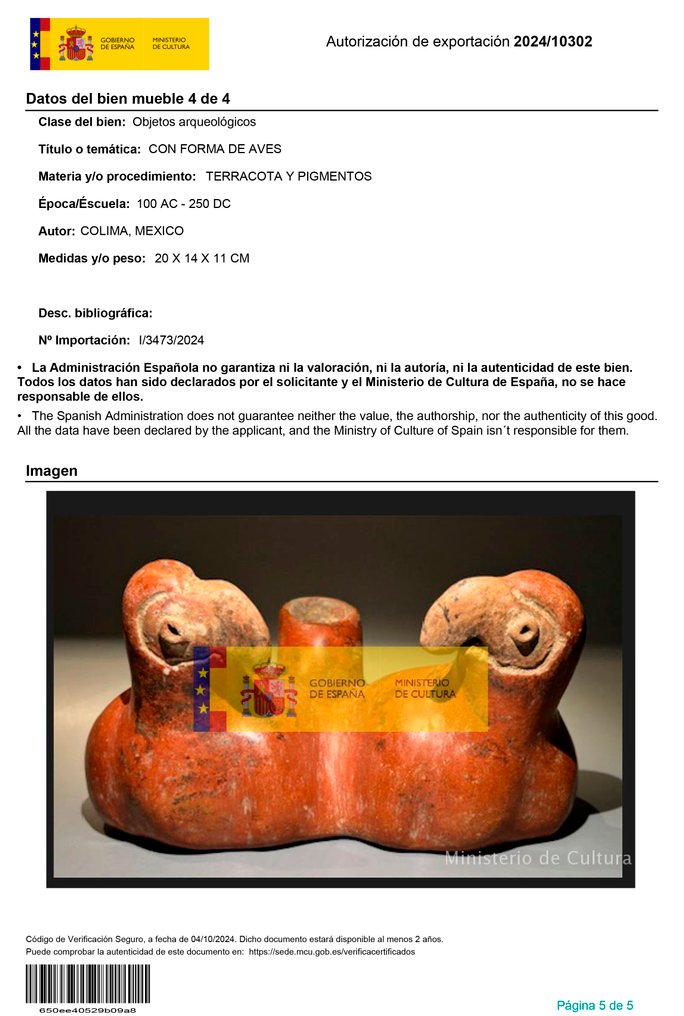
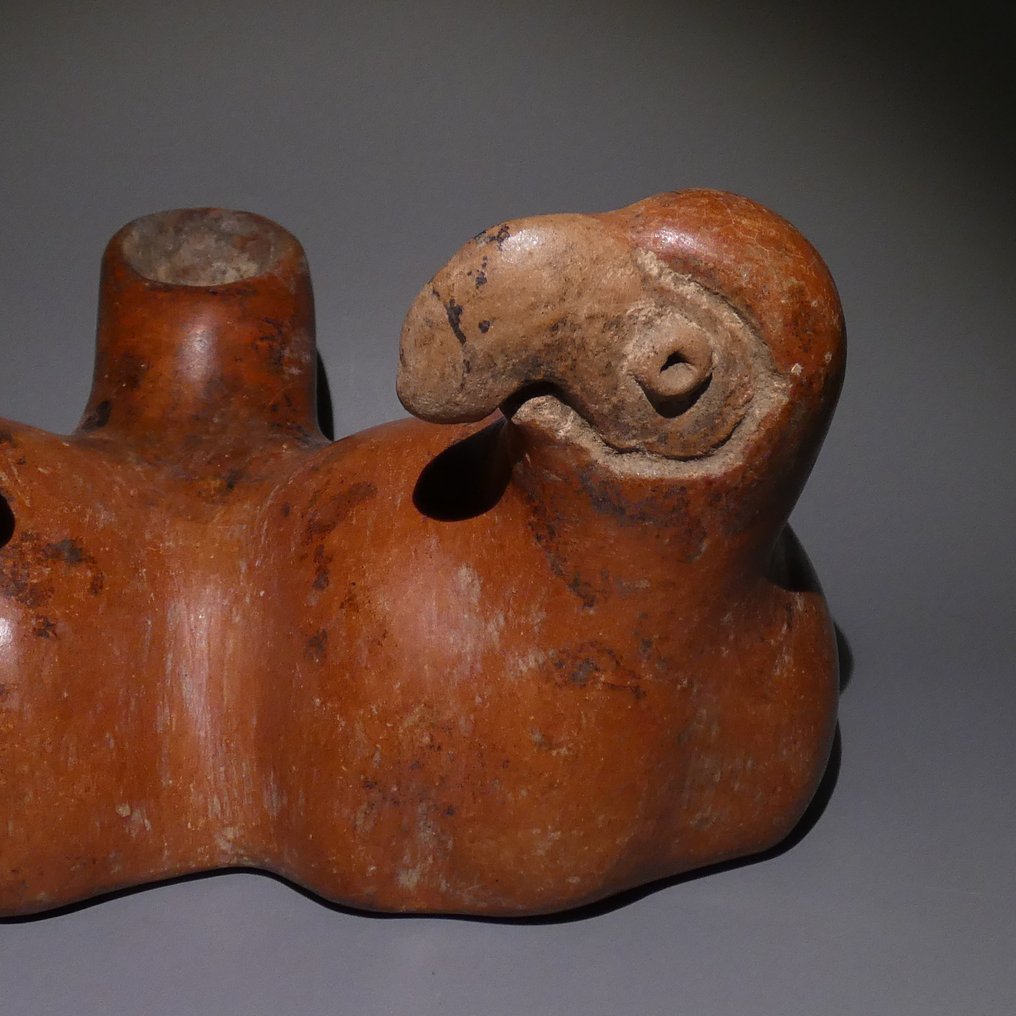
Colima, Mexiko, Terracotta Seltenes Doppelgefäß-Parrot. 21 cm Länge. 100 v. Chr. – 250 n. Chr. Spanische Ausfuhrlizenz.


03
Tage
03
Stunden
04
Minuten
08
Sekunden
Aktuelles Gebot
€ 60
Mindestpreis nicht erreicht

Experte
Von Ruth Garrido Vila ausgewählt
Leitete das Ifergan Collection Museum, spezialisiert auf phönizische Archäologie.
Schätzung € 2.500 - € 2.800
13 andere Benutzer beobachten dieses Objekt
 | 60 € | |
|---|---|---|
 | 55 € |
Käuferschutz auf Catawiki
Ihre Zahlung wird von uns sicher verwahrt, bis Sie Ihr Objekt erhalten.Details ansehen
Trustpilot 4.4 | 134559 Bewertungen
Auf Trustpilot als hervorragend bewertet.
Seltene Doppelgefäß-Parrot aus Colima, Mexiko, dat in der Zeitspanne 100 v. Chr.–250 n. Chr. datiert ist, aus Terracotta gefertigt, 21 cm lang, 10,5 cm hoch, 14 cm breit, in gutem Zustand mit spanischer Exportlizenz und Provenienz aus Privatkollektionen in Paris (1970–1980) und Barcelona, 2024 öffentlich versteigert.
KI-gestützte Zusammenfassung
Vom Verkäufer bereitgestellte Beschreibung
Rare Double Vessel Parrot.
- BIG AND NICE -
Colima, Mexico, 100 BC - 250 AD
Terracotta
21 cm long, 10,5 cm height and 14 cm width
Provenance:
- Private collection, Paris, France, 1970-1980. Thence by descendent.
- Private collection, Barcleona. Public auction 2024.
Documents:
- Spanish Export License
Condition: Good, see photos.
Documents: With Spanish Export license.
The Colima people lived in northwest Mexico, in a rugged, low-lying coastal region carved by valleys, each with its own ecology and a warm, humid climate. The history of the Colima people is not well known, but, like many Mesoamerican cultures, the Colima displayed some stylistic elements that links them with the ancient Olmecs.
Colima ceramics display a wide variety of figures and shapes, but little variation in technique. Most pieces have a burnished red finish and some are decorated with orange or white incisions. Molded figures are common, especially of plants, animals (especially dogs) and seashells. Human representations typically feature dwarfs and hunchbacks more than others, and few female forms. Many of these figures have “coffee-bean” eyes and are dressed in finely detailed traditional attire. Little is known of Colima stonework; only a few pieces such as mace heads, small masks and figurines have been found. These people also practiced basketweaving and weaving, and used metallurgy to make objects such as needles, axes, rattles, nose rings and ear ornaments.
The vast majority of ceramic pieces that have been ascribed to this culture are grave goods found in the tombs of individuals of high social rank. The Colima buried their dead in family tombs up to 30 meters deep, some with multiple chambers. The bodies were accompanied by a wide variety of grave goods, including ceramic statuettes of armed men, which served as symbolic guardians. Ceramic sculptures of dogs were another common grave good, and were believed to be the emissaries of Xolotl, the god of death.
Der Verkäufer stellt sich vor
WICHTIGE HINWEISE:
-Wir sind ein professioneller Verkäufer.
- Alle verkauften Artikel werden mit einer professionellen Rechnung geliefert.
- Alle verkauften Artikel werden mit einem eigenen Echtheitszertifikat (Garantiedokument) geliefert, das die Beschreibung, das Bild und die Herkunft des Artikels enthält.
- Alle Artikel werden per privatem Kurier mit Versicherung versendet (DHL Express, CORREOS aus Spanien oder ähnliches mit Sendungsverfolgungsnummer).
- Alle Artikel werden beim Versand (falls erforderlich) als Antiquitäten deklariert, die älter als 100 Jahre sind, und ihr Preis wird bewertet.
- Für den Versand außerhalb der EU: Lieferzeit vorbehaltlich der Zollabfertigung. Die Haftung und die im Zielland geltenden Zollbestimmungen bzw. Einfuhrbestimmungen liegen ausschließlich in der Verantwortung des Käufers. Wir sind nicht verantwortlich für Verzögerungen, die durch Zollverfahren verursacht werden. Einfuhrsteuern und Mehrwertsteuer sind nicht in den Versandkosten enthalten. Die zu zahlende Einfuhrsteuer bzw. Mehrwertsteuer hängt vom Bestimmungsland ab. Die Zahlung etwaiger Steuern oder etwaige Streitigkeiten mit den Zollbehörden liegen in der alleinigen Verantwortung des Käufers.
- Für den Versand einiger der angebotenen Artikel außerhalb der Europäischen Union ist die Einholung einer Exportgenehmigung erforderlich, in der die Zahlung der Exportgebühren durch den Käufer gemäß spanischem Recht aufgeführt ist. Wenn es notwendig ist, wird es in der Beschreibung des Artikels erwähnt, denn nicht in allen Fällen ist es so. Diese Gebühren werden auf Kosten des Käufers der Rechnung hinzugefügt. Diese Ausfuhrgebühren werden auf den endgültigen Auktionspreis festgelegt und der Steuersatz wird nicht direkt auf den Gesamtwert des zu exportierenden Artikels angewendet, sondern es gelten die unterschiedlichen Prozentsätze nach Abschnitten: Bis zu 6.000 Euro: 5 %. Von 6.001 bis 60.000 Euro: 10 %.
Der Prozess zur Beantragung einer Exportgenehmigung kann maximal 1-2 Monate dauern.
- Wir garantieren, dass er dieses Stück im Einklang mit allen nationalen und internationalen Gesetzen zum Eigentum an Kulturgut erworben hat.
Übersetzt mit Google ÜbersetzerRare Double Vessel Parrot.
- BIG AND NICE -
Colima, Mexico, 100 BC - 250 AD
Terracotta
21 cm long, 10,5 cm height and 14 cm width
Provenance:
- Private collection, Paris, France, 1970-1980. Thence by descendent.
- Private collection, Barcleona. Public auction 2024.
Documents:
- Spanish Export License
Condition: Good, see photos.
Documents: With Spanish Export license.
The Colima people lived in northwest Mexico, in a rugged, low-lying coastal region carved by valleys, each with its own ecology and a warm, humid climate. The history of the Colima people is not well known, but, like many Mesoamerican cultures, the Colima displayed some stylistic elements that links them with the ancient Olmecs.
Colima ceramics display a wide variety of figures and shapes, but little variation in technique. Most pieces have a burnished red finish and some are decorated with orange or white incisions. Molded figures are common, especially of plants, animals (especially dogs) and seashells. Human representations typically feature dwarfs and hunchbacks more than others, and few female forms. Many of these figures have “coffee-bean” eyes and are dressed in finely detailed traditional attire. Little is known of Colima stonework; only a few pieces such as mace heads, small masks and figurines have been found. These people also practiced basketweaving and weaving, and used metallurgy to make objects such as needles, axes, rattles, nose rings and ear ornaments.
The vast majority of ceramic pieces that have been ascribed to this culture are grave goods found in the tombs of individuals of high social rank. The Colima buried their dead in family tombs up to 30 meters deep, some with multiple chambers. The bodies were accompanied by a wide variety of grave goods, including ceramic statuettes of armed men, which served as symbolic guardians. Ceramic sculptures of dogs were another common grave good, and were believed to be the emissaries of Xolotl, the god of death.
Der Verkäufer stellt sich vor
WICHTIGE HINWEISE:
-Wir sind ein professioneller Verkäufer.
- Alle verkauften Artikel werden mit einer professionellen Rechnung geliefert.
- Alle verkauften Artikel werden mit einem eigenen Echtheitszertifikat (Garantiedokument) geliefert, das die Beschreibung, das Bild und die Herkunft des Artikels enthält.
- Alle Artikel werden per privatem Kurier mit Versicherung versendet (DHL Express, CORREOS aus Spanien oder ähnliches mit Sendungsverfolgungsnummer).
- Alle Artikel werden beim Versand (falls erforderlich) als Antiquitäten deklariert, die älter als 100 Jahre sind, und ihr Preis wird bewertet.
- Für den Versand außerhalb der EU: Lieferzeit vorbehaltlich der Zollabfertigung. Die Haftung und die im Zielland geltenden Zollbestimmungen bzw. Einfuhrbestimmungen liegen ausschließlich in der Verantwortung des Käufers. Wir sind nicht verantwortlich für Verzögerungen, die durch Zollverfahren verursacht werden. Einfuhrsteuern und Mehrwertsteuer sind nicht in den Versandkosten enthalten. Die zu zahlende Einfuhrsteuer bzw. Mehrwertsteuer hängt vom Bestimmungsland ab. Die Zahlung etwaiger Steuern oder etwaige Streitigkeiten mit den Zollbehörden liegen in der alleinigen Verantwortung des Käufers.
- Für den Versand einiger der angebotenen Artikel außerhalb der Europäischen Union ist die Einholung einer Exportgenehmigung erforderlich, in der die Zahlung der Exportgebühren durch den Käufer gemäß spanischem Recht aufgeführt ist. Wenn es notwendig ist, wird es in der Beschreibung des Artikels erwähnt, denn nicht in allen Fällen ist es so. Diese Gebühren werden auf Kosten des Käufers der Rechnung hinzugefügt. Diese Ausfuhrgebühren werden auf den endgültigen Auktionspreis festgelegt und der Steuersatz wird nicht direkt auf den Gesamtwert des zu exportierenden Artikels angewendet, sondern es gelten die unterschiedlichen Prozentsätze nach Abschnitten: Bis zu 6.000 Euro: 5 %. Von 6.001 bis 60.000 Euro: 10 %.
Der Prozess zur Beantragung einer Exportgenehmigung kann maximal 1-2 Monate dauern.
- Wir garantieren, dass er dieses Stück im Einklang mit allen nationalen und internationalen Gesetzen zum Eigentum an Kulturgut erworben hat.
Übersetzt mit Google ÜbersetzerDetails
Kultur
Colima, Mexico,
Jahrhundert/ Zeitraum
100 BC - 250 AD
Name of object
Rare double vessel Parrot. 21 cm L. 100 BC - 250 AD. Spanish Export License
Erworben von
Privatsammlung
Material
Terracotta
Zustand
Gut
Verkauft von
Disclaimer
Der Verkäufer wurde von Catawiki über die Anforderungen an die Dokumentation informiert und garantiert Folgendes: - Das Objekt wurde rechtmäßig erworben. - Der Verkäufer hat das Recht, das Objekt zu verkaufen und/oder zu exportieren (sofern zutreffend). - Der Verkäufer wird die erforderlichen Herkunftsinformationen bereitstellen und die notwendigen Dokumente sowie Genehmigungen bzw. Lizenzen besorgen (soweit zutreffend und gemäß den örtlichen Gesetzen geboten). - Der Verkäufer wird den Käufer über etwaige Verzögerungen bei der Erlangung von Genehmigungen bzw. Lizenzen informieren. Mit der Abgabe eines Gebots erkennen Sie an, dass je nach Ihrem Wohnsitzland Importdokumente erforderlich sein können und die Beschaffung von Genehmigungen bzw. Lizenzen zu Verzögerungen bei der Lieferung Ihres Objekts führen kann.
Der Verkäufer wurde von Catawiki über die Anforderungen an die Dokumentation informiert und garantiert Folgendes: - Das Objekt wurde rechtmäßig erworben. - Der Verkäufer hat das Recht, das Objekt zu verkaufen und/oder zu exportieren (sofern zutreffend). - Der Verkäufer wird die erforderlichen Herkunftsinformationen bereitstellen und die notwendigen Dokumente sowie Genehmigungen bzw. Lizenzen besorgen (soweit zutreffend und gemäß den örtlichen Gesetzen geboten). - Der Verkäufer wird den Käufer über etwaige Verzögerungen bei der Erlangung von Genehmigungen bzw. Lizenzen informieren. Mit der Abgabe eines Gebots erkennen Sie an, dass je nach Ihrem Wohnsitzland Importdokumente erforderlich sein können und die Beschaffung von Genehmigungen bzw. Lizenzen zu Verzögerungen bei der Lieferung Ihres Objekts führen kann.
