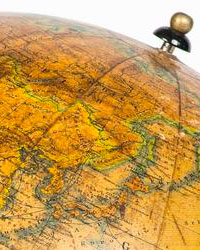
Rumänien - Transsilvanien; Mercator - Transylvania. - 1601-1620


13
Tage
02
Stunden
30
Minuten
50
Sekunden
Aktuelles Gebot
€ 1
Mindestpreis nicht erreicht

Experte
Von Ilaria Colombo ausgewählt
Spezialistin für alte Bücher, spezialisiert auf theologische Streitigkeiten seit 1999.
Schätzung € 350 - € 500
 | 1 € |
|---|
Käuferschutz auf Catawiki
Ihre Zahlung wird von uns sicher verwahrt, bis Sie Ihr Objekt erhalten.Details ansehen
Trustpilot 4.4 | 142857 Bewertungen
Auf Trustpilot als hervorragend bewertet.
Transsylvanien, copperstich Karte von Transsylvanien von Mercator, in Amsterdam ca. 1620 veröffentlicht, mit spätere Handfärbung und Abmessungen 335 x 430 mm, guter Zustand.
KI-gestützte Zusammenfassung
Vom Verkäufer bereitgestellte Beschreibung
Transylvania.
Decorative copper engraved map of Transylvania, produced to accompany the Mercator Hondius atlas and published in Amsterdam circa 1620. Latin text on verso.
See photo for condition. Some overall age toning. marginal stains.
A guaranteed genuine antique map.
GERARDUS MERCATOR
Gerardus Mercator ( 5 March 1512 – 2 December 1594) was a Flemish geographer, cosmographer and cartographer. He is most renowned for creating the 1569 world map based on a new projection which represented sailing courses of constant bearing (rhumb lines) as straight lines—an innovation that is still employed in nautical charts.
Mercator was a highly influential pioneer in the history of cartography. Along with Gemma Frisius and Abraham Ortelius, he is generally considered one of the founders of the Netherlandish school of cartography and geography. He is also widely considered the most notable figure of the school. In his own day, he was a notable maker of globes and scientific instruments. In addition, he had interests in theology, philosophy, history, mathematics and geomagnetism. He was also an accomplished engraver and calligrapher. Unlike other great scholars of the age, he travelled little and his knowledge of geography came from his library of over a thousand books and maps, from his visitors and from his vast correspondence (in six languages) with other scholars, statesmen, travellers, merchants and seamen. Mercator's early maps were in large formats suitable for wall mounting but in the second half of his life, he produced over 100 new regional maps in a smaller format suitable for binding into his Atlas of 1595. This was the first appearance of the word Atlas in reference to a book of maps. However, Mercator used it as a neologism for a treatise (Cosmologia) on the creation, history and description of the universe, not simply a collection of maps. He chose the word as a commemoration of the Titan Atlas, "King of Mauretania", whom he considered to be the first great geographer.
A large part of Mercator's income came from sales of terrestrial and celestial globes. For sixty years they were considered the finest in the world, and were sold in such numbers that there are many surviving examples. This was a substantial enterprise involving the manufacture of the spheres, printing the gores, building substantial stands, packing and distributing them all over Europe. He was also renowned for his scientific instruments, particularly his astrolabes and astronomical rings used to study the geometry of astronomy and astrology.
JODOCUS HONDIUS
Jodocus Hondius (Latinized version of his Dutch name: Joost de Hondt) (17 October 1563 – 12 February 1612) was a Flemish and Dutch engraver and cartographer. He is sometimes called Jodocus Hondius the Elder to distinguish him from his son Jodocus Hondius II. Hondius is best known for his early maps of the New World and Europe, for re-establishing the reputation of the work of Gerard Mercator, and for his portraits of Francis Drake. He inherited and republished the plates of Mercator, thus reviving his legacy, also making sure to include independent revisions to his work. One of the notable figures in the Golden Age of Dutch cartography (c. 1570s–1670s), he helped establish Amsterdam as the centre of cartography in Europe in the 17th century.
Hondius was born in Wakken and grew up in Ghent. In his early years he established himself as an engraver, instrument maker and globe maker. In 1584 he moved to London with his sister Jacomina to escape religious difficulties in Flanders. In 1587 in London he married Colette van den Keere, daughter of Hendrik, an engraver of metal type, and collaborated with her brother Pieter, also a mapmaker and engraver. Mercator's work had languished in comparison to the rival Theatrum Orbis Terrarum by Ortelius. Hondius republished Mercator's work with 36 additional maps (which were added to 107 original maps), including several which he himself had produced. Despite the addition of his own contributions, Hondius gave Mercator full credit as the author of the work, listing himself as the publisher. Hondius died, aged 48 (1612), in Amsterdam
Transylvania.
Decorative copper engraved map of Transylvania, produced to accompany the Mercator Hondius atlas and published in Amsterdam circa 1620. Latin text on verso.
See photo for condition. Some overall age toning. marginal stains.
A guaranteed genuine antique map.
GERARDUS MERCATOR
Gerardus Mercator ( 5 March 1512 – 2 December 1594) was a Flemish geographer, cosmographer and cartographer. He is most renowned for creating the 1569 world map based on a new projection which represented sailing courses of constant bearing (rhumb lines) as straight lines—an innovation that is still employed in nautical charts.
Mercator was a highly influential pioneer in the history of cartography. Along with Gemma Frisius and Abraham Ortelius, he is generally considered one of the founders of the Netherlandish school of cartography and geography. He is also widely considered the most notable figure of the school. In his own day, he was a notable maker of globes and scientific instruments. In addition, he had interests in theology, philosophy, history, mathematics and geomagnetism. He was also an accomplished engraver and calligrapher. Unlike other great scholars of the age, he travelled little and his knowledge of geography came from his library of over a thousand books and maps, from his visitors and from his vast correspondence (in six languages) with other scholars, statesmen, travellers, merchants and seamen. Mercator's early maps were in large formats suitable for wall mounting but in the second half of his life, he produced over 100 new regional maps in a smaller format suitable for binding into his Atlas of 1595. This was the first appearance of the word Atlas in reference to a book of maps. However, Mercator used it as a neologism for a treatise (Cosmologia) on the creation, history and description of the universe, not simply a collection of maps. He chose the word as a commemoration of the Titan Atlas, "King of Mauretania", whom he considered to be the first great geographer.
A large part of Mercator's income came from sales of terrestrial and celestial globes. For sixty years they were considered the finest in the world, and were sold in such numbers that there are many surviving examples. This was a substantial enterprise involving the manufacture of the spheres, printing the gores, building substantial stands, packing and distributing them all over Europe. He was also renowned for his scientific instruments, particularly his astrolabes and astronomical rings used to study the geometry of astronomy and astrology.
JODOCUS HONDIUS
Jodocus Hondius (Latinized version of his Dutch name: Joost de Hondt) (17 October 1563 – 12 February 1612) was a Flemish and Dutch engraver and cartographer. He is sometimes called Jodocus Hondius the Elder to distinguish him from his son Jodocus Hondius II. Hondius is best known for his early maps of the New World and Europe, for re-establishing the reputation of the work of Gerard Mercator, and for his portraits of Francis Drake. He inherited and republished the plates of Mercator, thus reviving his legacy, also making sure to include independent revisions to his work. One of the notable figures in the Golden Age of Dutch cartography (c. 1570s–1670s), he helped establish Amsterdam as the centre of cartography in Europe in the 17th century.
Hondius was born in Wakken and grew up in Ghent. In his early years he established himself as an engraver, instrument maker and globe maker. In 1584 he moved to London with his sister Jacomina to escape religious difficulties in Flanders. In 1587 in London he married Colette van den Keere, daughter of Hendrik, an engraver of metal type, and collaborated with her brother Pieter, also a mapmaker and engraver. Mercator's work had languished in comparison to the rival Theatrum Orbis Terrarum by Ortelius. Hondius republished Mercator's work with 36 additional maps (which were added to 107 original maps), including several which he himself had produced. Despite the addition of his own contributions, Hondius gave Mercator full credit as the author of the work, listing himself as the publisher. Hondius died, aged 48 (1612), in Amsterdam
Details
Epoche
1400-1900
Geografische Herkunft
Rumänien
Geografische Angabe
Transylvania
Kartograf/ Verlag
Mercator
Titel der Karte/ des Buchs
Transylvania.
Periode
1601-1620
Zustand
Gut
Technik
Kupferstich
Zusätzliche Info
A nice example of this desirable map.
Kartenfarbe
Moderne Fingerfarben
Höhe
335 mm
Breite
430 mm
Verkauft von