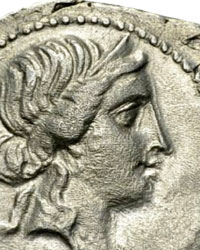
Römische Republik. Mark Antony. Denarius moving mint (Ohne Mindestpreis)


| 1 € |
|---|
Käuferschutz auf Catawiki
Ihre Zahlung wird von uns sicher verwahrt, bis Sie Ihr Objekt erhalten.Details ansehen
Trustpilot 4.4 | 121798 Bewertungen
Auf Trustpilot als hervorragend bewertet.
Ungraded römische Republik (imperatorisch) Denar von Marc Antony, bewegliche Münzstätte, 32–31 v. Chr. (Patrae), Vorderseite ANT AVG III VIR R P C mit einer Praetorischen Galeere, Rückseite LEG XXIII mit einem Adler zwischen zwei Standarten; kommt mit Echtheitszertifikat.
Vom Verkäufer bereitgestellte Beschreibung
RULER: Marc Antony
DATE: Patrae (?), 32-31 B.C
DENOMINATION: Denarius
MATERIAL: Silver, AR
SIZE & WEIGHT: 18 mm, 3,1 gr
OBVERSE: ANT AVG III VIR R P C, Praetorian galley
REVERSE: LEG XXIII, Legionary eagle between two standards.
REFERENCES: RSC 60
Comes with Certificate of Authenticity
Minted in vast quantities between 32 and 31 BC to finance Mark Antony's military operations as he prepared for the final showdown with Octavian (the future Emperor Augustus). Unlike most Roman coinage of the period, the obverse (front) of this coin series typically features a galley or ship, while the reverse prominently displays a legionary eagle (Aquila) flanked by two military standards, often with the inscription "LEG" followed by the specific legion's number (from I to XXIII). This militaristic design was a direct form of propaganda, emphasizing Antony's reliance on his loyal legions and his role as a respected commander, rather than focusing on his own portrait or his controversial relationship with Cleopatra. The debased silver content of these coins, intended to stretch Antony's resources, ironically contributed to their longevity, keeping them in circulation for centuries.
The final civil war of the Roman Republic, often called the War of Actium (32–30 BC), was the culmination of a decade-long struggle for supremacy between the two remaining Triumvirs: Mark Antony, ruler of the East, and Octavian, master of the West. Their initial political alliance fractured due to escalating personal and political tensions. Octavian skillfully used propaganda against Antony, focusing on his increasing association with Cleopatra VII of Egypt and the "Donations of Alexandria," which saw Roman lands granted to her and their children. Octavian illegally seized and published Antony's will, which contained politically damaging provisions—notably his desire to be buried in Alexandria—which Octavian successfully presented to the Roman people and Senate as proof of Antony's betrayal of Rome for an Eastern monarchy.
The open conflict began when Octavian convinced the Roman Senate to declare war, not directly on Antony, but on Cleopatra, knowing Antony would stand by her side. The decisive moment came on September 2, 31 BC, at the Battle of Actium, a major naval engagement off the western coast of Greece. Octavian's forces, led by his general Marcus Agrippa, outmaneuvered the combined fleets of Antony and Cleopatra. Following the rout at Actium, Octavian pursued the pair to Egypt. Both Antony and Cleopatra committed suicide in 30 BC after Octavian's final victory at Alexandria. Octavian's triumph ended the Roman Republic, allowing him to consolidate all power and become the first Roman Emperor, Augustus. The War of Actium ushered in the Pax Romana and the beginning of the Imperial age.
Der Verkäufer stellt sich vor
RULER: Marc Antony
DATE: Patrae (?), 32-31 B.C
DENOMINATION: Denarius
MATERIAL: Silver, AR
SIZE & WEIGHT: 18 mm, 3,1 gr
OBVERSE: ANT AVG III VIR R P C, Praetorian galley
REVERSE: LEG XXIII, Legionary eagle between two standards.
REFERENCES: RSC 60
Comes with Certificate of Authenticity
Minted in vast quantities between 32 and 31 BC to finance Mark Antony's military operations as he prepared for the final showdown with Octavian (the future Emperor Augustus). Unlike most Roman coinage of the period, the obverse (front) of this coin series typically features a galley or ship, while the reverse prominently displays a legionary eagle (Aquila) flanked by two military standards, often with the inscription "LEG" followed by the specific legion's number (from I to XXIII). This militaristic design was a direct form of propaganda, emphasizing Antony's reliance on his loyal legions and his role as a respected commander, rather than focusing on his own portrait or his controversial relationship with Cleopatra. The debased silver content of these coins, intended to stretch Antony's resources, ironically contributed to their longevity, keeping them in circulation for centuries.
The final civil war of the Roman Republic, often called the War of Actium (32–30 BC), was the culmination of a decade-long struggle for supremacy between the two remaining Triumvirs: Mark Antony, ruler of the East, and Octavian, master of the West. Their initial political alliance fractured due to escalating personal and political tensions. Octavian skillfully used propaganda against Antony, focusing on his increasing association with Cleopatra VII of Egypt and the "Donations of Alexandria," which saw Roman lands granted to her and their children. Octavian illegally seized and published Antony's will, which contained politically damaging provisions—notably his desire to be buried in Alexandria—which Octavian successfully presented to the Roman people and Senate as proof of Antony's betrayal of Rome for an Eastern monarchy.
The open conflict began when Octavian convinced the Roman Senate to declare war, not directly on Antony, but on Cleopatra, knowing Antony would stand by her side. The decisive moment came on September 2, 31 BC, at the Battle of Actium, a major naval engagement off the western coast of Greece. Octavian's forces, led by his general Marcus Agrippa, outmaneuvered the combined fleets of Antony and Cleopatra. Following the rout at Actium, Octavian pursued the pair to Egypt. Both Antony and Cleopatra committed suicide in 30 BC after Octavian's final victory at Alexandria. Octavian's triumph ended the Roman Republic, allowing him to consolidate all power and become the first Roman Emperor, Augustus. The War of Actium ushered in the Pax Romana and the beginning of the Imperial age.