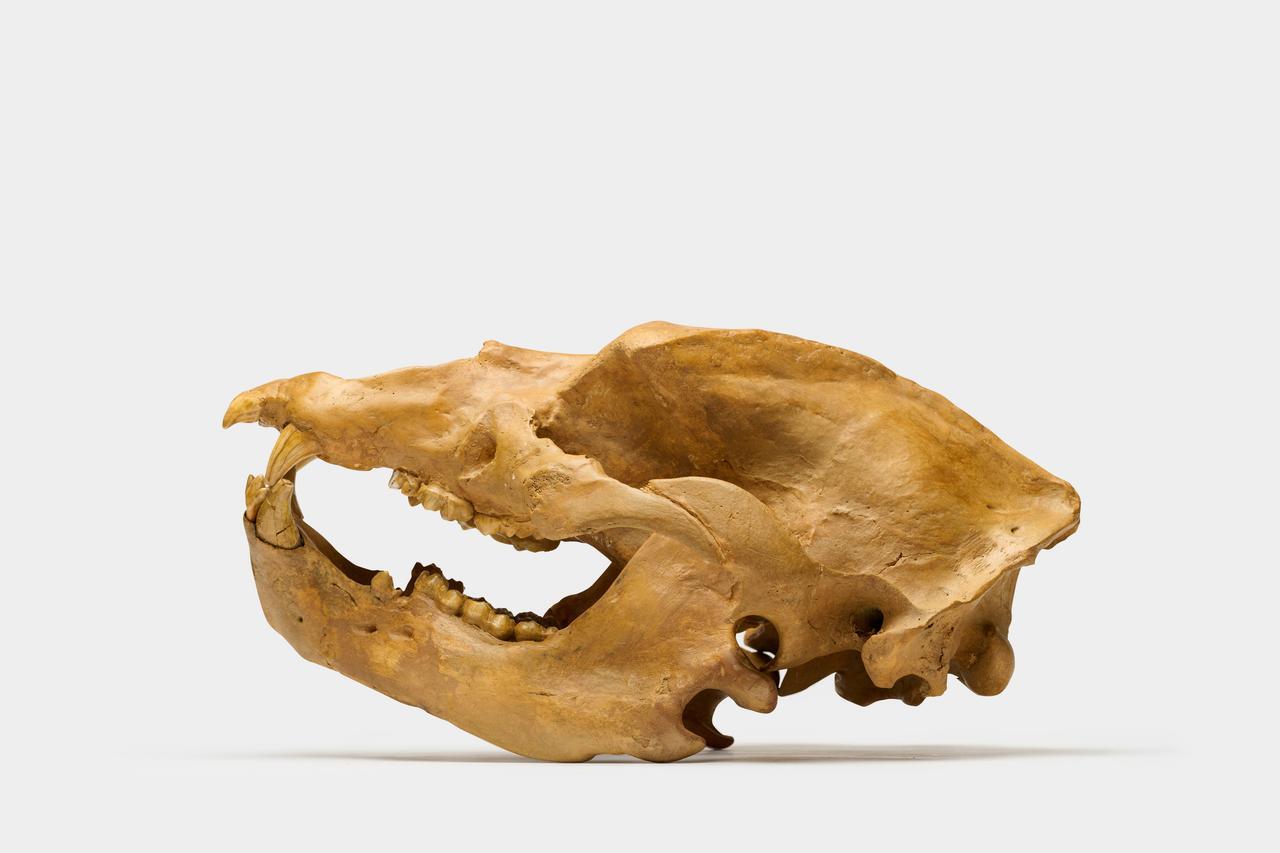
No. 100756260

No. 100756260
→10 cm long x 4 cm wide at widest point fossilized Basilosaurus pre-molar from late Eocene
→ Weight 63 grams
Thi is 10 cm long pre-molar which is indicative that Basilosaurus was an enormous predator and the ridges on the teeth is representative of cutting & shearing performed by these teeth. The teeth features two unsymmetric roots which are again characteristic feature of Basilosaurus teeth where the thicker root faces the back of the jaw and the somewhat thinner root is in front of the jaw. The teeth features 3 ridges on each side and one central ridge. Some small sections of the ridges are eroded away due to excavation or probably the fossilization process itself but nevertheless, majority 90% teeth is fully intact. The teeth looks like a person with two feet leaning against the wall in one of the photos and in other photos it appear to be a person about to sprint. The crown of the teeth has the signature light cholocate brown color which the remaining teeth has yellow-golden touch to it against a light color background.As its roughly 35 million year old fossil, so there is no biological material left and its purely rock,mineral,sand and stone etc. Zooming into to the photos one can see those minerals. Some parts of root are erorded away giving the glimpse of the inside of the root. Basilosaurus was a mammal and unlike reptiles it didn't shed its teeth. However, looking at the underside of the root one can see distinct layers indicating the attaching of the teeth to the jaw. Just like enamel is the top layer of crown, the top layer of root is Cementum and that is indicated in the fossil and the comes the inner layers.
The white small lines on the fossil are due to plant root which interacted with the fossil during the fossilization process leaving behind those lines.
There is top notch restoration & conservation work done of the teeth to protect it and make it essentially long lasting. These teeth are found embedded in hard /semi hardened rock, so excavation is quite challenging and repair work is normal.
All in all this fossil is not only representative of the Basilosaurus, top predator Late Eocene ocean ecosystem, but holds very valuable information about the fossilization process in addition to this wonderful aesthetic looks.
It gives good feeling to hold & look at this teeth reminding of the wonderful Basilosaurus.
How to buy on Catawiki
1. Discover something special
2. Place the top bid
3. Make a secure payment