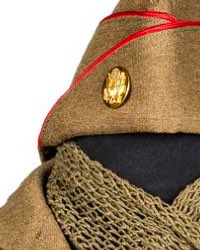
No. 98145404

No. 98145404
Größe. ca. 25,5 x 20,5 cm
In August 1987 Chilton was assigned to NASA and became an astronaut in August 1988, qualifying for assignment as a pilot on Space Shuttle flight crews.
Chilton held a variety of technical assignments. He served in the Mission Development Branch of the Astronaut Office in support of the Infrared Background Signature Survey (IBSS) satellite, and the Orbital Maneuvering Vehicle (OMV) programs. He was the Astronaut Office T-38 Talon safety officer, leader of the Astronaut Support Personnel team at the Kennedy Space Center, and was lead spacecraft communicator (CAPCOM) for numerous Shuttle flights.
Chilton also served as Deputy Program Manager for the early International Space Station program. A veteran of three space flights, Chilton logged more than 704 hours in space.
An accomplished guitarist, Chilton spent a portion of his spare time hammering out riffs on a Fender Stratocaster while jamming with the all astronaut band, "Max Q".
STS-49, which lasted from May 7–16, 1992, was the maiden voyage of Space Shuttle Endeavour. During the mission, the crew conducted the initial test flight of Endeavour, performed a record four EVA’s (spacewalks) to retrieve, repair and deploy the International Telecommunications Satellite (Intelsat), and to demonstrate and evaluate numerous EVA tasks to be used for the assembly of Space Station Freedom. Additionally, a variety of medical, scientific and operational tests were conducted throughout the mission. STS-49 logged 213 hours in space and 141 Earth orbits prior to landing at Edwards Air Force Base, California, where the crew conducted the first test of the Endeavour’s drag chute.[3]
STS-59
STS-59, the Space Radar Laboratory (SRL) mission, April 9–20, 1994, was launched aboard Space Shuttle Endeavour. SRL consisted of three large radars, SIR-C/X-SAR (Shuttle Imaging Radar C/X-Band Synthetic Aperture Radar), and a carbon monoxide sensor that were used to enhance studies of the Earth's surface and atmosphere. The imaging radars operated in three frequencies and four polarizations. This multispectral capability of the radars provided information about the Earth's surface over a wide range of scales not discernible with previous single-frequency experiments. The carbon monoxide sensor (MAPS) used gas filter radiometry to measure the global distribution of CO in the troposphere. Real-time crew observations of surface phenomena and climatic conditions augmented with over 14,000 photographs aided investigators in interpretation and calibration of the data. The mission concluded with a landing at Edwards AFB after orbiting the Earth 183 times in 269 hours.[4]
STS-76
Astronaut Kevin P. Chilton on the deck of Space Shuttle Atlantis during the STS-76 missions. Chilton was the commander of the STS-76 mission.
Chilton commanded STS-76, the third docking mission to the Russian space station Mir, which launched on March 22, 1996, with a crew of six aboard Atlantis. Following rendezvous and docking with Mir, transfer of a NASA astronaut to Mir for a five-month stay was accomplished to begin a continuous presence of U.S. astronauts aboard Mir for the next two-year period. The crew also transferred 4800 pounds of science and mission hardware, food, water and air to Mir and returned over 1100 pounds of U.S. and ESA science and Russian hardware. The first spacewalk from the Shuttle while docked to Mir was conducted. Experiment packages were transferred from the Shuttle and mounted on the Mir docking module to detect and assess debris and contamination in a space station environment. The Spacehab module carried in the Shuttle payload bay was utilized extensively for transfer and return stowage of logistics and science and also carried Biorack, a small multipurpose laboratory used during this mission for research of plant and animal cellular function. This mission was also the first flight of Kidsat, an electronic camera controlled by classroom students via a Ku-band link between JSC Mission Control and the Shuttle, which used digitized photography from the Shuttle for science and education. Following 145 orbits of the Earth, Atlantis landed with a crew of five at Edwards Air Force Base in California on March 31, 1996, 221 hours after liftoff.
Quelle: Wikipedia
Wichtig: Aufgrund der unsicheren Versand- und Zollbedingungen versende ich aktuell nicht in die USA. Vielen Dank für Ihr Verständnis.
How to buy on Catawiki
1. Discover something special
2. Place the top bid
3. Make a secure payment