No. 99710847

No longer available
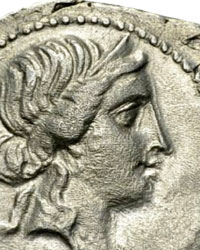
Roman Empire. Elagabalus (AD 218-222). Denarius Rome - ABVNDANTIA AVG
Bidding closed
5 days ago

Roman Empire. Elagabalus (AD 218-222). Denarius Rome - ABVNDANTIA AVG

RULER: Elagabalus DATE: 218 - 222 A.D DENOMINATION: Denarius MATERIAL: Silver, AR SIZE & WEIGHT: 18 mm, 3 gr OBVERSE: Laureate bust of Elagabalus draped to right, around IMP ANTONINVS PIVS AVG REVERSE: Around ABVNDANTIA AVG, Abundantia standing to left emptying cornucopiae held with both hands, star to left REFERENCES: RIC 56, RSC 1a, BMC 189 Comes with Certificate of Authenticity and Export Licence. If you are from outside the European Union, we will have to apply for the export licence again for your country, this takes 3 to 5 weeks and has a cost of 5% of the hammer price, this amount will be added to the final invoice. Marcus Aurelius Antoninus (c. 203/4–222 CE), better known as Elagabalus (or Heliogabalus), was a Roman emperor whose brief reign, beginning at the age of 14, was one of the most controversial in Roman history. Born Sextus Varius Avitus Bassianus in Emesa, Syria, he was the hereditary high priest of the local sun god, Elagabal. His rise to power in 218 CE was engineered by his formidable grandmother, Julia Maesa, who leveraged the family's connection to the Severan dynasty by claiming Elagabalus was the illegitimate son of the recently assassinated Emperor Caracalla. This claim successfully won the loyalty of a legion, defeated the reigning usurper Macrinus, and saw the teenage priest installed on the imperial throne. The emperor's reign was immediately dominated by his religious zeal, which shocked and alienated the Roman aristocracy. Elagabalus brought the sacred symbol of his Syrian god—a large, black conical meteorite (baetyl)—to Rome, constructed the magnificent Elagabalium temple on the Palatine Hill, and elevated the deity Sol Invictus Elagabal to the position of supreme god in the Roman pantheon, superseding Jupiter himself. The emperor, dressing in flowing, ornate Syrian priestly robes and a tiara, performed ecstatic public rituals, which were deemed "barbaric" and effeminate by traditionalist Romans. His highly unusual public and personal life, including marrying a Vestal Virgin and allegedly prostituting himself, fueled tales of extreme decadence, eccentricity, and disregard for Roman customs. This combination of religious fanaticism, alleged sexual impropriety, and the promotion of non-traditional advisors proved to be his undoing. Julia Maesa, fearing that her grandson’s outrageous behavior would bring ruin to her entire dynasty, decided to replace him. She began promoting his younger, more moderate cousin, Severus Alexander, as a successor. After Elagabalus tried to have Alexander assassinated, the Praetorian Guard, thoroughly alienated, revolted. On March 11, 222 CE, at the age of 18, Elagabalus and his mother, Julia Soaemias, were murdered by the Guards. Their bodies were mutilated, dragged through the streets of Rome, and ultimately thrown into the Tiber River, followed by a formal damnatio memoriae to erase his memory from public records.

No. 99710847

No longer available
Roman Empire. Elagabalus (AD 218-222). Denarius Rome - ABVNDANTIA AVG

Roman Empire. Elagabalus (AD 218-222). Denarius Rome - ABVNDANTIA AVG

RULER: Elagabalus
DATE: 218 - 222 A.D
DENOMINATION: Denarius
MATERIAL: Silver, AR
SIZE & WEIGHT: 18 mm, 3 gr
OBVERSE: Laureate bust of Elagabalus draped to right, around IMP ANTONINVS PIVS AVG
REVERSE: Around ABVNDANTIA AVG, Abundantia standing to left emptying cornucopiae held with both hands, star to left
REFERENCES: RIC 56, RSC 1a, BMC 189

Comes with Certificate of Authenticity and Export Licence. If you are from outside the European Union, we will have to apply for the export licence again for your country, this takes 3 to 5 weeks and has a cost of 5% of the hammer price, this amount will be added to the final invoice.

Marcus Aurelius Antoninus (c. 203/4–222 CE), better known as Elagabalus (or Heliogabalus), was a Roman emperor whose brief reign, beginning at the age of 14, was one of the most controversial in Roman history. Born Sextus Varius Avitus Bassianus in Emesa, Syria, he was the hereditary high priest of the local sun god, Elagabal. His rise to power in 218 CE was engineered by his formidable grandmother, Julia Maesa, who leveraged the family's connection to the Severan dynasty by claiming Elagabalus was the illegitimate son of the recently assassinated Emperor Caracalla. This claim successfully won the loyalty of a legion, defeated the reigning usurper Macrinus, and saw the teenage priest installed on the imperial throne.

The emperor's reign was immediately dominated by his religious zeal, which shocked and alienated the Roman aristocracy. Elagabalus brought the sacred symbol of his Syrian god—a large, black conical meteorite (baetyl)—to Rome, constructed the magnificent Elagabalium temple on the Palatine Hill, and elevated the deity Sol Invictus Elagabal to the position of supreme god in the Roman pantheon, superseding Jupiter himself. The emperor, dressing in flowing, ornate Syrian priestly robes and a tiara, performed ecstatic public rituals, which were deemed "barbaric" and effeminate by traditionalist Romans. His highly unusual public and personal life, including marrying a Vestal Virgin and allegedly prostituting himself, fueled tales of extreme decadence, eccentricity, and disregard for Roman customs.

This combination of religious fanaticism, alleged sexual impropriety, and the promotion of non-traditional advisors proved to be his undoing. Julia Maesa, fearing that her grandson’s outrageous behavior would bring ruin to her entire dynasty, decided to replace him. She began promoting his younger, more moderate cousin, Severus Alexander, as a successor. After Elagabalus tried to have Alexander assassinated, the Praetorian Guard, thoroughly alienated, revolted. On March 11, 222 CE, at the age of 18, Elagabalus and his mother, Julia Soaemias, were murdered by the Guards. Their bodies were mutilated, dragged through the streets of Rome, and ultimately thrown into the Tiber River, followed by a formal damnatio memoriae to erase his memory from public records.

Bidding closed
Alessandro Fiamingo
Expert
Estimate  € 150 - € 200

Similar objects

For you in

Ancient Coins

Set a search alert
Set a search alert to get notified when new matches are available.

This object was featured in


How to buy on Catawiki

Learn more about our Buyer Protection

      1. Discover something special

      Browse through thousands of special objects selected by experts. View the photos, details and estimated value of each special object. 

      2. Place the top bid

      Find something you love and place the top bid. You can follow the auction to the end or let our system do the bidding for you. All you have to do is set a bid for the maximum amount you want to pay. 

      3. Make a secure payment

      Pay for your special object and we’ll keep your payment secure until it arrives safe and sound. We use a trusted payment system to handle all transactions. 

Have something similar to sell?

Whether you're new to online auctions or sell professionally, we can help you earn more for your special objects.

Sell your object