Nr 99239870

Inte längre tillgänglig
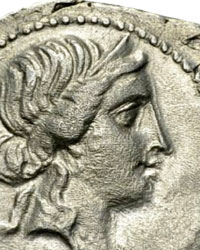
Romerska republiken (kejsare). Marcus Iunius Brutus. Denarius From the E.E. Clain-Stefanelli collection
Budgivning avslutad
2 veckor sedan

Romerska republiken (kejsare). Marcus Iunius Brutus. Denarius From the E.E. Clain-Stefanelli collection

RULER: Brutus DATE: Mint moving, 43-42 B.C DENOMINATION: Denarius MATERIAL: Silver, AR SIZE & WEIGHT: 17 mm, 3,49 gr OBVERSE: LEIBERTAS, head of Libertas right REVERSE: CAEPIO BRVTVS PRO COS, Lyre between a quiver and a laurel branch REFERENCES: Crawford 501/1 PROVENANCE: From the E.E. Clain-Stefanelli collection Comes with Certificate of Authenticity Marcus Junius Brutus (c. 85–42 BC) was a Roman senator and politician whose life remains one of the most polarizing and dramatic chapters in the history of the late Roman Republic. Descended from Lucius Junius Brutus, the semi-legendary founder of the Republic who expelled the last king, Marcus Brutus inherited a deep-seated philosophical commitment to libertas—the traditional concept of liberty and senatorial rule. Despite this staunch Republicanism, he was pardoned and highly favored by Julius Caesar after the Civil War, receiving high honors such as the governorship of Cisalpine Gaul and the urban praetorship. Brutus’s personal integrity, coupled with his close relationship with Caesar—whose mistress was Brutus's mother, Servilia—made his eventual betrayal of his benefactor all the more shocking. The pivotal moment of Brutus’s life was his decision to join and ultimately lead the conspiracy to assassinate Julius Caesar. Driven by the fear that Caesar’s self-declaration as "Dictator for Life" on the Ides of March, 44 BC, signaled the permanent end of the Republic and a return to monarchy, Brutus put his philosophical duty above his personal loyalties. The conspirators, calling themselves the Liberatores (Liberators), struck Caesar down at a Senate meeting, a moment forever immortalized by the dramatic, likely fictional, line "Et tu, Brute?" The immediate aftermath, however, did not bring the expected restoration of the Republic. Instead, a public outcry, fueled by Mark Antony’s rhetoric, forced Brutus and his co-conspirator, Gaius Cassius Longinus, to flee Rome. Brutus and Cassius consolidated their forces and treasuries in the eastern provinces, preparing for a confrontation with the Second Triumvirate, composed of Mark Antony, Octavian (Caesar’s adopted son and heir), and Lepidus. This conflict culminated in the two decisive Battles of Philippi in Macedonia in 42 BC. After his army was utterly defeated in the second engagement, Brutus, refusing to be captured, chose to take his own life. His death marked the final, futile stand for the Roman Republic and ushered in the final stage of the civil wars that would ultimately lead to the rise of Octavian (Augustus) as Rome’s first Emperor. Brutus's legacy remains complex, viewed by some as the "noblest Roman" who fought for freedom, and by others as a treacherous murderer.

Nr 99239870

Inte längre tillgänglig
Romerska republiken (kejsare). Marcus Iunius Brutus. Denarius From the E.E. Clain-Stefanelli collection

Romerska republiken (kejsare). Marcus Iunius Brutus. Denarius From the E.E. Clain-Stefanelli collection

RULER: Brutus
DATE: Mint moving, 43-42 B.C
DENOMINATION: Denarius
MATERIAL: Silver, AR
SIZE & WEIGHT: 17 mm, 3,49 gr
OBVERSE: LEIBERTAS, head of Libertas right
REVERSE: CAEPIO BRVTVS PRO COS, Lyre between a quiver and a laurel branch
REFERENCES: Crawford 501/1
PROVENANCE: From the E.E. Clain-Stefanelli collection

Comes with Certificate of Authenticity

Marcus Junius Brutus (c. 85–42 BC) was a Roman senator and politician whose life remains one of the most polarizing and dramatic chapters in the history of the late Roman Republic. Descended from Lucius Junius Brutus, the semi-legendary founder of the Republic who expelled the last king, Marcus Brutus inherited a deep-seated philosophical commitment to libertas—the traditional concept of liberty and senatorial rule. Despite this staunch Republicanism, he was pardoned and highly favored by Julius Caesar after the Civil War, receiving high honors such as the governorship of Cisalpine Gaul and the urban praetorship. Brutus’s personal integrity, coupled with his close relationship with Caesar—whose mistress was Brutus's mother, Servilia—made his eventual betrayal of his benefactor all the more shocking.

The pivotal moment of Brutus’s life was his decision to join and ultimately lead the conspiracy to assassinate Julius Caesar. Driven by the fear that Caesar’s self-declaration as "Dictator for Life" on the Ides of March, 44 BC, signaled the permanent end of the Republic and a return to monarchy, Brutus put his philosophical duty above his personal loyalties. The conspirators, calling themselves the Liberatores (Liberators), struck Caesar down at a Senate meeting, a moment forever immortalized by the dramatic, likely fictional, line "Et tu, Brute?" The immediate aftermath, however, did not bring the expected restoration of the Republic. Instead, a public outcry, fueled by Mark Antony’s rhetoric, forced Brutus and his co-conspirator, Gaius Cassius Longinus, to flee Rome.

Brutus and Cassius consolidated their forces and treasuries in the eastern provinces, preparing for a confrontation with the Second Triumvirate, composed of Mark Antony, Octavian (Caesar’s adopted son and heir), and Lepidus. This conflict culminated in the two decisive Battles of Philippi in Macedonia in 42 BC. After his army was utterly defeated in the second engagement, Brutus, refusing to be captured, chose to take his own life. His death marked the final, futile stand for the Roman Republic and ushered in the final stage of the civil wars that would ultimately lead to the rise of Octavian (Augustus) as Rome’s first Emperor. Brutus's legacy remains complex, viewed by some as the "noblest Roman" who fought for freedom, and by others as a treacherous murderer.

Budgivning avslutad
Carmen Vera Gutiérrez
Expert
Uppskattat pris  € 550 - € 650

Liknande objekt

För dig i

Gamla mynt

Skapa en sökbevakning
Skapa en sökbevakning för att få ett meddelande när nya matchningar är tillgängliga.

Detta objekt förekom i


Hur du köper på Catawiki

Läs mer om vårt Köparskydd

      1. Upptäck något speciellt

      Bläddra bland tusentals speciella objekt som valts ut av experter. Se foton, detaljer och uppskattat värde för varje speciellt objekt. 

      2. Lägg det högsta budet

      Hitta något du älskar och lägg det högsta budet. Du kan följa auktionen till slutet eller låta vårt system sköta budgivningen åt dig. Allt du behöver göra är att ställa in ett bud på det maximala belopp du vill betala. 

      3. Gör en säker betalning

      Betala för ditt speciella objekt så håller vi din betalning säker tills det anländer välbehållet. Vi använder ett pålitligt betalningssystem för att hantera alla transaktioner. 

Har du något liknande att sälja?

Oavsett om du är ny på onlineauktioner eller säljer professionellt kan vi hjälpa dig att tjäna mer på dina speciella föremål.

Sälj ditt objekt