Nr. 105196244

Nicht mehr verfügbar
Thrakien, Ainos Tetradrachm Circa 415/4-413/2 BC
Auktion beendet
Vor 6 Tagen

Thrakien, Ainos Tetradrachm Circa 415/4-413/2 BC

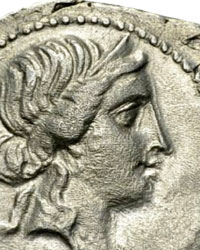
THRACE, Ainos. Circa 415/4-413/2 BC. AR Tetradrachm. Head of Hermes right, wearing petasos / Goat standing right; ivy branch to right; all within incuse square. Ainos came rather late to currency production, striking its first tetradrachms only after the expulsion of the Persians from northern Greece following Xerxes’ defeat at Salamis. Its first period ended with the Athenian coinage decree of 449 BC, but the mint was in operation again by circa 435 BC, tapering off rapidly until disappearing with the conquest of the city by Philip of Macedon in 342 BC. Its uniform types throughout its history were Hermes and the goat, the latter the symbol of the pasture land that provided what prosperity Ainos had. Hermes was the patron deity of Ainos, dating from the time of the Trojan War. According to a poem by Kallimachos, the sculptor Epeios, who constructed the Trojan Horse, also made a wooden statue (ξοανον) of Hermes, which was washed out to sea and recovered by fishermen by the Hebros river. The fishermen, thinking it just a piece of driftwood, tried to burn it in their bonfire. When it failed to burn they took fright and threw it back into the sea, which promptly cast it back again. The natives accepted it as a relic of the gods, and erected the sanctuary of Hermes Perpheraios (the Wanderer) at the future site of Ainos. The later coins of Ainos, with their splendid facing head of Hermes, showcase some of the finest numismatic art of the Greek world. Nevertheless, Ainos never became an important city or trading center. The climate might have had something to do with it; according to Athaneus, Ainos had two seasons, eight months of cold and four months of winter. At least the goats liked it. Weight: 16,55 gr Diameter: 25,2 mm Condition: Very Fine

Nr. 105196244

Nicht mehr verfügbar
Thrakien, Ainos Tetradrachm Circa 415/4-413/2 BC

Thrakien, Ainos Tetradrachm Circa 415/4-413/2 BC

THRACE, Ainos. Circa 415/4-413/2 BC. AR Tetradrachm. Head of Hermes right, wearing petasos / Goat standing right; ivy branch to right; all within incuse square.
Ainos came rather late to currency production, striking its first tetradrachms only after the expulsion of the Persians from northern Greece following Xerxes’ defeat at Salamis. Its first period ended with the Athenian coinage decree of 449 BC, but the mint was in operation again by circa 435 BC, tapering off rapidly until disappearing with the conquest of the city by Philip of Macedon in 342 BC. Its uniform types throughout its history were Hermes and the goat, the latter the symbol of the pasture land that provided what prosperity Ainos had. Hermes was the patron deity of Ainos, dating from the time of the Trojan War. According to a poem by Kallimachos, the sculptor Epeios, who constructed the Trojan Horse, also made a wooden statue (ξοανον) of Hermes, which was washed out to sea and recovered by fishermen by the Hebros river. The fishermen, thinking it just a piece of driftwood, tried to burn it in their bonfire. When it failed to burn they took fright and threw it back into the sea, which promptly cast it back again. The natives accepted it as a relic of the gods, and erected the sanctuary of Hermes Perpheraios (the Wanderer) at the future site of Ainos. The later coins of Ainos, with their splendid facing head of Hermes, showcase some of the finest numismatic art of the Greek world. Nevertheless, Ainos never became an important city or trading center. The climate might have had something to do with it; according to Athaneus, Ainos had two seasons, eight months of cold and four months of winter. At least the goats liked it.

Weight: 16,55 gr
Diameter: 25,2 mm

Condition: Very Fine

Auktion beendet
Carmen Vera Gutiérrez
Experte
Schätzung  € 3.900 - € 4.300

Ähnliche Objekte

Für Sie aus der Kategorie

Antike Münzen

Suchalarm einrichten
Richten Sie einen Suchalarm ein, um benachrichtigt zu werden, sobald neue passende Objekte verfügbar sind.

Dieses Objekt wurde vorgestellt in:


So kaufen Sie auf Catawiki

Mehr zum Käuferschutz erfahren

      1. Etwas Besonderes entdecken

      Entdecken Sie in unseren Auktionen Tausende von besonderen Objekten, die von Experten ausgewählt wurden. Sehen Sie sich die Fotos, die ausführliche Beschreibung und den Schätzwert der besonderen Objekte an, die Sie interessieren. 

      2. Höchstgebot abgeben

      Finden Sie etwas, das Sie begeistert, und geben Sie das Höchstgebot ab. Sie können die Auktion bis zum Schluss mitverfolgen oder unser System für Sie bieten lassen. Dazu müssen Sie einfach nur den Maximalbetrag eingeben, den Sie für das jeweilige Objekt ausgeben möchten. 

      3. Sichere Zahlung durchführen

      Bezahlen Sie Ihr besonderes Objekt und wir verwahren Ihre Zahlung, bis Ihr Objekt unversehrt bei Ihnen angekommen ist. Wir wickeln alle Transaktionen mit einem zuverlässigen und sicheren Zahlungssystem ab. 

Haben Sie etwas Ähnliches zu verkaufen?

Unabhängig davon, ob Online-Auktionen Neuland für Sie sind oder ob Sie gewerblich verkaufen – wir helfen Ihnen, mehr mit Ihren besonderen Objekten zu verdienen.

Objekt verkaufen