Nr. 107043438

Nicht mehr verfügbar
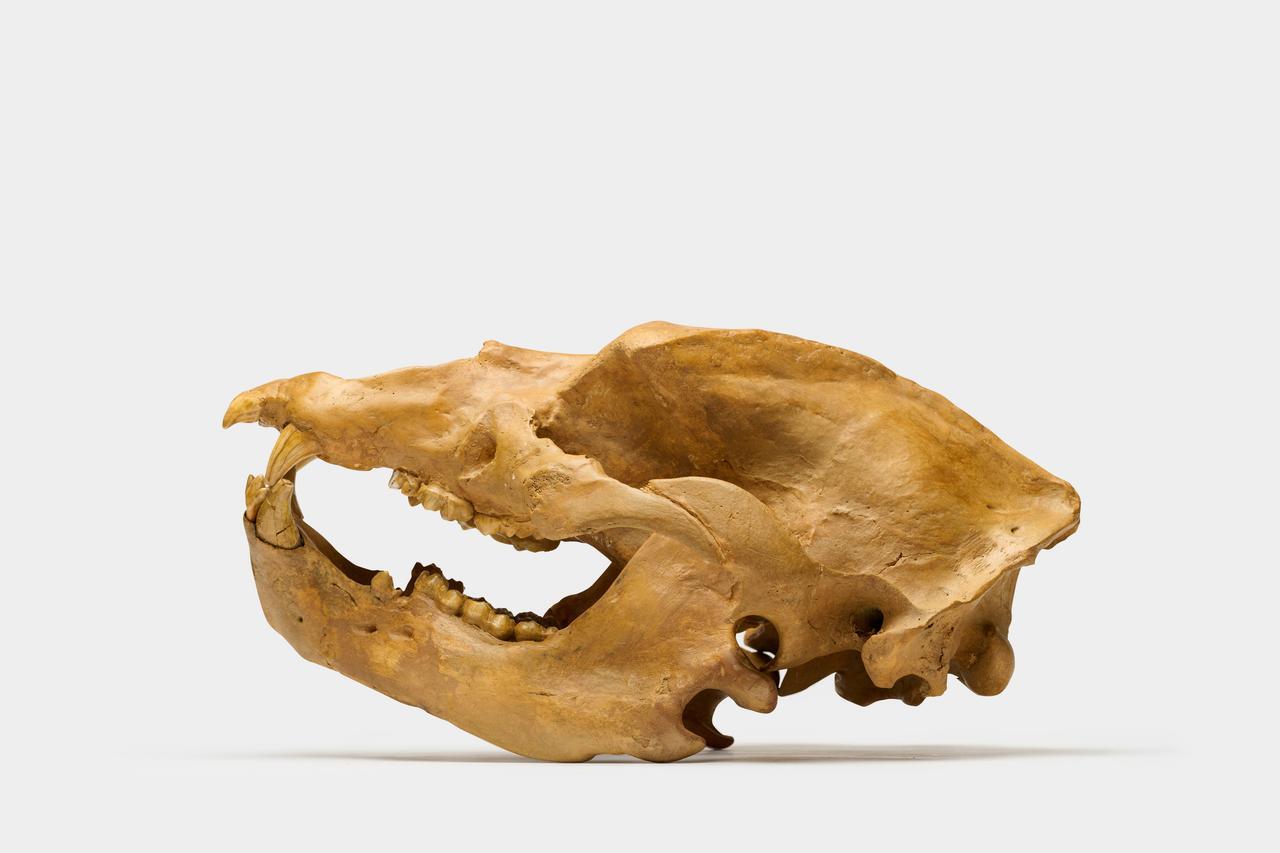
Außergewöhnlich großer Basilosaurier cf. Pappocetus (Wal-Vorfahre) Eckzahn mit Wurzel - Fossiler Zahn
Auktion beendet
Vor 8 h

Außergewöhnlich großer Basilosaurier cf. Pappocetus (Wal-Vorfahre) Eckzahn mit Wurzel - Fossiler Zahn

Scientific name: Unidentified Basilosaurid - (primitive whale ancestor) - Potencial cf Pappocetus lugardi - rooted Canine Tooth Location: Dakhla, Western Sahara, South Morocco Geological Formation: Samlat - Aridal Formation Age: Late Eocene (~40 Million Years) Size: 9,3 cm REF.: #J692 DESCRIPTION: Nicely preserved canine tooth from cf Pappocetus lugardi, a type of protocetid cetacean (early whale ancestor). These outstanding teeth come from the Middle Eocene-age Aridal and Samlat Formations, located in the Western Sahara near Gueran, Morocco. They're commonly found associated with teeth of the shark Otodus sokolovi (Carcharocles auriculatus), a megalodon ancestor. There are few restorations through the root, mainly the basal part of the root has been restored. However, the rest of the root and almost all the tooth crown its fully natural. The specimen has been stabilized with Paraloid B72 to ensure its long term proper preservation. Its the canine tooth of dentary. Pappocetus lugardi is an extinct species of protocetid whale that lived during the Eocene epoch (approximately 40–44 million years ago) in Africa. As a transitional form between land and sea, this amphibious, 20–25 foot long carnivore is considered an ancestor of Basilosaurus and represents a crucial stage in whale evolution. Key Facts About Pappocetus lugardi: Discovery: First described by C.W. Andrews in 1920 based on fossils from the Ameki Formation in Nigeria. Additional specimens have been found in the Sahara Desert in Morocco. Evolutionary Position: Pappocetus belongs to the family Protocetidae, which are early, amphibious whales that could likely move on land using their large limbs, while also being capable swimmers. Physical Characteristics: Size: Estimated to be around 20-25 feet in length. Diet/Habits: A large, amphibious, aquatic carnivore with robust teeth, likely relying on vision and smell for hunting. Appearance: More whale-like than its predecessors, with a streamlined body, yet retaining functional, though reduced, hind limbs. Fossil Record: Known from jaw fragments, teeth, and skull material. Relation to Modern Whales: While it was a transitional form, it is unlikely to have possessed the modern echolocation abilities found in later cetaceans. All of our fossils come with a Certificate of Authenticity. Every week, the issued Certificates of Authenticity are updated in our database verification system on our website. If you find that your certificate has not yet been updated, please contact us and we will update it immediately. Display box NOT included.

Nr. 107043438

Nicht mehr verfügbar
Außergewöhnlich großer Basilosaurier cf. Pappocetus (Wal-Vorfahre) Eckzahn mit Wurzel - Fossiler Zahn

Außergewöhnlich großer Basilosaurier cf. Pappocetus (Wal-Vorfahre) Eckzahn mit Wurzel - Fossiler Zahn

Scientific name: Unidentified Basilosaurid - (primitive whale ancestor) - Potencial cf Pappocetus lugardi - rooted Canine Tooth

Location: Dakhla, Western Sahara, South Morocco

Geological Formation: Samlat - Aridal Formation

Age: Late Eocene (~40 Million Years)

Size: 9,3 cm

REF.: #J692

DESCRIPTION:

Nicely preserved canine tooth from cf Pappocetus lugardi, a type of protocetid cetacean (early whale ancestor). These outstanding teeth come from the Middle Eocene-age Aridal and Samlat Formations, located in the Western Sahara near Gueran, Morocco. They're commonly found associated with teeth of the shark Otodus sokolovi (Carcharocles auriculatus), a megalodon ancestor.

There are few restorations through the root, mainly the basal part of the root has been restored. However, the rest of the root and almost all the tooth crown its fully natural. The specimen has been stabilized with Paraloid B72 to ensure its long term proper preservation. Its the canine tooth of dentary.

Pappocetus lugardi is an extinct species of protocetid whale that lived during the Eocene epoch (approximately 40–44 million years ago) in Africa. As a transitional form between land and sea, this amphibious, 20–25 foot long carnivore is considered an ancestor of Basilosaurus and represents a crucial stage in whale evolution.

Key Facts About Pappocetus lugardi:

Discovery: First described by C.W. Andrews in 1920 based on fossils from the Ameki Formation in Nigeria. Additional specimens have been found in the Sahara Desert in Morocco.

Evolutionary Position: Pappocetus belongs to the family Protocetidae, which are early, amphibious whales that could likely move on land using their large limbs, while also being capable swimmers.

Physical Characteristics:
Size: Estimated to be around 20-25 feet in length.
Diet/Habits: A large, amphibious, aquatic carnivore with robust teeth, likely relying on vision and smell for hunting.

Appearance: More whale-like than its predecessors, with a streamlined body, yet retaining functional, though reduced, hind limbs.

Fossil Record: Known from jaw fragments, teeth, and skull material.

Relation to Modern Whales: While it was a transitional form, it is unlikely to have possessed the modern echolocation abilities found in later cetaceans.

All of our fossils come with a Certificate of Authenticity. Every week, the issued Certificates of Authenticity are updated in our database verification system on our website. If you find that your certificate has not yet been updated, please contact us and we will update it immediately. Display box NOT included.

Auktion beendet
Sullivan Halipré
Experte
Schätzung  € 200 - € 250

Ähnliche Objekte

  • ​
    ​
    ​
  • ​
    ​
    ​
  • ​
    ​
    ​
  • ​
    ​
    ​
  • ​
    ​
    ​
  • ​
    ​
    ​
  • ​
    ​
    ​
  • ​
    ​
    ​
  • ​
    ​
    ​
  • ​
    ​
    ​

Für Sie aus der Kategorie

Fossilien

  • ​
    ​
    ​
  • ​
    ​
    ​
  • ​
    ​
    ​
  • ​
    ​
    ​
  • ​
    ​
    ​
  • ​
    ​
    ​
  • ​
    ​
    ​
  • ​
    ​
    ​
  • ​
    ​
    ​
  • ​
    ​
    ​
Suchalarm einrichten
Richten Sie einen Suchalarm ein, um benachrichtigt zu werden, sobald neue passende Objekte verfügbar sind.

Dieses Objekt wurde vorgestellt in:


So kaufen Sie auf Catawiki

Mehr zum Käuferschutz erfahren

      1. Etwas Besonderes entdecken

      Entdecken Sie in unseren Auktionen Tausende von besonderen Objekten, die von Experten ausgewählt wurden. Sehen Sie sich die Fotos, die ausführliche Beschreibung und den Schätzwert der besonderen Objekte an, die Sie interessieren. 

      2. Höchstgebot abgeben

      Finden Sie etwas, das Sie begeistert, und geben Sie das Höchstgebot ab. Sie können die Auktion bis zum Schluss mitverfolgen oder unser System für Sie bieten lassen. Dazu müssen Sie einfach nur den Maximalbetrag eingeben, den Sie für das jeweilige Objekt ausgeben möchten. 

      3. Sichere Zahlung durchführen

      Bezahlen Sie Ihr besonderes Objekt und wir verwahren Ihre Zahlung, bis Ihr Objekt unversehrt bei Ihnen angekommen ist. Wir wickeln alle Transaktionen mit einem zuverlässigen und sicheren Zahlungssystem ab. 

Haben Sie etwas Ähnliches zu verkaufen?

Unabhängig davon, ob Online-Auktionen Neuland für Sie sind oder ob Sie gewerblich verkaufen – wir helfen Ihnen, mehr mit Ihren besonderen Objekten zu verdienen.

Objekt verkaufen