Nr. 108129046

Nr. 108129046
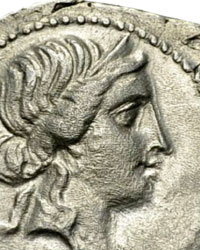
An extraordinary and historic late-republican silver denarius commemorating the submission of King Aretas III of Nabataea, renowned as one of the first Roman coins to depict a living foreign monarch submitting directly to Roman authority.
Issuer: Roman Republic (Moneyers: Marcus Aemilius Scaurus and Publius Plautius Hypsaeus)
Denomination: Silver Denarius
Composition: Silver
Date of Issue: 58 BC
Mint: Rome Mint
Catalog References: Crawford# 422/1b; Sydenham# 913; RSC Aemilia# 8
Obverse (A): King Aretas III of Nabataea kneeling right beside a dromedary camel, holding an olive branch in his right hand and the camel's reins in his left, with M • SCAVR / AED • CVR (Marcus Scaurus Aedilis Curulis) above, EX • S • C (Ex Senatus Consulto) flanking, and REX ARETAS in the exergue.
Reverse (R): Jupiter driving a galloping quadriga (four-horse chariot) left, hurling a thunderbolt with his right hand; scorpion below the horses' feet, with P • HYPSAE / AED • CVR (Publius Hypsaeus Aedilis Curulis) above, C • HYPSAE • COS / PREIVER (Capta Privernum) in two lines in the exergue, and HVPSAEV • S • C in the field.
Historical Context & Numismatic Significance:
The Nabataean Submission: Struck during the curule aedileship of Marcus Aemilius Scaurus (stepson of Sulla and former legate under Pompey the Great), the obverse directly references Scaurus's diplomatic victory in 62 BC when King Aretas III paid 300 talents of silver to avert a Roman invasion of Petra.
Contemporary Political Propaganda: Departing from traditional ancestral claims, Scaurus used his coinage to advertise his own living achievements—a self-aggrandizing move that prefigured the transition from Republic to Empire.
The Reverse Commemoration: The reverse design was provided by his colleague Publius Plautius Hypsaeus, celebrating his ancestor Gaius Plautius Decianus, who captured the Volscian city of Privernum in 329 BC.
So kaufen Sie auf Catawiki
1. Etwas Besonderes entdecken
2. Höchstgebot abgeben
3. Sichere Zahlung durchführen