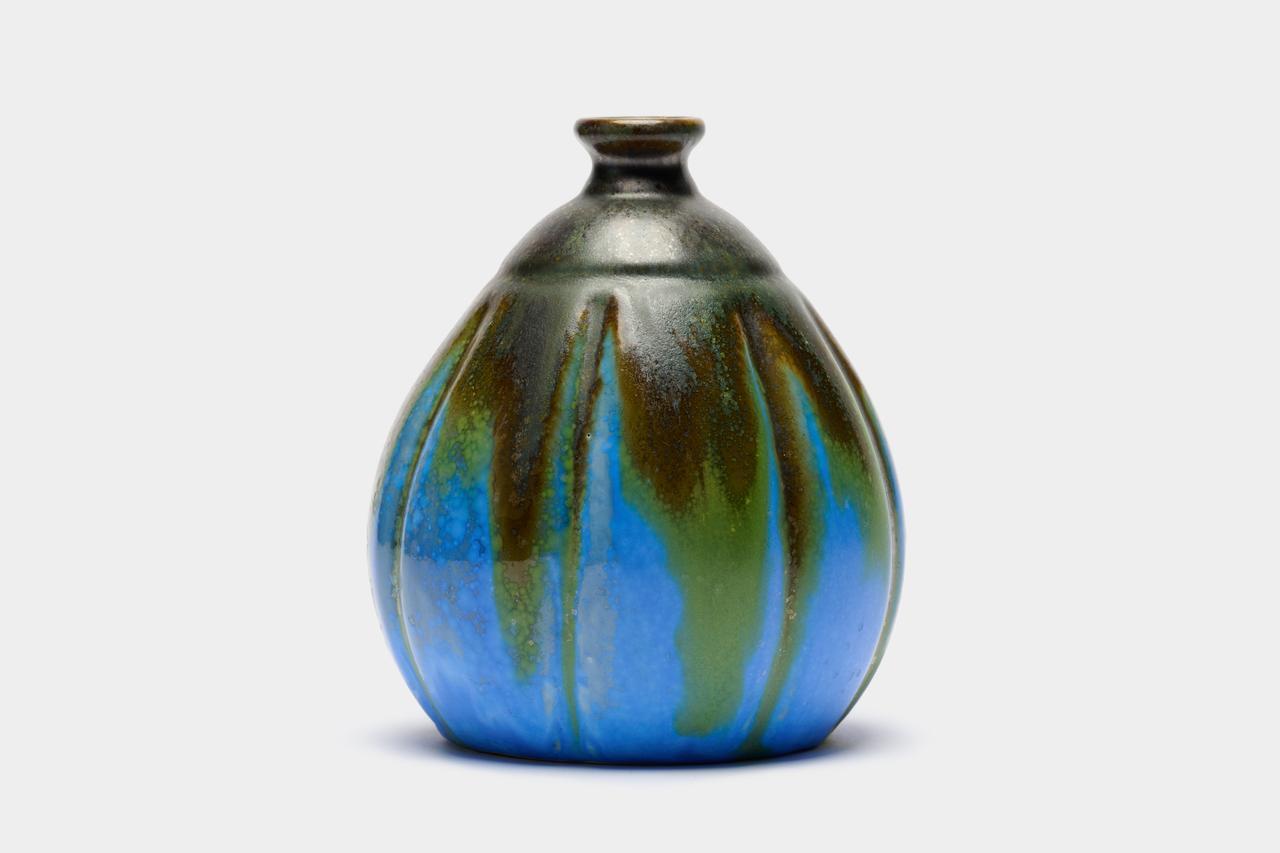
Charger plate - Earthenware - Large Delft plate


Holds a master’s in Art History, specialising in Second French Empire and Dutch Golden Age.
| €101 | ||
|---|---|---|
| €80 | ||
| €55 | ||
Catawiki Buyer Protection
Your payment’s safe with us until you receive your object.View details
Trustpilot 4.4 | 124722 reviews
Rated Excellent on Trustpilot.
A large Delftware earthenware chinoiserie dish, dating to circa 1680–1690, 34.5 cm across, in fair condition with glaze loss at the rim and a small hairline, originating from the Netherlands.
Description from the seller
Large Delft plate Chinoiserie Chinese Ming Delftware Blue White Dish – 17th Century
On offer is a large good quality 17th Century Delft or Delftware (earthenware, faience) blue and white dish. This Delft Chinoiserie dish is made after examples of Chinese porcelain kraak dishes in Wanli and transitional style. In the center a standing Chinese figure in a garden holding a fan. At the flared border large panels with Chinese seated figures alternated with stylized tulips (a reminder of the tulip madness around 1640…) separated by narrow panels with stylized flower stems. This charger stands out by his remarkable high quality painting. Rare find! Provenance: Originating from the estate of a deceased Dutch private collector.
Note; These Chinoiserie earthenware (Faience) objects were mainly made in Delft, Holland (hence the name), during the 17th and 18th Century. The range consisted by dishes, vases, jugs and so on. Faience is earthenware that is covered with a white tin glaze. The production of faience in Chinoiserie style was an answer on the demand and desire by the middle class to obtain real Chinese porcelain. However, at that time only the wealthy upperclass good obtain the (too) expensive Chinese porcelain, imported by the Dutch East India company (VOC). The start of the Delft style was around 1600. The most highly regarded period of production is about 1640–1740. Delftware became popular and was widely exported in Europe and even reached China and Japan. Chinese and Japanese potters even made porcelain versions of Delftware, for export to Europe!
Date: 17th Century ca. 1680-1690.
Size: Measures ca. 34,5 cm across.
Condition: Good. The dish has some glaze loss at the rim and superficial wear which is typical of this type of Delftware. A superficial short hairline at the rim. Good ring sound!
Will be packed very well and shipped with registered track/trace with insurance. Combined shipping possible, we return postage costs.
Large Delft plate Chinoiserie Chinese Ming Delftware Blue White Dish – 17th Century
On offer is a large good quality 17th Century Delft or Delftware (earthenware, faience) blue and white dish. This Delft Chinoiserie dish is made after examples of Chinese porcelain kraak dishes in Wanli and transitional style. In the center a standing Chinese figure in a garden holding a fan. At the flared border large panels with Chinese seated figures alternated with stylized tulips (a reminder of the tulip madness around 1640…) separated by narrow panels with stylized flower stems. This charger stands out by his remarkable high quality painting. Rare find! Provenance: Originating from the estate of a deceased Dutch private collector.
Note; These Chinoiserie earthenware (Faience) objects were mainly made in Delft, Holland (hence the name), during the 17th and 18th Century. The range consisted by dishes, vases, jugs and so on. Faience is earthenware that is covered with a white tin glaze. The production of faience in Chinoiserie style was an answer on the demand and desire by the middle class to obtain real Chinese porcelain. However, at that time only the wealthy upperclass good obtain the (too) expensive Chinese porcelain, imported by the Dutch East India company (VOC). The start of the Delft style was around 1600. The most highly regarded period of production is about 1640–1740. Delftware became popular and was widely exported in Europe and even reached China and Japan. Chinese and Japanese potters even made porcelain versions of Delftware, for export to Europe!
Date: 17th Century ca. 1680-1690.
Size: Measures ca. 34,5 cm across.
Condition: Good. The dish has some glaze loss at the rim and superficial wear which is typical of this type of Delftware. A superficial short hairline at the rim. Good ring sound!
Will be packed very well and shipped with registered track/trace with insurance. Combined shipping possible, we return postage costs.