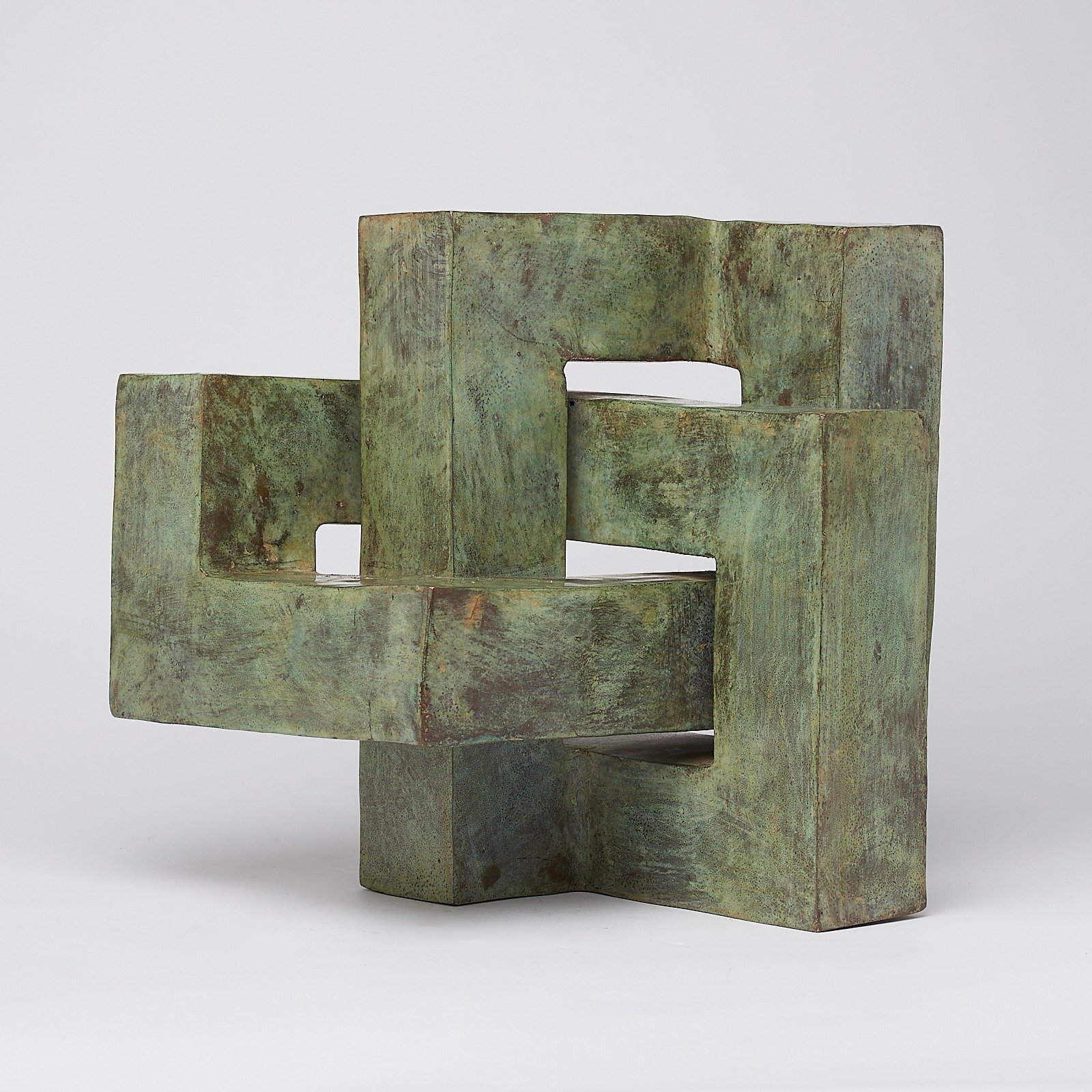
Candlestick - Bronze - Bronze candelabrum - 64 cm


Catawiki Buyer Protection
Your payment’s safe with us until you receive your object.View details
Trustpilot 4.4 | 124985 reviews
Rated Excellent on Trustpilot.
Description from the seller
Classification and category
It is a standing candlestick (altar) designed to hold a single candle. For its
Typology, dimensions, and design fall into the category of ornamentation.
liturgical/decorative, commonly used in both ecclesiastical contexts and interiors.
classic-style domestic appliances from the mid-20th century.
Materials and manufacturing technique
The object is made of brass with a gold finish (possible gold plating or tinted lacquer).
Manufacturing aligns with mid-20th-century mass production through
casting of elements, turning of the shaft and mechanical assembly, with finishes of
polished. The presence of green patina (verdigris) on the candlestick cup is consistent with the
natural oxidation of the copper contained in brass.
Style and design
Stylistically, respond to an ecclesiastical-classical language inherent to the Italian repertoire.
Mediterranean of the mid-20th century: turned stem, curved finials, and a tripod base.
Broad. The sober gold and the smooth lines reinforce its representative function and
ceremonial.
Marks, stamps or inscriptions
No marks, punch marks, or inscriptions are visible in the images. The absence
a workshop punch reduces the manufacturer's traceability, common in mass-produced parts of
at this time. It is recommended to inspect the underside of the base and under the felts, in case
There were mold numbers or workshop marks.
Condition of preservation
Overall condition good: light to moderate wear to the gilding, patina, and localized verdigris.
at the top, with no signs of dents or structural deformations in the
images. Formal integrity preserved; it is advisable to verify the stability of the
Tripod and clearances at the joint.
Time and place of manufacture
The combination of golden brass, serial turning, and a tripod base, added to the language.
formal ecclesiastical, points to the mid-20th century (ca. 1950–1970), with high
Probability of Southern European production (Italian or Spanish market), where is it?
The typology was widespread for parish endowments and for domestic devotional use.
Original purpose and evolution
Designed for liturgical/decorative use in chapels or secondary altars, its height
It favors visibility in celebrations or corners of rooms. In recent decades these
pieces have entered the domestic decorative market due to their classic aesthetic.
Historical and stylistic relevance
Although it is not an artist's piece nor solid bronze from the eighteenth–nineteenth centuries, it represents the
postwar serialized repertoire that supplied churches and homes, reflecting the
Persistence of classical taste in the European religious sphere.
Declared measurements: Material: Function: Approx. height 64 cm; base width approx. 20 cm, Cup diameter 13 cm.
Gross weight without packaging: 3.5 - 4 kg.
Brass with a gold finish (possible plating/lacquer).
Freestanding candlestick for a candle.
Classification and category
It is a standing candlestick (altar) designed to hold a single candle. For its
Typology, dimensions, and design fall into the category of ornamentation.
liturgical/decorative, commonly used in both ecclesiastical contexts and interiors.
classic-style domestic appliances from the mid-20th century.
Materials and manufacturing technique
The object is made of brass with a gold finish (possible gold plating or tinted lacquer).
Manufacturing aligns with mid-20th-century mass production through
casting of elements, turning of the shaft and mechanical assembly, with finishes of
polished. The presence of green patina (verdigris) on the candlestick cup is consistent with the
natural oxidation of the copper contained in brass.
Style and design
Stylistically, respond to an ecclesiastical-classical language inherent to the Italian repertoire.
Mediterranean of the mid-20th century: turned stem, curved finials, and a tripod base.
Broad. The sober gold and the smooth lines reinforce its representative function and
ceremonial.
Marks, stamps or inscriptions
No marks, punch marks, or inscriptions are visible in the images. The absence
a workshop punch reduces the manufacturer's traceability, common in mass-produced parts of
at this time. It is recommended to inspect the underside of the base and under the felts, in case
There were mold numbers or workshop marks.
Condition of preservation
Overall condition good: light to moderate wear to the gilding, patina, and localized verdigris.
at the top, with no signs of dents or structural deformations in the
images. Formal integrity preserved; it is advisable to verify the stability of the
Tripod and clearances at the joint.
Time and place of manufacture
The combination of golden brass, serial turning, and a tripod base, added to the language.
formal ecclesiastical, points to the mid-20th century (ca. 1950–1970), with high
Probability of Southern European production (Italian or Spanish market), where is it?
The typology was widespread for parish endowments and for domestic devotional use.
Original purpose and evolution
Designed for liturgical/decorative use in chapels or secondary altars, its height
It favors visibility in celebrations or corners of rooms. In recent decades these
pieces have entered the domestic decorative market due to their classic aesthetic.
Historical and stylistic relevance
Although it is not an artist's piece nor solid bronze from the eighteenth–nineteenth centuries, it represents the
postwar serialized repertoire that supplied churches and homes, reflecting the
Persistence of classical taste in the European religious sphere.
Declared measurements: Material: Function: Approx. height 64 cm; base width approx. 20 cm, Cup diameter 13 cm.
Gross weight without packaging: 3.5 - 4 kg.
Brass with a gold finish (possible plating/lacquer).
Freestanding candlestick for a candle.