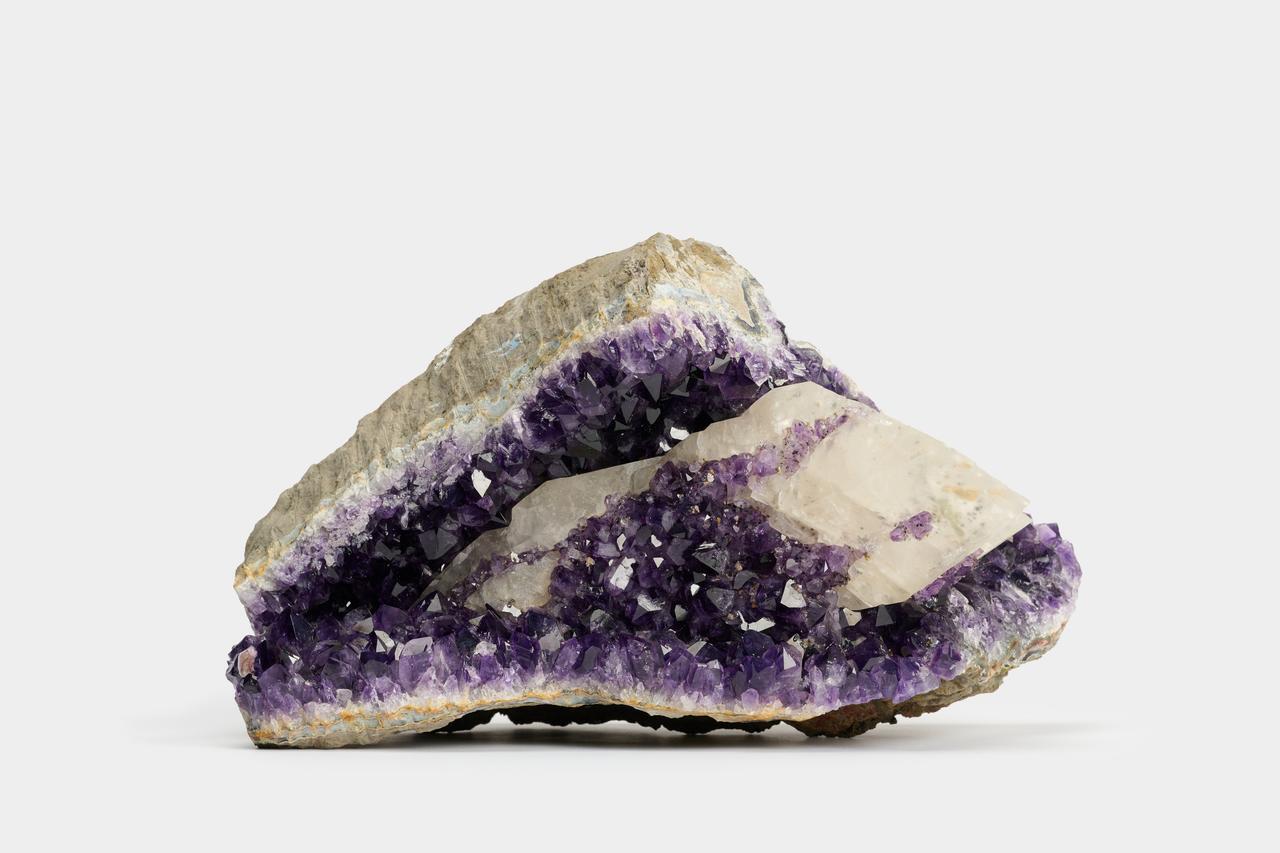
Ruby Crystals- 9.41 g - (3)


Add to your favourites to get an alert when the auction starts.
Catawiki Buyer Protection
Your payment’s safe with us until you receive your object.View details
Trustpilot 4.4 | 128441 reviews
Rated Excellent on Trustpilot.
Description from the seller
GeoChimes: Earth’s Exclusive Edition - Legacy: Winza
- Personal collection items "The Gods of Africa": "The Cornucopia" 16.80 ct; "The Heart" 15.80 ct; "The Dart" 14.50 ct.
- Includes a set of detailed microscopic images of the interesting surface features of all samples as a bonus (please see an example above).
- A legendary variety of corundum with a "neon" saturation, sourced from the iconic, now-depleted deposit in the Dodoma Province.
- Selected for Investment-grade mineral collections, and natural fancy jewelry made by modern high-end lapidaries.
--------------------
BASIC DESCRIPTION
Cabochon grade 47+ ct lot (3 pieces) of natural Winza Ruby (Corundum) crystals sourced from the famous, now depleted, Winza deposit in the Dodoma Province, Tanzania. This material is world-renowned for its unique, "neon" pinkish-red to raspberry saturation of color, close to Padparadscha, that sets it apart from any other ruby origin.
Unlike typical rounded alluvial stones, these specimens exhibit a clear hexagonal habit, which is highly prized by collectors, the rugged, authentic crystal habits with characteristic surface striations and the "raw" look of primary deposit material.
This lot is weighed above 47 ct, making it a substantial find for high-end lapidaries or investment-grade mineral collections. The average weight per piece in this lot nears 16 carats, a size that is becoming increasingly rare for this specific Tanzanian location.
--------------------
LOT DETAILS
Number of Items: 3
Approximate Total Weight: 47.05 ct
Approximate Individual Weights (in carats): "The Cornucopia" 16.80; "The Triangle" 15.80; "The Dart" 14.50
Approximate Individual Dimensions (in mm): "The Cornucopia" 17.78 x 13.63 x 8.75; "The Triangle" 17.31 x 14.98 x 7.89; "The Dart" 19.98 x 10.99 x 10.93
Color: Saturated "Winza" red with distinct purplish-pink undertones (raspberry red).
Clarity: Opaque/Included (cabochon grade). These pieces feature the signature black inclusions (spinel/hercynite) that serve as a "fingerprint" of the Winza origin.
Treatment: 100% Natural, No Heat, No Treatment.
--------------------
TECHNICAL DETAILS
Origin: Winza, Dodoma Region, Tanzania.
Type: Natural Corundum (Ruby).
Chemical Classification: Al2O3 (Aluminum Oxide).
Crystal System: Trigonal (Hexagonal habit).
Hardness: 9.0 on the Mohs scale (the second hardest natural mineral).
Specific Gravity: 3.97 – 4.05.
Refractive Index: 1.762 – 1.770.
Other Optical Properties: Strong pleochroism, showing flashes of purplish-red and orangey-red depending on the viewing axis.
NOTE FOR CUTTERS: Winza rubies are known for their unique internal geometry. When orienting for cutting, pay close attention to the potential for blue color zoning often found at the core of these crystals, which can add incredible depth to the finished gem.
--------------------
MICROSCOPIC ANALYSIS OF THE INTERNAL INCLUSIONS MOSAIC (see the included pictures)
1. Host Matrix and Chromatic Zoning
The primary corundum matrix exhibits significant color zoning, transitioning from vibrant chromium-rich pink to iron-influenced "brick" red. This variation is highly characteristic of Winza rubies, where uneven distribution of Chromium (Cr3+) and Iron/Titanium within the crystal lattice creates distinct saturated and desaturated sectors during metamorphic growth.
2. Crystalline Zonation (White/Transparent Mosaic)
The observed large, pale angular shapes represent zones of colorless corundum (leuco-sapphire) or pale blue sapphire. Unlike typical guest minerals, these are often syngenetic intergrowths. The fine parallel striations observed are not twinning planes of a foreign mineral, but rhythmic growth lines or structural planes within the corundum itself, marking changes in the chemical environment during the ruby’s formation.
3. Primary Crystal Inclusions (Spinel or Garnet)
Visible are dark, euhedral grains which are primary silicate or oxide crystals—most likely Hercynite Spinel or Pyrope-Almandine Garnet. Their "black" appearance is a result of high iron saturation and total light absorption within the crystal body. These grains serve as the original nucleation points around which the ruby formed. In Winza specimens, the high refractive index of these garnets often creates a mirror-like reflection at the interface with the host ruby, mimicking the look of metallic oxides.
4. Interstitial Iron Oxides (Limonite/Goethite)
The boundaries between the ruby and sapphire zones are traced by orange-brown channels. These are Secondary Iron Stains (Limonite/Goethite). These epigenetic films formed when iron-rich fluids penetrated micro-fractures and interstitial gaps during the stone's exhumation. This creates the diagnostic "map-like" or "honeycomb" texture that highlights the internal crystalline architecture of the specimen.
5. Associated Mineralogy and Paragenesis
While the microscope reveals the primary inclusions, the broader geological context of the Winza deposit involves a specific suite of minerals that define this locality. The rubies are hosted within Amphibolite and Kyanite-bearing schists, which explains the presence of chemical elements like magnesium and iron. Beyond the observed spinel and sapphire zones, these rubies can contain sub-microscopic inclusions of Pargasite (a dark green calcic amphibole) and acicular (needle-like) Rutile. In some specimens from this area, microscopic crystals of Apatite or Monazite may be present, often requiring Raman spectroscopy for definitive identification. The presence of Kyanite in the surrounding matrix is particularly significant, as it marks the high-pressure metamorphic conditions of the Mozambique Belt. These "invisible" mineralogical associations are what dictate the ruby's trace-element profile, distinguishing it from marble-hosted deposits and ensuring its unique status among Tanzanian gemstones.
--------------------
HISTORICAL CONTEXT
The Winza deposit was discovered in 2007 and caused an immediate sensation in the global gemstone market.
The Discovery: Unlike many ancient mines, Winza was found by local farmers in a remote area of central Tanzania. It briefly became a "gold rush" for rubies and sapphires.
Scientific Impact: Winza rubies redefined gemological standards because they often possess a "glow" similar to Burmese rubies but with a geological signature (inclusions) previously unseen in high-quality corundum.
Current Availability: Most of the primary Winza pipes were exhausted within a few years. Today, finding raw, unheated crystals of the size in this lot is increasingly difficult, as the mine is no longer producing at its peak.
--------------------
THE WINZA TALE OF GEOLOGICAL WONDER AND HUMAN IMPACT
The Historical Fever and Market Shock: The Winza ruby deposit, discovered in central Tanzania in late 2007, represents one of the most intense and shortest-lived "gem rushes" in modern history. Unlike the legendary Mogok mines in Myanmar, which have been active for centuries, Winza flared up like a supernova. Within months of the discovery, a quiet farming village was transformed into a chaotic mining hub of over 6,000 people. What made Winza historically significant for gemologists was the extraordinary quality of the crystals; they produced rubies and pinkish-red sapphires that were naturally vibrant and "eye-clean." This challenged the global market because, for the first time in decades, high-end rubies were available that required no heat treatment, making them instant rivals to the finest Burmese stones. However, by late 2009, the primary secondary deposits were largely exhausted, turning Winza rubies into rare collector's items almost overnight.
Ethical Dynamics and the "Conflict-Free" Alternative: From an ethical perspective, the Winza discovery occurred at a critical geopolitical moment. At the time, the United States had implemented the JADE Act, which banned the importation of rubies from Myanmar (Burma) due to human rights abuses by the military junta. Winza rubies offered a timely, "clean" alternative for luxury jewelers. Because the mining was primarily artisanal—conducted by individuals and small groups rather than large corporations or state military forces—the stones were generally seen as "conflict-free." However, this ethical silver lining had a darker side: the lack of regulation meant that many miners worked in perilous conditions without safety equipment, and the sudden influx of wealth into a poor rural area led to rapid inflation and social instability within the local Tanzanian community.
Ecological Consequences and the Scarred Landscape: Environmentally, the Winza rush serves as a cautionary tale of the "resource curse" at a micro-level. Before 2007, the region was an unremarkable agricultural zone. The ruby fever turned fertile farmland into a lunar landscape of thousands of unregulated pits and trenches. Since the mining was unplanned and frantic, there was no topsoil management or environmental oversight. This led to severe land degradation; as the miners moved on, they left behind a terrain "riddled like Swiss cheese," making it impossible for local farmers to return to their original livelihoods. Furthermore, these abandoned pits became stagnant pools after the rainy seasons, leading to a spike in waterborne diseases and malaria, leaving the local ecosystem and the health of its inhabitants compromised long after the gemstones were gone.
--------------------
GEOLOGICAL ORIGIN AND FORMATION
These rubies formed within the East African Orogen, a massive geological belt created by the collision of tectonic plates hundreds of millions of years ago.
Metamorphic Genesis: Formed under extreme pressure and temperatures (approx. 800°C) within amphibolite-facies rocks. This environment allowed the aluminum to crystallize into high-density corundum.
The Winza Signature: The presence of black hercynite or orange spinel crystals as inclusions is a diagnostic feature of this locality. These "internal guests" prove the ruby's natural, untreated origin.
Chromium Content: The high chromium levels responsible for the red color also cause strong fluorescence, making the stones appear to "glow" even in low-light conditions.
--------------------
GEMOLOGICAL PROFILE
Crystallography: The stones show well-defined hexagonal faces and basal pinacoids typical of high-quality Tanzanian corundum.
Fluorescence: Strong red fluorescence under UV light, which enhances the "fire" of the stone under daylight.
Internal Characteristics: Professional gemologists identify Winza rubies by their unique bent or "curved" silk-like needles and distinctive mineral inclusions.
Luster: Sub-adamantine to vitreous.
Durability: With a hardness of 9, these stones are perfect for heirloom jewelry, as they are highly resistant to scratching and chemical erosion.
--------------------
MARKET INSIGHTS (2026)
Winza Ruby is currently a "blue chip" collector's item. Because the production at the source is unstable and mostly depleted, prices for rough material are on a steep upward trend.
The "No Heat" Premium: In today's market, unheated rubies are the gold standard. Winza is one of the few locations that produces top-tier color naturally, without the need for thermal enhancement.
Size Scarcity: While small Winza rubies are still traded, pieces over 10 carats in the rough are rare. This 50+ ct lot represents a significant investment opportunity.
Pricing Trends:
Standard Raw Material: $80–$200 per gram.
Facet-Grade Transparent Rough: $1,000–$5,000+ per carat depending on the potential for a "clean" center.
--------------------
METAPHYSICAL & TRADITIONAL LORE
!!! IMPORTANT DISCLAIMER: The seller does not guarantee any medical, healing, metaphysical, magical, and/or esoteric properties. Information is for context only. !!!
The Stone of Nobility: Ruby has been called the "King of Gemstones" for millennia, symbolizing power, passion, and protection.
Chakra Alignment: Directly linked to the Root Chakra (Muladhara), it is believed to ground the wearer while boosting physical energy and libido.
The Winza Energy: Practitioners believe that because Winza rubies are "raw and untempered" by heat, they carry a more potent, grounding earth energy compared to factory-treated stones.
Spiritual Protection: Traditional lore suggests that rubies can warn the wearer of impending danger and help resolve disputes with a sense of calm authority.
--------------------
DEAR COLLECTOR,
Thank you for your interest in "GeoChimes: Earth’s Exclusive Edition - Legacy: Winza". We are keen to provide you with the best services and we treat every shipment with the utmost priority, ensuring a safe journey to your hands.
Pristine Condition: Every specimen undergoes a meticulous and careful manual cleaning process using isopropyl alcohol and water (no ultrasound used) to ensure purity and weight accuracy.
Precision Documentation: We provide exact measurements and weights for every piece, ensuring the description matches the reality of what you receive.
Selection & Storing: Each stone is professionally sorted and ready for immediate display or specific use in your project. Your order arrives in a professional, softly padded protective box, accompanied by detailed description.
The "Thank You" Bonus: We truly value your support. Every delivery includes a curated bonus gift, with its value scaled to reflect the generosity of your winning bid.
We wish you a successful auction.
- GeoChimes
GeoChimes: Earth’s Exclusive Edition - Legacy: Winza
- Personal collection items "The Gods of Africa": "The Cornucopia" 16.80 ct; "The Heart" 15.80 ct; "The Dart" 14.50 ct.
- Includes a set of detailed microscopic images of the interesting surface features of all samples as a bonus (please see an example above).
- A legendary variety of corundum with a "neon" saturation, sourced from the iconic, now-depleted deposit in the Dodoma Province.
- Selected for Investment-grade mineral collections, and natural fancy jewelry made by modern high-end lapidaries.
--------------------
BASIC DESCRIPTION
Cabochon grade 47+ ct lot (3 pieces) of natural Winza Ruby (Corundum) crystals sourced from the famous, now depleted, Winza deposit in the Dodoma Province, Tanzania. This material is world-renowned for its unique, "neon" pinkish-red to raspberry saturation of color, close to Padparadscha, that sets it apart from any other ruby origin.
Unlike typical rounded alluvial stones, these specimens exhibit a clear hexagonal habit, which is highly prized by collectors, the rugged, authentic crystal habits with characteristic surface striations and the "raw" look of primary deposit material.
This lot is weighed above 47 ct, making it a substantial find for high-end lapidaries or investment-grade mineral collections. The average weight per piece in this lot nears 16 carats, a size that is becoming increasingly rare for this specific Tanzanian location.
--------------------
LOT DETAILS
Number of Items: 3
Approximate Total Weight: 47.05 ct
Approximate Individual Weights (in carats): "The Cornucopia" 16.80; "The Triangle" 15.80; "The Dart" 14.50
Approximate Individual Dimensions (in mm): "The Cornucopia" 17.78 x 13.63 x 8.75; "The Triangle" 17.31 x 14.98 x 7.89; "The Dart" 19.98 x 10.99 x 10.93
Color: Saturated "Winza" red with distinct purplish-pink undertones (raspberry red).
Clarity: Opaque/Included (cabochon grade). These pieces feature the signature black inclusions (spinel/hercynite) that serve as a "fingerprint" of the Winza origin.
Treatment: 100% Natural, No Heat, No Treatment.
--------------------
TECHNICAL DETAILS
Origin: Winza, Dodoma Region, Tanzania.
Type: Natural Corundum (Ruby).
Chemical Classification: Al2O3 (Aluminum Oxide).
Crystal System: Trigonal (Hexagonal habit).
Hardness: 9.0 on the Mohs scale (the second hardest natural mineral).
Specific Gravity: 3.97 – 4.05.
Refractive Index: 1.762 – 1.770.
Other Optical Properties: Strong pleochroism, showing flashes of purplish-red and orangey-red depending on the viewing axis.
NOTE FOR CUTTERS: Winza rubies are known for their unique internal geometry. When orienting for cutting, pay close attention to the potential for blue color zoning often found at the core of these crystals, which can add incredible depth to the finished gem.
--------------------
MICROSCOPIC ANALYSIS OF THE INTERNAL INCLUSIONS MOSAIC (see the included pictures)
1. Host Matrix and Chromatic Zoning
The primary corundum matrix exhibits significant color zoning, transitioning from vibrant chromium-rich pink to iron-influenced "brick" red. This variation is highly characteristic of Winza rubies, where uneven distribution of Chromium (Cr3+) and Iron/Titanium within the crystal lattice creates distinct saturated and desaturated sectors during metamorphic growth.
2. Crystalline Zonation (White/Transparent Mosaic)
The observed large, pale angular shapes represent zones of colorless corundum (leuco-sapphire) or pale blue sapphire. Unlike typical guest minerals, these are often syngenetic intergrowths. The fine parallel striations observed are not twinning planes of a foreign mineral, but rhythmic growth lines or structural planes within the corundum itself, marking changes in the chemical environment during the ruby’s formation.
3. Primary Crystal Inclusions (Spinel or Garnet)
Visible are dark, euhedral grains which are primary silicate or oxide crystals—most likely Hercynite Spinel or Pyrope-Almandine Garnet. Their "black" appearance is a result of high iron saturation and total light absorption within the crystal body. These grains serve as the original nucleation points around which the ruby formed. In Winza specimens, the high refractive index of these garnets often creates a mirror-like reflection at the interface with the host ruby, mimicking the look of metallic oxides.
4. Interstitial Iron Oxides (Limonite/Goethite)
The boundaries between the ruby and sapphire zones are traced by orange-brown channels. These are Secondary Iron Stains (Limonite/Goethite). These epigenetic films formed when iron-rich fluids penetrated micro-fractures and interstitial gaps during the stone's exhumation. This creates the diagnostic "map-like" or "honeycomb" texture that highlights the internal crystalline architecture of the specimen.
5. Associated Mineralogy and Paragenesis
While the microscope reveals the primary inclusions, the broader geological context of the Winza deposit involves a specific suite of minerals that define this locality. The rubies are hosted within Amphibolite and Kyanite-bearing schists, which explains the presence of chemical elements like magnesium and iron. Beyond the observed spinel and sapphire zones, these rubies can contain sub-microscopic inclusions of Pargasite (a dark green calcic amphibole) and acicular (needle-like) Rutile. In some specimens from this area, microscopic crystals of Apatite or Monazite may be present, often requiring Raman spectroscopy for definitive identification. The presence of Kyanite in the surrounding matrix is particularly significant, as it marks the high-pressure metamorphic conditions of the Mozambique Belt. These "invisible" mineralogical associations are what dictate the ruby's trace-element profile, distinguishing it from marble-hosted deposits and ensuring its unique status among Tanzanian gemstones.
--------------------
HISTORICAL CONTEXT
The Winza deposit was discovered in 2007 and caused an immediate sensation in the global gemstone market.
The Discovery: Unlike many ancient mines, Winza was found by local farmers in a remote area of central Tanzania. It briefly became a "gold rush" for rubies and sapphires.
Scientific Impact: Winza rubies redefined gemological standards because they often possess a "glow" similar to Burmese rubies but with a geological signature (inclusions) previously unseen in high-quality corundum.
Current Availability: Most of the primary Winza pipes were exhausted within a few years. Today, finding raw, unheated crystals of the size in this lot is increasingly difficult, as the mine is no longer producing at its peak.
--------------------
THE WINZA TALE OF GEOLOGICAL WONDER AND HUMAN IMPACT
The Historical Fever and Market Shock: The Winza ruby deposit, discovered in central Tanzania in late 2007, represents one of the most intense and shortest-lived "gem rushes" in modern history. Unlike the legendary Mogok mines in Myanmar, which have been active for centuries, Winza flared up like a supernova. Within months of the discovery, a quiet farming village was transformed into a chaotic mining hub of over 6,000 people. What made Winza historically significant for gemologists was the extraordinary quality of the crystals; they produced rubies and pinkish-red sapphires that were naturally vibrant and "eye-clean." This challenged the global market because, for the first time in decades, high-end rubies were available that required no heat treatment, making them instant rivals to the finest Burmese stones. However, by late 2009, the primary secondary deposits were largely exhausted, turning Winza rubies into rare collector's items almost overnight.
Ethical Dynamics and the "Conflict-Free" Alternative: From an ethical perspective, the Winza discovery occurred at a critical geopolitical moment. At the time, the United States had implemented the JADE Act, which banned the importation of rubies from Myanmar (Burma) due to human rights abuses by the military junta. Winza rubies offered a timely, "clean" alternative for luxury jewelers. Because the mining was primarily artisanal—conducted by individuals and small groups rather than large corporations or state military forces—the stones were generally seen as "conflict-free." However, this ethical silver lining had a darker side: the lack of regulation meant that many miners worked in perilous conditions without safety equipment, and the sudden influx of wealth into a poor rural area led to rapid inflation and social instability within the local Tanzanian community.
Ecological Consequences and the Scarred Landscape: Environmentally, the Winza rush serves as a cautionary tale of the "resource curse" at a micro-level. Before 2007, the region was an unremarkable agricultural zone. The ruby fever turned fertile farmland into a lunar landscape of thousands of unregulated pits and trenches. Since the mining was unplanned and frantic, there was no topsoil management or environmental oversight. This led to severe land degradation; as the miners moved on, they left behind a terrain "riddled like Swiss cheese," making it impossible for local farmers to return to their original livelihoods. Furthermore, these abandoned pits became stagnant pools after the rainy seasons, leading to a spike in waterborne diseases and malaria, leaving the local ecosystem and the health of its inhabitants compromised long after the gemstones were gone.
--------------------
GEOLOGICAL ORIGIN AND FORMATION
These rubies formed within the East African Orogen, a massive geological belt created by the collision of tectonic plates hundreds of millions of years ago.
Metamorphic Genesis: Formed under extreme pressure and temperatures (approx. 800°C) within amphibolite-facies rocks. This environment allowed the aluminum to crystallize into high-density corundum.
The Winza Signature: The presence of black hercynite or orange spinel crystals as inclusions is a diagnostic feature of this locality. These "internal guests" prove the ruby's natural, untreated origin.
Chromium Content: The high chromium levels responsible for the red color also cause strong fluorescence, making the stones appear to "glow" even in low-light conditions.
--------------------
GEMOLOGICAL PROFILE
Crystallography: The stones show well-defined hexagonal faces and basal pinacoids typical of high-quality Tanzanian corundum.
Fluorescence: Strong red fluorescence under UV light, which enhances the "fire" of the stone under daylight.
Internal Characteristics: Professional gemologists identify Winza rubies by their unique bent or "curved" silk-like needles and distinctive mineral inclusions.
Luster: Sub-adamantine to vitreous.
Durability: With a hardness of 9, these stones are perfect for heirloom jewelry, as they are highly resistant to scratching and chemical erosion.
--------------------
MARKET INSIGHTS (2026)
Winza Ruby is currently a "blue chip" collector's item. Because the production at the source is unstable and mostly depleted, prices for rough material are on a steep upward trend.
The "No Heat" Premium: In today's market, unheated rubies are the gold standard. Winza is one of the few locations that produces top-tier color naturally, without the need for thermal enhancement.
Size Scarcity: While small Winza rubies are still traded, pieces over 10 carats in the rough are rare. This 50+ ct lot represents a significant investment opportunity.
Pricing Trends:
Standard Raw Material: $80–$200 per gram.
Facet-Grade Transparent Rough: $1,000–$5,000+ per carat depending on the potential for a "clean" center.
--------------------
METAPHYSICAL & TRADITIONAL LORE
!!! IMPORTANT DISCLAIMER: The seller does not guarantee any medical, healing, metaphysical, magical, and/or esoteric properties. Information is for context only. !!!
The Stone of Nobility: Ruby has been called the "King of Gemstones" for millennia, symbolizing power, passion, and protection.
Chakra Alignment: Directly linked to the Root Chakra (Muladhara), it is believed to ground the wearer while boosting physical energy and libido.
The Winza Energy: Practitioners believe that because Winza rubies are "raw and untempered" by heat, they carry a more potent, grounding earth energy compared to factory-treated stones.
Spiritual Protection: Traditional lore suggests that rubies can warn the wearer of impending danger and help resolve disputes with a sense of calm authority.
--------------------
DEAR COLLECTOR,
Thank you for your interest in "GeoChimes: Earth’s Exclusive Edition - Legacy: Winza". We are keen to provide you with the best services and we treat every shipment with the utmost priority, ensuring a safe journey to your hands.
Pristine Condition: Every specimen undergoes a meticulous and careful manual cleaning process using isopropyl alcohol and water (no ultrasound used) to ensure purity and weight accuracy.
Precision Documentation: We provide exact measurements and weights for every piece, ensuring the description matches the reality of what you receive.
Selection & Storing: Each stone is professionally sorted and ready for immediate display or specific use in your project. Your order arrives in a professional, softly padded protective box, accompanied by detailed description.
The "Thank You" Bonus: We truly value your support. Every delivery includes a curated bonus gift, with its value scaled to reflect the generosity of your winning bid.
We wish you a successful auction.
- GeoChimes
Details
Disclaimer
It is believed that certain gemstones and minerals have beneficial health and spiritual properties. However, using or wearing gemstones or minerals does not mean that you can treat, cure or prevent any disease. Please consult your health care professional for information on health care issues and do not stop any medications or courses of treatment, without first consulting your health care professional. The use of gemstones or minerals as a wellness therapy is one of personal choice. While stones or crystals have been used historically to relieve or prevent symptoms, the objects sold on our website offer no guarantee of results. Therefore, Catawiki cannot guarantee or be held liable for the effectiveness of these objects sold herein.